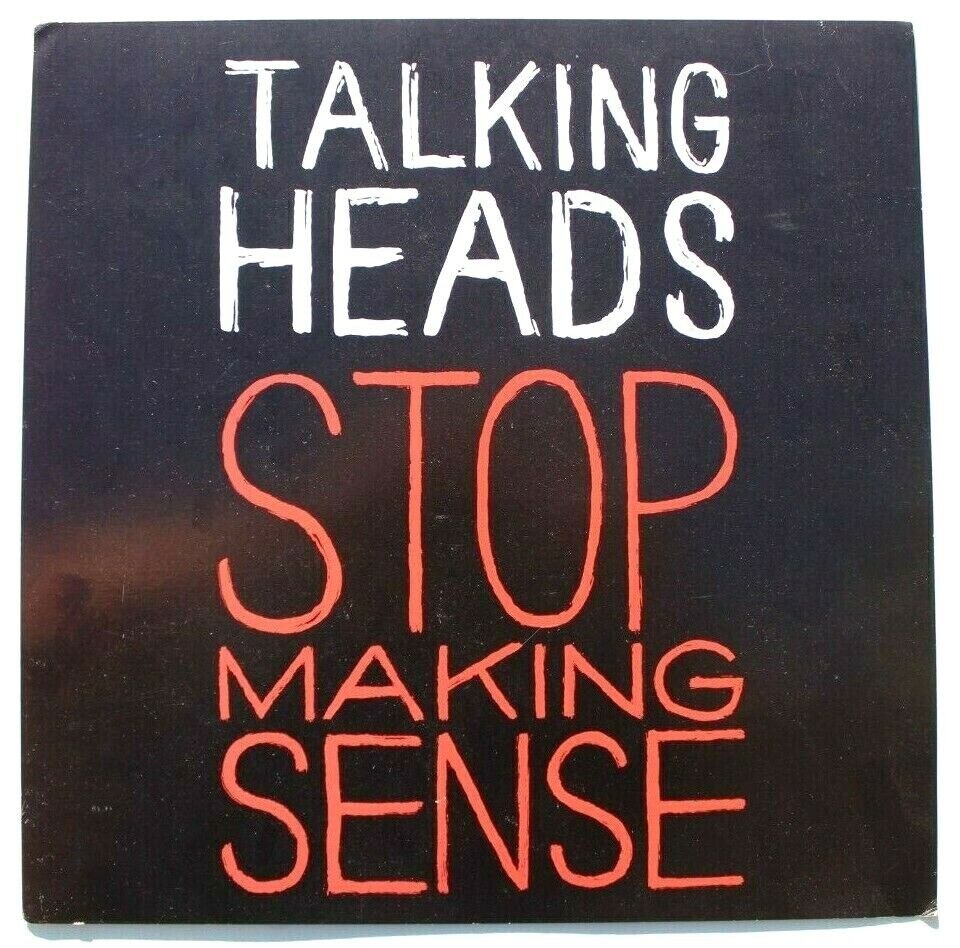
It’s the Talking Heads concert film, shot by Jonathan Demme over three nights at the Pantages in Hollywood in December 1983. Frontman David Byrne walks out alone with a boom box and an acoustic guitar, and the band gets built one member at a time until it’s a nine-piece.
It had been rattling around the back of my head for years. ‘Greatest concert film ever made’, according to a lot of people with opinions I respected. But I’d never really gotten into the Talking Heads, so I never bothered. Then I saw a copy on sale for five bucks and it was time to finally take the plunge.
I wouldn’t say I was wrong about the Talking Heads. I just didn’t know what I didn’t know. I had no negative view of them, I just failed to understand how influential they truly are.
Funny thing about David Byrne — he reads as a Gen X icon, though he’s a Baby Boomer who was born in Scotland, 1952.
A concert film is the intersection of two artists. You need the act operating at the height of its powers, and you need a director with enough restraint to understand he is not the star. His only job is to take what happened in that room and deliver in the best way possible to the theatrical or home-viewing audience. And get the sound right. That’s a big one.
That takes strength, because you have to remove most of yourself from the product. Scorsese doesn’t do that exactly — he’s right there on camera in The Last Waltz, asking questions. But that’s his thing and it works. The Last Waltz has been first on my list in this category for years.
“…of enormous energy, of life being lived at a joyous high.” —Roger Ebert
Seven years after this, Demme made The Silence of the Lambs, which landed Best Picture, Director, Actor, Actress and Adapted Screenplay. The Big Five. Only two other films in history have done it. It Happened One Night (1934) and One Flew Over the Cuckoo’s Nest (1975). Demme knew, in 1983, to keep the cameras on the stage and leave himself out of it.
Now, before I say a word about the actual music, a disclaimer. I find written reviews of music absolutely preposterous. Word salad. They read like parodies of the music review business itself: Referring to an album as a “bluesy, whiskey-soaked rag mama rock opera” — it comes across as writers spinning nonsense to describe a thing you can only get by hearing it yourself. The best you can do is tell people it’s good and advise them to go experience it for themselves. Everything past that comes out clunky and pretentious. Go read any Rolling Stone album review and you’ll see what I mean.
So with that out of the way, here’s what stood out.
Byrne has said himself that he’s somewhere on the spectrum. Watch him for five minutes and it stops being a question. That is in no way used pejoratively. The man is a certified autistic/artistic genius, and he joins a list in that regard I keep that also includes Michael Jackson, Axl Rose and Kanye West. Autist being another term that is not used lightly or to be framed as derogatory. I’m referring to those possessing actual genius.
The show is constructed visually, sonically, and with a songwriting range that shows craftsmanship and control. Song after song I’d sit there thinking, “Holy shit, this is a Talking Heads song too?” Having never fully explored their catalog on my own, I badly underestimated how deeply their DNA runs through popular music and culture.
And speaking of Kanye — the suit. That absurd broad-shouldered architectural monstrosity Byrne climbs into in the back half of the film. Decades later Kanye and Lil Pump built an entire video around it, the two of them shuffling down a hallway inside giant square shoulders. I don’t consider it as a coincidence, I see it as homage.
The version of genius people usually mean by “idiot savant” is narrow. One thing, done inhumanly well, and not much else. Byrne is the other kind. He calls on a dozen different influences and styles and makes them cohere into one thing. As a writer, I sometimes refer to myself as an idiom savant.
He is not, however, an autist at the highest order. Byrne is very left-leaning, and American Utopia — the 2018 album, then the Broadway show, then the Spike Lee film — is pro-immigration with a side of activism. While he is extremely talented, he does not reach the utmost levels of intellectual transcendence of a Stanley Kubrick or a Bobby Fischer.
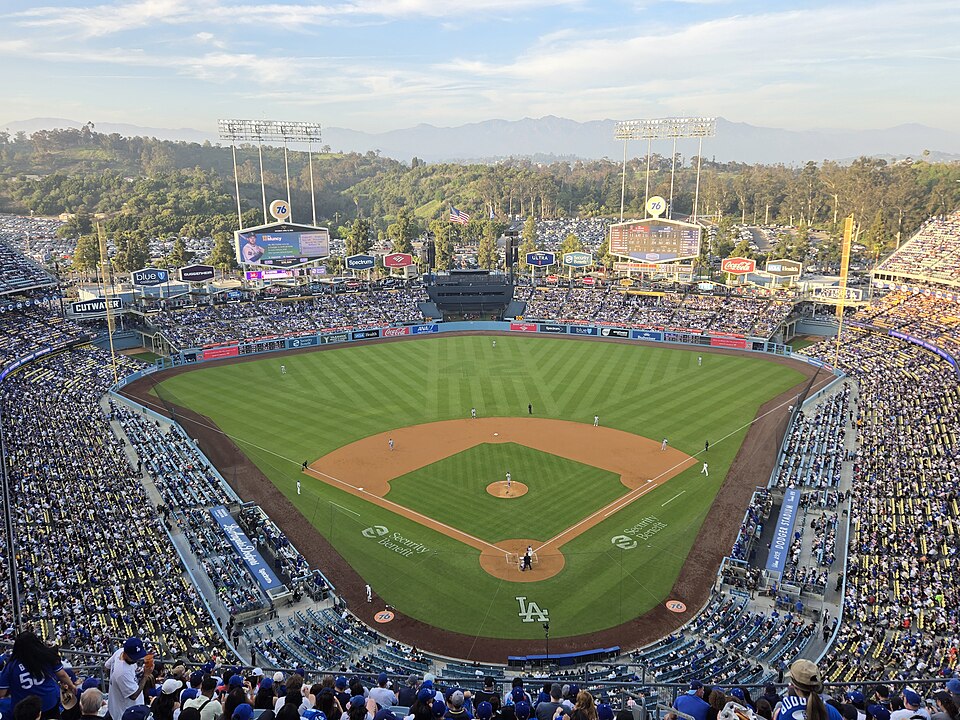
The Dodgers empire may be coming apart at the seams.
“Prosecutors are investigating whether Walter’s businesses hid financial ties while borrowing billions from insurers he controls.” — Reuters
After the surprising sale of the Los Angeles Lakers last week, it now looks as though Mark Walter may need to divest himself of the Los Angeles Dodgers as well. The club says he has no plans to sell. He also had no plans to sell the Lakers ten months ago.
The situation is in the early stages, and there is serious bias in the coverage of it so far. I do remember a President of the United States who caught 34 felonies in New York, and then caught a separate half-billion dollar civil judgment for ‘inflating the value of his assets’ to get better terms on his loans — a farcical judgment an appeals court later threw out. Inflated collateral, concealed connections. Same neighborhood of accusations. The difference is that the Walter case appears to be actually substantive and not just politically motivated lawfare.
The Mark Walter situation is nuts and it's becoming a real question of whether he's going to need to sell the Dodgers to help raise $20 billion needed to pay back loans (Full story/explanation in first reply) pic.twitter.com/yjpoa3hwS1
The Dodgers having to sell isn’t the biggest story. It’s the Guggenheim group’s stake in their TV rights deal that makes this very interesting. If this is true, and it ends up costing the Dodgers their $334 million annual local television revenue, it shakes up the hierarchy of Major League Baseball immediately.
Also interesting is that Shohei Ohtani has a clause in his contract that should GM Andrew Friedman leave the team, or the ownership group change, he can opt out of his contract the following offseason.
“Ohtani can opt out if Walter is no longer controlling owner or Friedman no longer runs baseball ops.” — ESPN
Los Angeles also owes north of a billion dollars in deferred salary money to players on the team after their contracts end. That may not be a huge issue now, but if revenues are shared more evenly in the future that could become a burden to the new owners.
This only serves to add fuel to the fire for owners who desperately want a salary cap this offseason in their labor dispute with the MLBPA.
Currently the smaller-revenue teams can coast on the league’s welfare check before they spend a dime from ticket sales or local TV. They’d like a bigger cut of the pie than they’re getting, and they’re willing to institute a salary floor to get the players on board. The new CBA only needs 23 of the league’s 30 owners to approve it. If enough of the smaller fish band together and force this issue, things get very interesting. This incident could take out the ownership of the biggest financial juggernaut in the sport before the deepest parts of the CBA battle come to pass. The owners don’t care as much about leveling the competition and competitive balance as they do increasing their franchise valuations. That’s exactly what a salary cap would provide for them.
Los Angeles achieving a three-peat this fall with another World Series title would be historic and impressive regardless of the payroll, but it may also be their last chance to do so in the league’s current framework.
With the players and owners speaking different languages in early stage CBA negotiations, this tectonic shift occuring right at this time feels like another reason we may not see baseball played in 2027. The dynamics may be in such a state a flux that a reconcilliation becomes even more difficult to arrive at.
I’m counting down the five biggest crisis situations in College Football. This isn’t the worst overall programs. This factors in failing to meet expectations, mismanagement, financial and conference status, consistent losing, scandals, and falling from grace. These are situations that are faltering in the ever changing landscape of college football. Some have more viable paths back to success than others.
Honorable Mention: Michigan State
Three head coaches in four years. They fired Mel Tucker for cause in 2023 with $79 million left on his deal, a designation he’s still suing to overturn. Then they gave Jonathan Smith seven years and fired him after two, eating $32.5 million. Then they replaced him with Pat Fitzgerald, two years out of the game after Northwestern fired him amid a hazing scandal.
And I still see Fitzgerald as a potentially stabilizing force with upside. He won 110 games in Evanston with none of the resources he’ll have now.
They’ll be fine either way. Big Ten full shares averaged nearly $80 million in 2024-25 and Michigan State collects that annually. Conference status is their saving grace. The Spartans can eat the $32.5 million they owe Smith, but if Tucker settles for as much as that or more, things get a little hairy. It’s not all doom and gloom in East Lansing, but the gap between the Spartans and the Wolverines, Buckeyes, Nittany Lions, and Hoosiers has only grown wider. Not to mention how much further the additions of USC, Washington and Oregon drop them down the conference pecking order.
#5 Florida State
The ACC fell behind. Its schools pull in the mid-forties per year while the Big Ten and SEC each clear $70 million, so Florida State sued its own conference to get out early. They settled in March 2025 — a bigger cut of the ESPN money, exit fee cut to $165 million and dropping to $75 million by 2030-31, media rights included on the way out. They bought themselves a door.
The problem is there may not be a room on the other side. The Big Ten only admits AAU members — Miami got in in 2023, along with North Carolina, Duke, Virginia and Pitt. Florida State isn’t one. The SEC doesn’t need them either, since Florida already owns the state, and Finebaum’s read is they’d rather have UNC and Virginia. And if the SEC does want to expand its footprint into Florida, Miami is the more lucrative option.
The football has matched the finances. No bowl game since 2018. Third head coach in three years after Troy Taylor was fired and Frank Reich filled in for a season. Andrew Luck runs the program as general manager now, and Tavita Pritchard, a first-time head coach, runs the team. CFN projects the worst quarterback situation in the conference.
The alumni network is the counterargument, and it is a real one. Stanford graduates founded the world we live in today: Google, Nike, Netflix and Instagram, and the list goes on. The university sits on an endowment north of $37 billion. There is more capital in that donor base than in any five athletic departments combined.
It hasn’t mattered. Money moves toward things people want to be part of, and right now nobody wants to be part of Stanford football. Admissions standards don’t bend for a $23 million roster market. The travel doesn’t shorten. The media share doesn’t change until the next decade, and by then their best case scenario may be a spot in the Big 12. They are one of the big losers of the Pac-12 collapse, but not as big as the next team.
#3 Oregon State
This is the Pac-12 collapse’s biggest casualty. Ten schools left, Oregon State and Washington State were not invited anywhere, and the two of them kept the conference name and rebuilt it with Mountain West level teams. The 2026 Pac-12 is Boise State, Colorado State, Fresno State, San Diego State, Texas State, Utah State and Gonzaga for basketball.
On the field it has been worse. Oregon State went 2-10 last year. They fired Trent Bray at 0-7, the worst start since 1991, and the school said the roughly $4 million buyout would come out of donor money. That is a program passing the hat to fire its own coach. JaMarcus Shephard, a 42-year-old first-time head coach, takes over. This was a top-ten team in 2023.
On a personal note, I grew up a Pac-10 kid, and I’m glad to see the name live on. The conference may end up being one of the most exciting top to bottom in the FBS. But that doesn’t change the reality of the business side of things.
For a school that was spurned by the Big 12, their prospects for a better situation in the next round of realignment look meek. A dominant run in the new Pac-12 is their best hope to return to some form of national relevance.
#2 North Carolina
The Tar Heels made a splash last offseason with the hiring of NFL GOAT, eight-time Super Bowl winner, Bill Belichick. BB was given his “mutual” separation with the Patriots after a string of strange decisions, like having a defensive coordinator coach the offense, regressing Mac Jones from year two on, and missing the playoffs two years running, among a host of other issues.
I love Bill Belichick. I know that’s not a common sentiment from most fans, or even the media. I liked his surly press conferences and his casual trolling. I found him to be extremely entertaining, even if that was never his intention. The Boston sports media does not share that sentiment. They haven’t stopped dancing on his NFL head coaching grave since he left town.
After being passed over for the Falcons job, Coach Belichick spent a season in media, making weekly appearances on the Pat McAfee show and hosting his own podcast on YouTube. In each of these appearances there was a real sense that BB was attempting to rehab his image for one more crack at holding the reins for an NFL team. He sits just 15 wins away from Coach Shula’s record of 347.
He shocked the world by agreeing to a five year deal with the Tar Heels, but it conveniently included a reasonable opt out fee if he got an NFL offer after one year. The buyout was $10 million before June 1, 2025, and $1 million after. He brought in self-diagnosed football genius Michael Lombardi, his son Steve as defensive coordinator after a year as Washington’s DC, and perhaps most notoriously his 24 year old girlfriend Jordon Hudson.
After a horrendous first year on the field, and banning the Patriots from scouting players in person, his promise to be the 33rd NFL team that would prepare players for the league better than any other school in the nation looks thin. UNC finished 4-8 and had zero players drafted, ending a streak of at least one Tar Heel selected every year since 2016.
North Carolina may have a bright future if they’re able to exit the ACC for the Big Ten in 2031, but that will be long after the short term pain being induced upon them right now. If UNC fires him without cause after this season, they owe him the balance of the guarantee through December 2027 — one year, $10 million.
The question of whether Chapel Bill still has it in him to produce a winner the Belichick way is one of my favorite storylines going into the season. Game one in Dublin, Ireland on August 29th against a TCU team that dog-walked them last year will have the eyes of the college football world upon it, and it can’t get here soon enough.
#1 Colorado
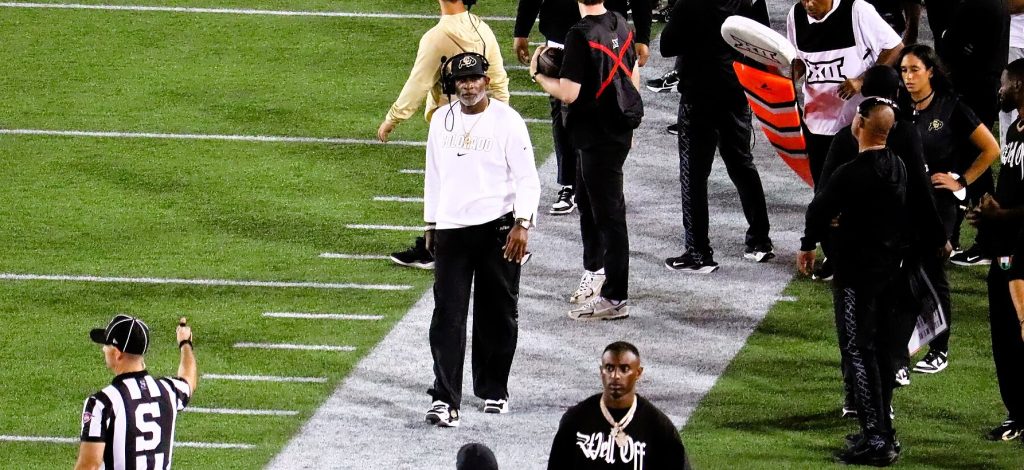
What can be said about this program that Jason Whitlock hasn’t already called out? Deion came over from Jackson State with a head full of steam. He brought Shedeur and Travis Hunter as his top holdovers from Jackson, and the “Louis” luggage he had jump in the portal. They stormed out to a 3-0 start, including a big season opening win on the road at TCU, and then the wheels fell off and they limped out to a 4-8 record. Reports came out from former players about the standoffish nature of Coach Prime Time, refusing to even speak to a significant portion of them.
In his second year they had their best record of his tenure at 9-4 and an Alamo Bowl loss to BYU. That might not sound great to you, but it was in fact enough to get two-way star Hunter the Heisman trophy. And as far as accomplishments for Deion in his time at CU, that’s the highwatermark, and frankly, nothing to sneeze at.
It appeared the CU move was just an attempt to get Shedeur into the NFL. ESPN did the best they could to assist with that, hyping him as QB 1A of the draft. Shedeur fell to the fifth round where he was selected by the Cleveland Browns, who had already selected Dillon Gabriel in the third round of that same draft. Shedeur’s time in Cleveland is well documented. I felt he held onto the ball for far too long in college to be a viable NFL starter, and some of those bad habits continue to plague his game today. Hunter was taken second overall by the Jags, who let him play both offense and defense his rookie season until he was hurt. He looked undersized in the NFL.
The run by the two athletes was enough to get their jersey numbers retired in Boulder. A move that would have been palatable had it only been Hunter’s. It seemed like Deion would mentally and emotionally check out after Shedeur moved on. He spent the CU offseason dealing with a bladder cancer issue, had a new bladder constructed, and returned in time for the start of the season. A disappointing one as the Buffs ended with a 3-9 record and won a single Big 12 game. Sanders enters year 4 having signed a five-year, $54 million extension in March 2025 that pays him an average of $10.8 million per year, making him the highest paid coach in the Big 12.
Footage has come out of Colorado’s fall camp practices this month, and the players looked extremely undersized.
𝗧𝗥𝗘𝗡𝗗𝗜𝗡𝗚: The Colorado Football team has gone viral for looking like a Youth Football team during practice.
The Buffaloes' players look concerningly skinny and extremely small.
In response to the negative publicity, CU placed a comprehensive gag order on reporters attending practice. They were not allowed to report on anything, that’s right, anything they saw at the session. The email read that nothing observed may be reported, published, posted, broadcast or otherwise shared in any form, on any platform, at any time, and that if you’re uncertain whether something is reportable, the answer is that it is not. If that wasn’t enough bad publicity, footage was then released of their female strength and conditioning coach giving a folksy, “y’all” laced speech to hype up the team that went over like a description of Linda Blair in The Exorcist at the family dinner table.
Powerful: Colorado’s female strength and conditioning coach Morgen Cote has gone viral for her motivational speech to the team.
"I don’t do this for the love of the game. I do this for the love of y’all."
The Big 12 is underfunded compared to the big two conferences. Their conference wide Monster Energy jersey patch sponsor is $20 million for the entire league, which comes out to about a million a school. Notre Dame’s SoFi patch is worth $18 to $20 million for just them. Yes, the Fighting Irish patch is equal to the entirety of the Big 12.
NIL is part of the issue, but it doesn’t make it any less real. Deion thrived when it was hype and swagger and attitude that sold young men on the program. Now years of missed expectations, excuses, and negative stories have soured prospects on calling Boulder home, and when they can’t match the checks being written by mid to bottom tier Big Ten schools, it’s easy to see why.
I expect this to be Deion’s last season on the sidelines. If he makes it through the year, he can agree to a buyout, step down due to “health reasons,” and sign a lucrative deal with ESPN to be featured on College GameDay where he can be a well-compensated media personality. Which is one of the things I believe he does best. His segments on NFL Network were usually very enjoyable. Back when they had the dream team of Marshall Faulk, Warren Sapp, Michael Irvin, Kurt Warner and Steve Mariucci. The program was actually fun, entertaining and informative. Contrast that with the media slop offered up by ESPN. Suffice to say, Deion, the Buffaloes, and ESPN may all be the better for this being his rocky mountain swan song.
I met Jimbo on my first trip to Colorado. The trip was to visit a buddy from High School who was enlisted and stationed at the Air Force Academy. Jimbo was still active duty Air Force at the time we met. If you’ve seen The Big Lebowski, his aura was much aligned with The Dude’s.
We picked him up before heading to Denver for a Rockies game. Me and three airmen made the trip in a Chrysler sedan. The guys had a pony keg from a gathering the night before with about a third of the beer still in it, and they dressed it up to look like a little kid in the middle of the back seat. It had a Rockies hat set on the tap and a Rockies jersey buttoned up around the keg.
I sat up front and didn’t drink any of the beer on the ride, but the boys in the back took the occasional pull from the tap.
On the way there I came up with a game called “Rock n Roll Draft” where we took turns drafting musicians to build out our dream lineup, and then debated afterwards whose was best. I remember drafting Chris Robinson and Keith Richards, the rest of the lineup escapes me.
Jimbo was later deployed to Afghanistan, where he worked as a medic. He had a fiancée at the time. He’d sent her an iPad and a phone, and a few other gifts. A few months into his deployment he found out she had been stepping out on him, and he broke things off. It was a serious detriment to his morale, but as Jimbo does, he carried on.
Speaking of breaking things off, I asked him about the weirdest injuries he saw during his stint in the middle east. He mentioned a man who had been having carnal relations with a female colleague at the air base and had broken his penis during the act. I immediately felt better about having only broken my forearm, my clavicle and my nose.
Jimbo was an avid reader. He had read every Stephen King release, and over 30 of them on that deployment alone. The pace having quickened after his engagement fell through.
He got back to Colorado and finished his time and was honorably discharged. He then used his GI Bill to attend HVAC, heavy equipment, and plumbing trade schools. But after completing them, he wanted to lay low for awhile. He grew out his beard and slept on my buddy’s recliner every night for a year in the house he was renting in Manitou Springs. He even dated the waitress at the Irish Pub we all had a crush on. My friend in the Air Force and I took a road trip back to California, and Jimbo came along for the ride. He was that sort of feller. I called him our Kramer.
We went to see Furthur, one of the Grateful Dead lineups post Jerry Garcia, and he passed out in front of me and hit his head. Me and my buddy had to pick him up by the arms and legs like a lifeless corpse we were throwing overboard. He came to in the midst of us walking him out of the floor area of the arena in Broomfield, CO. He was fine, but in all the concerts I’ve been to, I’ve seen numerous people pass out, yet had never been with someone who had done so themselves. Well, the law of averages caught up with us that day.
Then at the end of spring, that buddy of mine got out of the Air Force and moved out of state to cash-in on his GI bill. Jimbo knew it was time to return home and get a job, but he wanted one more Colorado summer before doing so.
I was in college at the time, working nights and weekends at a pizza place, and I couldn’t let him stay with me. But I got him a job delivering pizzas at the shop. His tenure there actually outlived mine. The manager was happy to have an honest and reliable employee that showed up for his shifts.
Jimbo took to living in his car to get the last Rocky Mountain summer in. There was a learning curve as he transitioned to vehicular life. The shop had a big stainless steel dishpit, and when it was empty, he’d use the drop down sprayer to wash his hair. I told him that wasn’t the best idea for a restaurant, and he ended up getting a membership at 24 Hour Fitness where he could shower, hang out, and watch cable TV. I don’t think he exercised there.
After he finished his shift at the pizza shop, he’d take his cash and get some food, then head over to the mall parking lot. He’d trap towels and t-shirts in between the windows and the door frame to create curtains. He said he’d then “get really high” and read until he fell asleep. He never had any trouble from cops or mall security.
It’s easy to look at some of the behaviors and label him a loser or a bum, but he was also a genuinely good guy who could always be relied upon when you needed a favor in return. He honored the bro code. He wasn’t ever the reason anyone out with him had a bad time. He never stepped on anyone’s toes. And he had a funny way of telling his stories from overseas and his upbringing.
He had a great mind for frugality — he had many stories from trips to Vegas and Reno, getting free drinks and discounted rooms. He had an encyclopedic knowledge of sports, which was a big anchor of our friendship. And he had the stomach to handle and the appetite for sports betting back when the only place you could legally do so was in the state of Nevada.
The subtle art of sneaking down into better seats at a sporting event was another of his specialties, and he was always interested in a scheme on how to do so. At the Rockies game we had two good tickets, and then bought two $4 Rockpile centerfield bleacher seats. Two of us went down into the good seats with the good tickets, one came up with both tickets, brought another guy down with him, then repeated it so all four of us were a few rows behind the dugout. This works at Rockies games, but it gets trickier in a place with regular sellouts.
If you asked him anything about his life, he’d just come right out and tell you, he didn’t withhold details even when they were to the detriment of his image. Jimbo had lost his mom at a young age, and some felt he was out searching for that place that would feel like coming home.
He was a Mets fan with a Yankees tattoo. He reminded me of the song “The Pilgrim, Chapter 33” by Kris Kristofferson:
He’s a walking contradiction, partly truth and partly fiction, taking every wrong direction on his lonely way back home.
He was something of a millennial cowboy that summer, a free spirit on the Front Range, taking each day as it came, holding off the impending responsibilities of adulthood just a little bit longer. The way I saw it, after six years serving his country and being deployed in a war zone, it certainly wasn’t for me to tell him to approach things any differently.
All of this was jogged loose in my memory after seeing a Subaru Outback with the back seat folded down this afternoon, and it brought to my mind that summer of freedom ol’ Jimbo got to live years ago.
I lost touch with him a few years back, but I hope the cool breeze finally guided him to a place that feels like home.
Many people who I admire as intelligent thinkers and creative minds suffer from a key blind spot I see occurring repeatedly. From Andrew Torba, Jay Dyer and Sam Hyde — they all carry a condition I describe as Bitcoin Brain. Or as the crypto community outside the Bitcoin bubble refers to them, Bitcoin Maxis.
Through this condition, which as it appears to me is caused by having bought into Bitcoin, or BTC, at a significantly lower price, realized 50-200x gains on the asset, and now have a devotion to it that causes all criticism of it to put them into a state of cognitive dissonance.
Just mentioning use cases for other cryptocurrency projects can trigger an adverse reaction. Bring up ISO 20022-compliant utility tokens in a social setting and you’ll more often than not hook a maxi who will launch into a myopic BTC fueled diatribe that lays out several of the arguments I’ll counter in this article.
To be clear, this is not financial advice. Nothing here is a price prediction. We could see a $200k, $300k, $400k Bitcoin, depending on how much institutional money comes into the asset in the near term.
Price is not the argument I’m making. What I’m interested in is the shifting paradigm — that a first generation technology from 2009, one that is slower, more expensive, and has fewer real world uses than what came after it, is still being sold to us as a revolutionary force in the future of global finance.
There is a maximum supply cap of twenty-one million Bitcoins. This is often one of the first points made by the champions of the token, scarcity.
There is a finite amount of gold. There is a finite amount of silver. There is a finite amount of beachfront property in Malibu. And there is a finite amount of Bitcoin. All four of those are true, but one of these things is not like the other.
Gold is scarce because it can’t be manufactured. You cannot copy the periodic table, change one line, and roll out Gold 2 with an extra 21 million tons.
There are other cryptos. And it isn’t just that they exist — it’s that they already do things Bitcoin is technologically incapable of doing. Foreign exchange that happens damn near instantly. Payments that settle across the world in seconds for a fraction of a penny. Commodities trading around the clock with a record of every transaction that’s open for anyone to inspect and impossible to go back and doctor.
So sure, you could build Bitcoin 2 and mint yourself another 21 million tokens. But why would you want to? You’d be launching a brand new product that’s already a generation behind the competition. Nobody would give it a second look.
And that says something very damning about the asset.
The original pitch, the one that made every libertarian I know fall in love, was peer-to-peer electronic cash outside the money printing governments and their fiat system.
It doesn’t do that and it never really did. Transactions take ten minutes to confirm and about an hour before anyone serious calls them final, fees float on congestion, and nobody is buying a latte with it.
The fix that BTC developers promised for eight years running has been the Lightning Network, where payments happen off-chain and settle in bulk later. On paper it solves the problem in an inefficient way. In practice, the node count continues to decrease, inhibiting its ability to ever operate at scale. But as is often the case with Bitcoin, the goal posts have already been moved. The pitch now is that it’s a “store of value,” not currency, not a payments network. When has a store of value been so volatile?
While we’re doing inventory, there’s the matter of what’s been buying all this. Tether is the largest stablecoin on earth and for years people have wondered whether every digital dollar it issues actually is backed by a real one. The stablecoins can then be used in transactions to trade for Bitcoin.
In 2021 that got answered twice. New York settled with them over misrepresenting the backing, and the CFTC found Tether had enough actual cash to cover the tokens on about a quarter of the days they examined.
“Tether reserves were not ‘fully-backed’ the majority of the time.” — CFTC
They paid, admitted nothing, and publish quarterly reports now. But it’s why, every time the market rips and somebody notices Tether minted another billion the week before, people get squinty. Bitcoin Maxis have frequently responded to this by saying some variation of, “if the Federal Reserve can print money, why can’t we?” These are supposed to be the adults in the room in the blockchain space?
That era is ending anyway. The GENIUS Act puts stablecoins under real federal rules by January 2027 — dollar-for-dollar reserves and audited books. What happens when Bitcoin’s money printer gets shut off?
This is part of the new arc for Bitcoin. It was the money you didn’t need permission to use. Now its loudest defenders spend their days begging Fortune 500 companies to put it on their balance sheets and are lobbying Washington to stockpile it.
Bitcoin has the earmarks of a brand-name, trillion-dollar pump and dump, and it traces back to its strange origins and the host of shady players acting on its behalf.
JUST IN: MicroStrategy is now ranked the #1 corporate seller of Bitcoin after SELLING another $216 million in Bitcoin.
Just last year, Strategy CEO Michael Saylor was urging investors to take out double mortgages to buy Bitcoin at the $124,000+, and promised his company would…
Michael Saylor’s pitch boils down to: who cares what it costs today when it’s going to be worth millions later? He’s even put a number on it.
“Every Bitcoin you don’t buy today is going to cost you $13 million.” — Michael Saylor
That isn’t an argument. It’s a forecast, and you’re expected to take his word for it.
Saylor is also not a new character, which is the part nobody brings up. In March of 2000, at the peak of dot-com mania, his company announced it had to restate two years of financials. The stock went from $333 a share to $86 in a single day.
Twenty-five years later he runs the same company under a new name and has bet all of it on one asset. Strategy holds roughly 840,000 Bitcoin (4% of the total possible supply) at an average cost around $75,000 a coin. Bitcoin is currently in the low $60Ks.
He also said for six straight years that he would never sell, that anyone who sells is weak. This month’s filing shows him selling Bitcoin to buy back his own preferred stock.
The engine that made the whole thing work was the premium. His stock traded at a big multiple to the Bitcoin behind it, so he could print shares, buy coins, and somehow end up with more Bitcoin per share than he started with. That premium is gone.
Since Oct. 2025, Strategy spent almost $17B buying Bitcoin. Yet despite that support, the price fell by 53%. If Bitcoin was that weak with Strategy buying $17B, imagine how much weaker it will be with Strategy selling $3.25B, plus more to maintain its minimum U.S. dollar reserve.
Then there’s Satoshi Nakamoto. That’s the name on the whitepaper that started all of this back in 2008. He built the thing, ran it for two years, answered questions on message boards, then stopped writing in 2011 and was never heard from again. Nobody knows who he is. Nobody knows if he’s one person or several.
He also has about a million coins that he mined himself in the early days, roughly five percent of every Bitcoin that will ever exist. Sixty-some billion dollars. It has not moved in fifteen years. The price has gone through the roof four separate times and he never touched a dime of it.
Three ways to explain that. He lost the keys, he’s dead, or he isn’t a person at all.
Satoshi Nakamoto, the secret founder of Bitcoin, has a wallet with 1 million Bitcoin that has not been touched in 15 years. It's worth $70 billion today. It's the biggest untouched fortune of all time. That's insane.
In 1996, twelve years before any of this, the NSA published a paper called “How to Make a Mint: The Cryptography of Anonymous Electronic Cash.” It walks through how you’d go about building an untraceable digital currency. They also designed the mathematical lock the whole system still runs on.
That’s not proof of anything. But if you’re asking who could invent a global currency, launch it, walk away and never once get caught, the list is short and they’re on it.
Here’s why that matters beyond being a fun theory. If Satoshi is a man, five percent of the supply is a mystery. If Satoshi is an agency, five percent of the supply is a loaded gun. Sit on it for thirty years while the thing gets baked into pension funds and corporate balance sheets and the national reserve, then wake up the wallet and cash in.
The mother of all rug pulls. And you’d never see it coming, because you never knew who was holding it.
The founder of the world’s most valuable monetary network being permanently and conveniently missing gets filed by his followers as epic mythology, not as the enormous red flag it is.
Along those lines, in 2014 Jeffrey Epstein put about half a million into Blockstream’s seed round, the company employing some of the most influential contributors to Bitcoin’s code. He also cut MIT a check that landed in 2015, right when the Bitcoin Foundation went broke and the developers maintaining the code had no employer. The lab picked up three of them.
“I have spoken to some of the founders of Bitcoin who are very excited.” — Jeffrey Epstein
Nobody involved has been accused of wrongdoing, and none of this means Epstein controlled Bitcoin. But at the most fragile moment in the network’s history — no foundation, no money, a handful of guys with the keys to the codebase — the man paying the bills was Jeffrey Fucking Epstein?
How could a decentralized, borderless currency be an asset to someone running an international human trafficking and blackmail ring?
Then there’s the quantum problem. Google researchers put out estimates this year suggesting a quantum computer could crack Bitcoin’s security faster than the network can produce a single block. Roughly a third of all coins are sitting in the kind of accounts where that’s a live concern, ‘Satoshi’s’ included.
So a proposal went up in April to phase out the vulnerable accounts and eventually freeze the coins of anyone who doesn’t move theirs in time.
Freeze the accounts. The unchangeable ledger with the rules nobody can touch is now having a public argument about icing out a third of the supply. They have once again lost the plot.
So where does this land? Two of BTC’s biggest problems, transaction cost and speed, are already solved. Just not by Bitcoin.
Wrap it, or tokenize it, and settle it on a distributed ledger built for payments and it clears in seconds for a fraction of a penny. The XRP Ledger does it, Stellar does it, and DTCC has already named both in its tokenization patent.
Bitcoin Maxis prefer to position it as the only crypto that will be left standing, keeping the blinders up is key, because the world realizing its limitations is a pitfall that shatters the illusion.
And when it happens, the price of Bitcoin will no longer be what drives the asset class at large.
Bitcoin being decoupled from the rest of the cryptocurrency space as the real-world adoption of utility coins (things that actually solve trillion-dollar problems) leads the way will spark one of the largest mass-hysteria events we’ve seen as Bitcoin Maxis attempt to rationalize what has come to pass.
Bitcoin has been a mainstream media marketing campaign. It has been a successful red herring designed to avert the attention of the masses while the rails of a new financial system using distributed ledger, smart contract and blockchain technology are being built with little fanfare outside of the crypto sphere. (Make no mistake, the smart money is not going to miss the boat on this.)
It’ll most likely always be around. As I stated, it may shatter through all-time-highs in the interim, but there will be a paradigm shift.
There is serious institutional, political, and potentially dark-money pressure to continue propping up the mirage. But in the end, I do believe Bitcoin will be remembered at best as the VCR of cryptocurrency, at worst as a multi-trillion dollar capital extraction conspiracy.
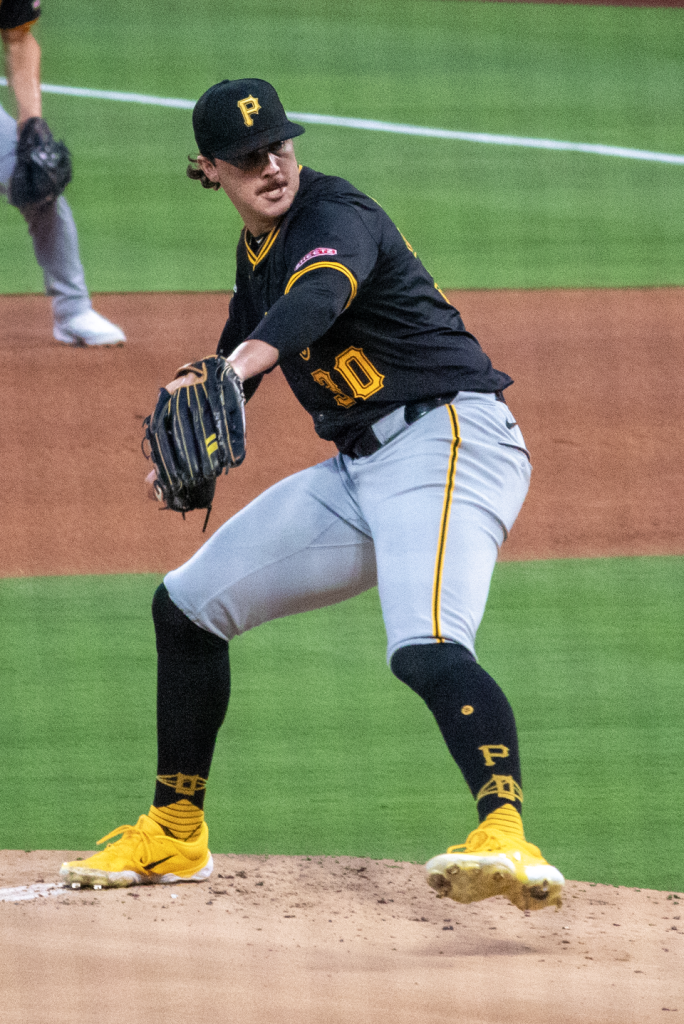
Paul Skenes’ pitch velocity has fallen off an absolute cliff in his third year in the Major Leagues.
Hall of Famer (in my book) Curt Schilling has weighed in on the regression on X:
The Athletic has an article asking what's wrong with Paul Skenes. Go back and check my social media BEFORE the WBC, and then the posts regarding his mechanics. I am not Carnac, I just did his job for a living and have studied it my entire life. This was predictable, and I…
Schilling’s issue is mechanical. Skenes’ arm drifts behind him toward third base instead of coming straight back, which strains everything from the shoulder down. He’s been calling Skenes a max-effort thrower since 2025 and said the delivery wouldn’t hold up under a starter’s workload. He also says he called this before the WBC.
The numbers back the alarm. Skenes threw 404 pitches at 99+ mph as a rookie in 2024. He threw 223 last season. This year he has thrown only three. You read that correctly, three pitches over 99 mph this year for Mr. Gas.
Theories range from being too fat, intentionally scaling back to save his arm for the big market teams (nonsensical, how would he get a big-money contract like this), or having his aura drained by his gymnast girlfriend. Also absurd, everyone in the show has a hot girlfriend, Skenes’ just happens to be the most visible.
An unflattering shirtless photo with Livvy Dunne on the beach has fueled the fire for the Paul Skenes weight gain storyline
It's time to figure this all out after he failed to top 97 mph in Tuesday's 65 pitch start pic.twitter.com/RjswMnH6Z5
Fat pitcher slander will not be tolerated on this platform. For one thing, Skenes isn’t actually fat. And if you think being fat as a pitcher means you won’t be successful, CC Sabathia, Bartolo Colon, David Wells, and George Herman Ruth would all like to have a word with you.
Personally, I’m inclined to agree more with Schilling’s analysis, along with the possibility of an undisclosed injury that is plaguing his current season.
On August 11 in Miami he was pulled after 65 pitches. His fastball averaged a career-low 95.7 and never touched 97. He got four whiffs on 34 swings, the worst rate of his career. Manager Don Kelly insisted it wasn’t injury-related. Though the denial doesn’t have me convinced.
Tim Lincecum’s body broke down after a few early dominant seasons, but Timmy the Kid did not have the powerful frame Skenes possesses.
Whatever the case may be, Skenes needs a significant reset to address the issue and protect his long term future in the league. It’s imperative he and the Pirates figure it out sooner than later, the franchise has three more years of contractual control for their ace, and Skenes has yet to even hit his arbitration money years. For a guy approaching his prime earning window, this becomes a potential $300m question for him.
Photo: Johnmaxmena2 / Wikimedia Commons (CC BY 4.0)
The Los Angeles Lakers have agreed to be sold for the second time in ten months.
“Mark Walter … is selling it to Josh Kushner and Bob Iger for $12.5 billion.” — CBS Sports
While most people’s initial reaction to the sale was in regard to LeBron leaving leading to a 25% increase in the value of the Lakers, or the connection to Disney’s deconstructionist woke era in Iger taking over, or the new connection the Lakers have to President Trump in Josh Kushner — the first person that came to my mind was Jay Mohr.
Mohr is a comedian I grew up enjoying that got into sports and podcasting, he hosted Jay Mohr Sports and Mohr Stories. The reason he came into my mind is that he is married to Jeanie Buss, former Lakers majority owner, who sold controlling interest to Mark Walter in June of 2025. Mohr was previously married to one of my childhood crushes, Nikki Cox, the comedy it-girl for a good chunk of the nineties. A series of plastic surgery misfortunes would in large part end her public-facing career. Mohr wrote one of the more surreal articles I’ve read during his time with Fox Sports, about being dosed with LSD at a restaurant while he was married to Nikki. The line I have never forgotten: “When you’re on acid and you’re playing Madden, your fingers are your coaches.” Then after his divorce from Nikki he ended up with Jeanie and became married into Lakers ownership. I say none of this out of envy for the man, but I have always found him funny and interesting so it’s more from a place of fraternal appreciation. He provides a human lens for me into the numbers and names of this story.
As for Kushner, this comes less than two weeks after FIFA scrapped his attempt to buy a private equity stake in the World Cup, a plan UEFA threatened to boycott the tournament over. He’ll also have to sell his current piece of the Miami Heat before this deal can be approved.
These new sports team sale prices and valuations are often used as talking points for whatever someone’s personal ideology is. People typically see this event through whatever their worldview happens to be: corruption in the Trump Administration, the league getting more woke, Jews continuing to take over the world, billionaires being unrestrained oligarchs that are destroying society — usually people’s initial baseline worldview comes out in how these type of events are colored in their minds.
For me, I’m sure that is still true to some degree. Yet the exorbitant valuations of sports franchises today are telling for a few reasons. First, enormous increases in company valuations have taken place over the last decade, and franchise values rose right alongside them. Second, sports are one of the last bastions of attention in a hyper-fractured, niched down marketplace where it’s easier than ever for people to exist in their own bubbles. Sports still unites people across otherwise scattered interests.
Another topic of discussion is the Lakers’ current owner, Mark Walter, who had purchased the team for $10 billion ten months ago, he makes a 25% return on that investment. Walter is the head of Guggenheim Baseball management, owners of the Dodgers since 2012, where he now turns his full attention to, aside from his reported federal investigation. So in a round about way, this one ups the Yankees’ big news of their minority share of Yankee Global to Apollo. That’s not how you make Mona Lisa smile.
These franchises are ultimately worth whatever people are willing to pay for them. Fans should be reminded that their beloved teams are often simply someone’s investment widget to be milked for cash and flipped when the right offer comes. It may be their owner’s hobby or status symbol, or best case scenario: their passion, where they seek to show mastery of leadership, competition, and detail to put the skills that have made them titans of industry on display within the sporting world. The latter describes franchises that are actually worthy of our time and attention. Seeing fans be emotionally decimated by incompetent organizations is like seeing a brand loyalist defend a defective product.
I understand Bob Iger does not equal Disney in this transaction, but he is still the most recognizable public figure from their executive leadership this century. Aside from Kathleen Kennedy and her brand-destroying reign as the head of Star Wars. My hope for the return of Disney to Los Angeles professional sports was always them reacquiring the Anaheim Ducks and bringing back the green and purple uniforms full time. Disney had an incredible setup with the Ducks and incorporated their IP into the live arena experience for fans. While we may not see that with the Lakers, I don’t expect to see any courtside shots of Goofy at Crypto.com arena, should they falter in the postseason, I will happily refer to them as a Mickey Mouse organization.
George Steinbrenner famously said he wouldn’t sell the Yankees for anything, that “owning the Yankees is like owning the Mona Lisa. You don’t sell it.” It appears Apollo Sports Capital have finally cracked the da Vinci code.
The $2.6 billion from Apollo Sports Capital buys an undisclosed minority stake in Yankee Global Enterprises and refinances the franchise’s existing debt. Apollo Sports Capital CEO Al Tylis takes a newly created seat on the YGE board. Hal Steinbrenner and the Steinbrenner family retain full control, with Steinbrenner saying the partnership “allows us to explore pursuing strategic opportunities.”
Is this the Yankees finally capitulating to the Dodgers’ dominance and deciding the equitization route is the only way to level the playing field?
For all my grievances with the Yankees, I have respected that they have not been as willing to bend to modernity as the rest of the league. Abstaining from a City Connect uniform, and until recently holding to a rigid facial hair policy. But it looks like the times may have finally caught up with the Bronx Bombers.
The Yankees and Apollo are in advanced talks for the investment firm to inject between $2B and $3B into the MLB club and its related businesses. It would be a combination of debt and equity, with multiple LPs bought out. @business first on the news.https://t.co/WB2Zk0ssSO via…
Would the Yankees have still made this move if they truly thought a hard salary cap was a inevitable? A change expected to raise franchise valuations even higher.
Debt restructuring is one of the key reasons listed by New York for the move. Though the remaining debt on Yankee Stadium is reportedly under $100 million, which makes $2.6 billion an awfully large hammer for that particular nail. It could also signal Hal Steinbrenner is anticipating the top of the market is approaching, and is cashing out serious profits on what he views as an acceptable valuation of his franchise.
Most importantly, it could be the Yankees getting much needed liquidity to survive a long work stoppage that looms after the CBA ends on December 1st. If that is in fact their primary motivation, it’s another sign we could be in for a long and bloody battle between the owners and players over the next 18 months.
This sort of deal rescued FC Barcelona from falling behind, and it looks like the Yankees have it in mind to follow that blueprint. But whereas Barca sold a 25% stake in future media rights, the Yankees have sold a minority stake in Yankee Global Enterprises — not just the ballclub, but the holding company that also owns 26% of the YES Network, roughly 16% of Legends Hospitality, and 10% apiece of AC Milan and New York City FC. MLB rules cap a single private capital fund at 15% of a franchise, so there is a ceiling on how much of the Bronx is actually for sale.
On the other side of the rivalry, Red Sox ownership Fenway Sports Group is closing in on selling a minority stake in Liverpool FC to a consortium that includes Jeff Bezos. Fenway Sports Group have made enormous gains on their Liverpool acquisition — they bought the club for £300 million in October of 2010, and the reported deal values it at roughly £4.4 billion today, with the consortium’s one-third stake going for somewhere around £1.4 billion. I’d love to imagine John Henry is willing to sell the Red Sox, preferably in their entirety, as well.
The Yankees now have the capital to keep pace financially with the Mets and Dodgers, at least for a while. Those two franchises may also exhibit their new ceiling, and in the LOL Mets case, their new floor.
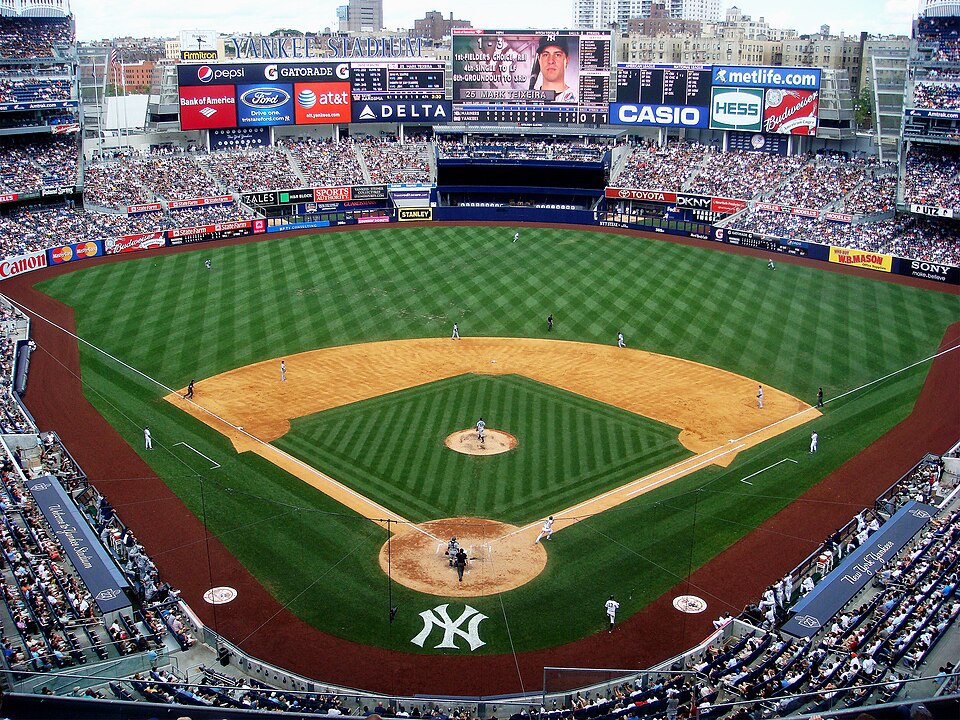
Photo: Matt Bolton / Wikimedia Commons — CC BY-SA 2.0
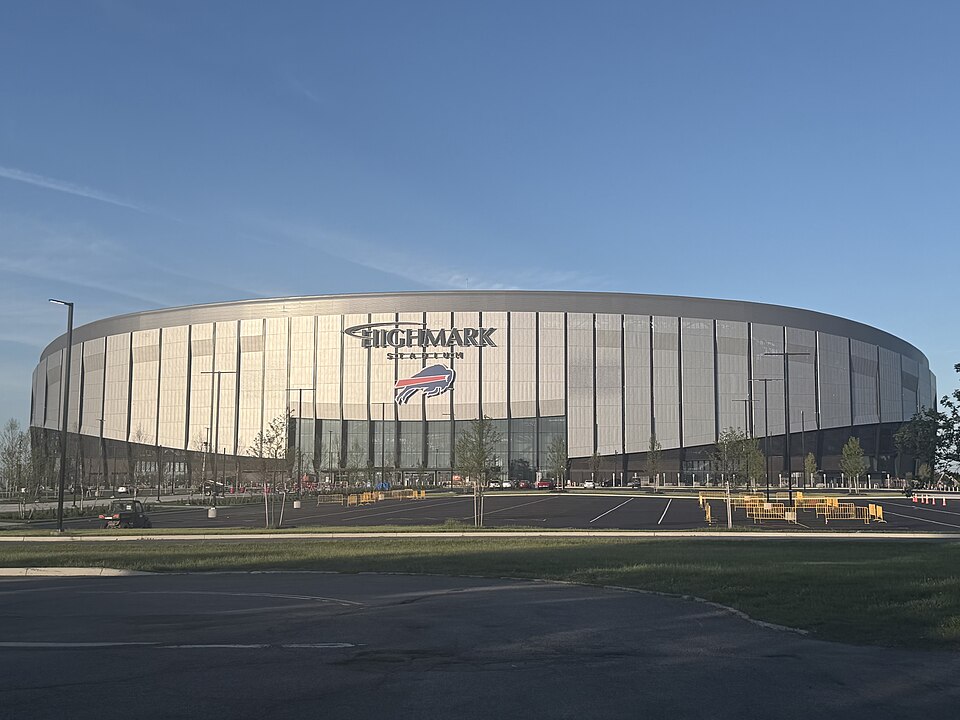
The Buffalo Bills opened their new stadium to season ticket holders on Saturday night for the Return of the Blue and Red Scrimmage.
“The Buffalo Bills welcomed 51,807 fans to the 2026 Return of Blue & Red.” — Buffalo Bills
The new stadium has continued to be the talk of Bills Twitter two days after the game, the main point of contention being obstructed view seats and smaller than expected video screens. As well as less than appetizing food offerings.
Cheese Pizza Review: new Highmark Stadium (literally first thing I saw and no line to grab) pic.twitter.com/m5FwpdcOQU
— Patrick Moran (Talking Buffalo) (@PatrickMoranTB) August 8, 2026
I’ve been following the construction of the stadium from the initial rendering released to the public. I have a few thoughts.
First, people complaining about the $2.2 billion price tag. $250 million from Erie County, $600 million from New York State, and Terry Pegula responsible for every dollar of the overruns. Those complaining about the public funds being used, I want to say I hear you, but this is New York state we’re talking about. Literally all they do is piss away taxpayer funds, for the most part it’s on things that offer me little to no utility. This stadium is not that. This is one of the best decisions Kathy Hochul has made as Governor. I know that’s not saying much, but I stand behind it.
Second, remember the American sports stadium dark ages? The era of multi-purpose stadiums. Where NFL and MLB teams shared venues, and the baseball games were played on astro turf or in stadiums with literally no view beyond the outfield? And the first half of the football season for teams like the Raiders and Dolphins were played with baseball infield dirt in the playing field? We survived that hellish period, it’s initial downfall marked by the construction of Camden Yards, and we entered a golden age of original ballparks with Oracle Park, PNC Park, Busch Stadium all being built after that. Buffalo’s new stadium is unique, which itself is becoming a rarity.
The NFL is now entering a new age of cookie cutter stadiums, we’re losing the tradition of football being played outside in the elements on grass. The Raiders, Falcons, Rams have all built impressive new enclosed stadiums in recent years, and the spectacle of Jerry World in Arlington still looms large, but with new stadium developments in Nashville, Kansas City, Chicago by way of Hammond, Indiana, Denver, and Cleveland, (Jacksonville is currently in the midst of a drastic remodel that will see a canopy added to the stadium while keeping it technically al fresco) nearly all of these stadiums will look like some xerox version of Allegiant Stadium in Las Vegas.
Team owners and cities are focused on a few key factors with a new stadium — a new place to host games that drives revenue to the area, to have an enclosed roof for the opportunity to host a future Super Bowl, and other major events, like Taylor Swift concerts, WrestleMania, the Final Four, etcetera, and they want to keep the team in the area for decades to come by getting them to sign a lease for the new digs.
While the obstructed view seats are a bit baffling to see in a brand new 2026 state-of-the-art facility, what the Bills got right is they stayed outdoors, they moved to a natural grass surface, and they created an environment that will be extremely loud. All of which play to their strengths, and in terms of being outdoors on natural grass, those are aspects that have been going extinct in this new wave of stadium construction.
I will not stand for the slander of the new stadium. I went on a dive using a view from my seat. Most modern nfl stadiums have some obstructed view seats. Here are some of the worst offenders I’ve found. I’m sure there’s more. #billsmafiapic.twitter.com/eG6sft1ehN
The architect, Populous, has designed the majority of new stadium builds, and the inspiration for this one is born from European football, the design moves the spectators closer to the field and rids the surface area around the field of wasted space. The bowl is modeled in part on Tottenham Hotspur Stadium, where the geometry traps the crowd noise and compresses it back down toward the field, and the upper deck here is reportedly the closest to the field in the league. These positives are deserving of praise and feel like a natural fit for Buffalo’s team.
But even in the initial renderings, man those video boards looked small.
Video boards inside the new Highmark Stadium are pretty underwhelming
Now factor in teams using half their video screens for scoreboard and stats displays— My hope is, atleast for key replays, they project the action across the entire board, or as fans have already dubbed it, the MiniTron.
Finally, and most importantly, this new stadium keeps the Bills in Buffalo on a 30-year lease.
I’ll reserve judgment on the execution of the new stadium until I see it for myself. I think the knee-jerk reaction from many Bills fans comes from our conditioning as almost getting things right time and time again.
Being the almost franchise for decades can have a traumatic effect on people. Mafia life isn’t for everyone.
Two former NBA players, Enes Kanter Freedom and Royce White, have announced they intend to identify as female to be eligible for the 2027 WNBA draft. Kanter Freedom said he and his team had carefully examined the league’s eligibility criteria and governing framework surrounding self-identification and inclusion, and that he qualifies. White followed hours later and added that his wig is in the mail.
The reason they can do this is that the WNBA has no transgender eligibility policy. None. The collective bargaining agreement signed in March says only that players who are women are eligible, and never defines the word. Into that silence stepped a parade of coaches and players — Cheryl Reeve, Stephanie White, Gabby Williams — all volunteering that a trans athlete would be welcome.
“I would welcome a trans athlete on my team or against my team, anytime. I don’t think it’s a problem in the world. It’s just another way to kind of attack trans people.”
“We embrace justice, equity, diversity, and inclusion. Those are the values that unite this Union and allow it to protect women’s sports while creating transformational change. Hate, abuse, and demonization of any person or group of people, including transgender people, only fuel fear, division, and harm. We will continue to have hard conversations. But we will not be used as political pawns.”
The WNBA is a Marxist community garden. It has always been an ideological experiment funded by the NBA, Nike, ESPN, etc. to platform their left-leaning, feminist and social and racial justice philosophy. The league is quite literally, a political pawn.
It actually serves as a wonderful microcosm of the shortcomings of these theories, as when gifted two mainstream stars on a team together in Caitlin Clark and Sophie Cunningham, the league has sought to suppress their popularity and elevate those who fit the racial and political agenda the league exists to serve. They are not interested in making money, they feel entitled to do and say what they want, and the concept of being profitable has absolutely no bearing on their actions.
Similar to how Mamdani’s New York City is giving everyone a little free preview of the inability for Marxist ideologues to handle the primary responsibilities of the positions they hold, in Mamdani’s case that being maintaining order and carrying out basic government functions, the league shows how the abundant fallacies in the views of those running it prevent it from ever growing into a respected and commercially viable sports product. If anyone can be a woman in their worldview, then they must dispel their bigoted ways and embrace the stunning and brave Enes and Royce as champions of the very diversity and inclusion they so virtuously espouse.
Update: In response to all this, Commissioner Cathy Engelbert sent a memo to the teams that declines to define who’s eligible, noting instead that WNBA eligibility rules are collectively bargained. Translation: the league can’t settle the transgender question without the union, and the union just told you exactly where it stands.
Update 2: Hours after this post, Sophie Cunningham was clubbed in the head on a fast break layup by Chicago’s DiJonai Carrington, who was ejected on a Flagrant 2 and then posted “WHITE PRIVILEGE” from the locker room and tagged the Fever.
Yeah, this league isn’t a completely racist trainwreck or anything like that. While it’s mildly funny when it’s a women’s basketball league, this is the same rotten ideology that’s infected large swaths of government.
Update 3: In the third quarter of that same game, Caitlin Clark was assessed her eighth technical of the season for accidentally bumping into a black female referee after being knocked out of bounds on a pass along the baseline. She simply looked at the official, turned away, and got teed up.
If your only access to the outside world was following the WNBA, you’d have a pretty strong inclination that America was on the verge of a race war.