The Summer of Jimbo

I met Jimbo on my first trip to Colorado. The trip was to visit a buddy from High School who was enlisted and stationed at the Air Force Academy. Jimbo was still active duty Air Force at the time we met. If you’ve seen The Big Lebowski, his aura was much aligned with The Dude’s.

We picked him up before heading to Denver for a Rockies game. Me and three airmen made the trip in a Chrysler sedan. The guys had a pony keg from a gathering the night before with about a third of the beer still in it, and they dressed it up to look like a little kid in the middle of the back seat. It had a Rockies hat set on the tap and a Rockies jersey buttoned up around the keg.

I sat up front and didn’t drink any of the beer on the ride, but the boys in the back took the occasional pull from the tap.

On the way there I came up with a game called “Rock n Roll Draft” where we took turns drafting musicians to build out our dream lineup, and then debated afterwards whose was best. I remember drafting Chris Robinson and Keith Richards, the rest of the lineup escapes me.

Jimbo was later deployed to Afghanistan, where he worked as a medic. He had a fiancée at the time. He’d sent her an iPad and a phone, and a few other gifts. A few months into his deployment he found out she had been stepping out on him, and he broke things off. It was a serious detriment to his morale, but as Jimbo does, he carried on.

Speaking of breaking things off, I asked him about the weirdest injuries he saw during his stint in the middle east. He mentioned a man who had been having carnal relations with a female colleague at the air base and had broken his penis during the act. I immediately felt better about having only broken my forearm, my clavicle and my nose.

Jimbo was an avid reader. He had read every Stephen King release, and over 30 of them on that deployment alone. The pace having quickened after his engagement fell through.

He got back to Colorado and finished his time and was honorably discharged. He then used his GI Bill to attend HVAC, heavy equipment, and plumbing trade schools. But after completing them, he wanted to lay low for awhile. He grew out his beard and slept on my buddy’s recliner every night for a year in the house he was renting in Manitou Springs. He even dated the waitress at the Irish Pub we all had a crush on. My friend in the Air Force and I took a road trip back to California, and Jimbo came along for the ride. He was that sort of feller. I called him our Kramer.

We went to see Furthur, one of the Grateful Dead lineups post Jerry Garcia, and he passed out in front of me and hit his head. Me and my buddy had to pick him up by the arms and legs like a lifeless corpse we were throwing overboard. He came to in the midst of us walking him out of the floor area of the arena in Broomfield, CO. He was fine, but in all the concerts I’ve been to, I’ve seen numerous people pass out, yet had never been with someone who had done so themselves. Well, the law of averages caught up with us that day.

Then at the end of spring, that buddy of mine got out of the Air Force and moved out of state to cash-in on his GI bill. Jimbo knew it was time to return home and get a job, but he wanted one more Colorado summer before doing so.

I was in college at the time, working nights and weekends at a pizza place, and I couldn’t let him stay with me. But I got him a job delivering pizzas at the shop. His tenure there actually outlived mine. The manager was happy to have an honest and reliable employee that showed up for his shifts.

Jimbo took to living in his car to get the last Rocky Mountain summer in. There was a learning curve as he transitioned to vehicular life. The shop had a big stainless steel dishpit, and when it was empty, he’d use the drop down sprayer to wash his hair. I told him that wasn’t the best idea for a restaurant, and he ended up getting a membership at 24 Hour Fitness where he could shower, hang out, and watch cable TV. I don’t think he exercised there.

After he finished his shift at the pizza shop, he’d take his cash and get some food, then head over to the mall parking lot. He’d trap towels and t-shirts in between the windows and the door frame to create curtains. He said he’d then “get really high” and read until he fell asleep. He never had any trouble from cops or mall security.

It’s easy to look at some of the behaviors and label him a loser or a bum, but he was also a genuinely good guy who could always be relied upon when you needed a favor in return. He honored the bro code. He wasn’t ever the reason anyone out with him had a bad time. He never stepped on anyone’s toes. And he had a funny way of telling his stories from overseas and his upbringing.

He had a great mind for frugality — he had many stories from trips to Vegas and Reno, getting free drinks and discounted rooms. He had an encyclopedic knowledge of sports, which was a big anchor of our friendship. And he had the stomach to handle and the appetite for sports betting back when the only place you could legally do so was in the state of Nevada.

The subtle art of sneaking down into better seats at a sporting event was another of his specialties, and he was always interested in a scheme on how to do so. At the Rockies game we had two good tickets, and then bought two $4 Rockpile centerfield bleacher seats. Two of us went down into the good seats with the good tickets, one came up with both tickets, brought another guy down with him, then repeated it so all four of us were a few rows behind the dugout. This works at Rockies games, but it gets trickier in a place with regular sellouts.

If you asked him anything about his life, he’d just come right out and tell you, he didn’t withhold details even when they were to the detriment of his image. Jimbo had lost his mom at a young age, and some felt he was out searching for that place that would feel like coming home.

He was a Mets fan with a Yankees tattoo. He reminded me of the song “The Pilgrim, Chapter 33” by Kris Kristofferson:

He’s a walking contradiction, partly truth and partly fiction, taking every wrong direction on his lonely way back home.

He was something of a millennial cowboy that summer, a free spirit on the Front Range, taking each day as it came, holding off the impending responsibilities of adulthood just a little bit longer. The way I saw it, after six years serving his country and being deployed in a war zone, it certainly wasn’t for me to tell him to approach things any differently.

All of this was jogged loose in my memory after seeing a Subaru Outback with the back seat folded down this afternoon, and it brought to my mind that summer of freedom ol’ Jimbo got to live years ago.

I lost touch with him a few years back, but I hope the cool breeze finally guided him to a place that feels like home.

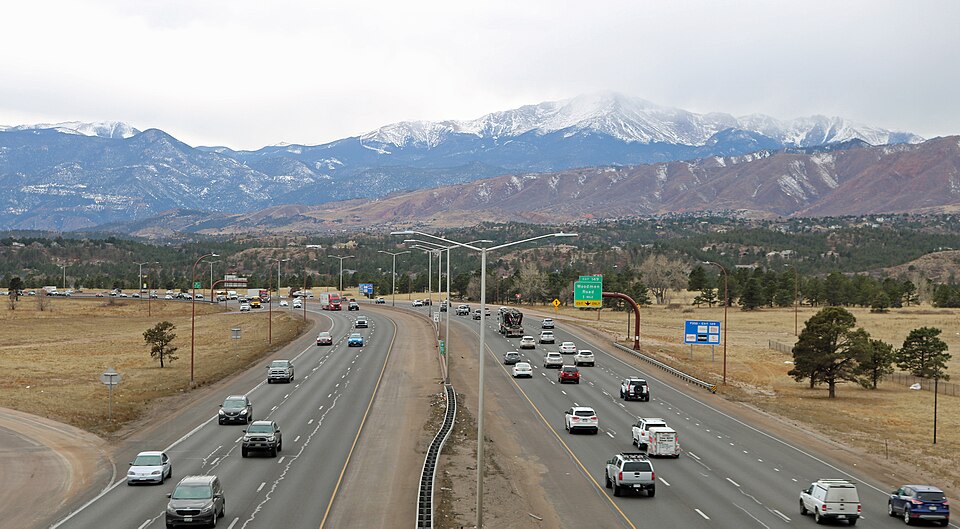
Photo by Jeffrey Beall, licensed under CC BY 4.0.
The Gen X George Carlin


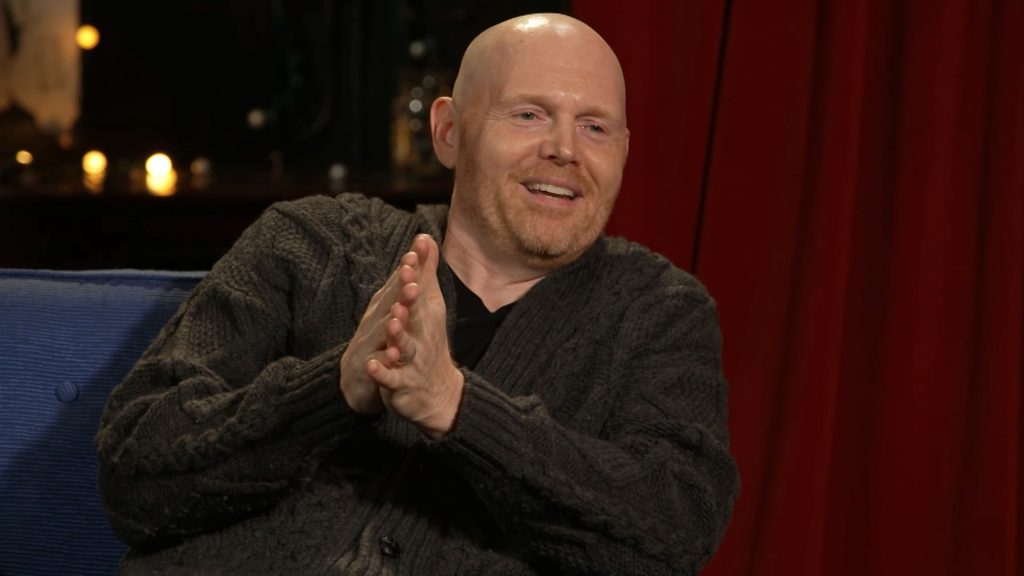
The long, and agonizing to witness, fall of Bill Burr has entered new depths.

The transformation reminds me of another once lethal comedian who became unfunny in his life’s third act.

George Carlin grew into a bitter, cynical, and nihilistic comic. It was a serious falloff from his humor in the 70’s and 80’s, which I admit still wasn’t for everyone.

I remember watching Carlin’s early specials replayed on HBO as a kid. His facial expressions, verbal cues, sound effects, oddities and writing were brilliant, and genuinely made me laugh.

I even recall where I was the day I learned he had died, June 22, 2008. Sitting in a local bar & grill with my aunt eating chicken wings. How many comedians can you say you recall such details about? For me, the only other one is Norm Macdonald’s passing.

Carlin allowed his growing cynicism to infect his act, that may be understating what has gone on with Bill Burr.

To be clear, this isn’t coming from someone who has never appreciated Burr’s work. I saw him live in a mid-sized theater about a decade ago. He did an hour and a half and it was fine, but still much softer than his specials from a decade prior to that, and he seemed to be sorting his way through the material as he went.

This was a man who once did a bit on stage about domestic violence. “They say every time after it happens, how there’s no reason to hit a woman. Now, I’m not saying you should ever do it. But no reason? There’s no reason??” It was darkly hilarious and acted out with passion and charm.

Contrast that with Bill Burr Presents: Friends Who Kill, the Netflix showcase where he MC’s and just shits on “Karens”, and by that he simply means white women. I got enough of a sense of what it was from Gavin McInnes and Anthony Cumia covering it rather than having to subject myself to the full experience. That was June of 2022. This collapse has been an ongoing thing, when was the turn? Covid seems to be the underlying inflection point. Yet, Burr is not simply a Covidiot.

A review of his 2025 Hulu special Drop Dead Years called him a therapeutic work in progress, figuring himself out in public. That was meant as a compliment. Burr agrees with the premise — he told Variety the special was the result of reevaluating his own past work, and described himself as a recovering meathead doing the best he can. So it wasn’t just the theater tour. He’s working material out in the specials too, on the eighth hour-long feature of his career, at 56 years old.

In September 2025 he went to the Riyadh Comedy Festival , which is the funniest thing I’ve seen him do in quite some time. Not that I have any issue with people taking Saudi money, I think it’s more admirable than taking Hollywood’s, but because it infuriated the very people he has been aligning himself with for roughly a decade. Top acts were reportedly paid as much as $1.6 million, according to Tim Dillon. Burr trying to reconcile his remaining fans’ anger with his willingness to forgo his new allegiances for a payday was fun to witness. 

He’s always played up the angry red-head comic, but now he’s far less coherent. He recently exhibited an inability to formulate even a basic question when interviewing The Strokes frontman Julian Casablancas on his podcast. Casablancas is no Captain Charisma himself these days, but the interview only got back on track when the singer began asking Burr questions about himself. Burr’s mind literally seems to have ceased its most basic functions in favor of distilling everything through his own self-loathing narcissistic impulses, at least from what can be gleaned on the surface. It’s a sure fire recipe for getting your wires crossed.

He also feels he can write off all criticism of his comedy as racist because he is in an interracial marriage. Which is, of course, preposterous. His comedy doesn’t fail to make me laugh because of who his wife is. It’s his constant mental gymnastics that seek to position himself as the counter-cultural voice of reason that fail to make him relatable to the people who once appreciated him. This negative feedback loop creates further cognitive dissonance that struggles to process how he became the one being labeled out-of-touch.

Bill Burr was never a comedic genius that rivaled the all-time greats. But he was funny. That’s no longer the case. Comedy comes from honesty, and when you can’t be honest about the world, you can’t satirize, mock, or lampoon its inconsistencies in a genuine way.

George Carlin stopped being funny and started being a very well paid doomer, more interested in showing the audience how smart he was for figuring the grand mysteries of the universe out on his own. Bill Burr has descended beyond that. The cringy content he is putting out today does however make for its own form of entertainment.

You won’t be seeing me at any of his shows in the future, but we’ll always have the Red Sox.

The Odd-yssey

Yes, the Honda Odyssey gag is an original meme. I’ll be posting more of these here on occasion — consider them the Sunday funnies or political cartoons of this publication.

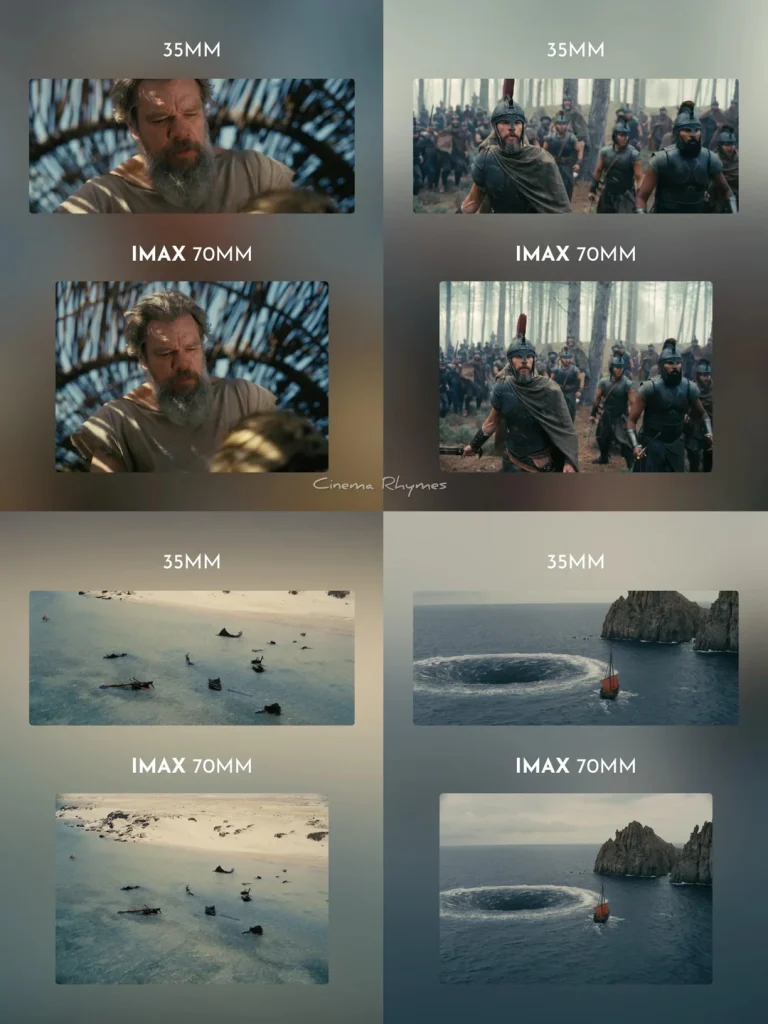
The Odyssey, the highly polarizing new film from director Christopher Nolan, opened yesterday. The media and establishment cinema sites have heaped praise on it, and reports have come out that Rotten Tomatoes is pruning user reviews to keep the score high. Meanwhile, I’ve heard plenty of dissenting opinions on social media taking aim at the dialogue, acting, pacing, and overall production. I’ve read there are a few big set pieces that genuinely wow, but the film itself is a genuine disappointment to many longtime Nolan fans — and then there’s a shocking wrinkle where IMAX viewers are getting a significantly better view of the film than everyone in a regular theater.

Here’s the short version of why: Nolan shot the entire film on IMAX cameras in the format’s full 1.43:1 aspect ratio — the tallest, most complete frame there is. But only a small handful of true IMAX 70mm theaters in the world can actually project that full frame. Everyone else is watching a cropped movie. Standard IMAX screens show it at 1.90:1. Regular digital and 35mm showings crop it down further still, to a conventional widescreen ratio. So depending on where you buy your ticket, you are not just getting a smaller screen — you are literally seeing less of the image Nolan shot. Same movie, meaningfully different film, and most people who buy a ticket this weekend have no idea which version they’re getting. And judging by the frame comparisons, the standard version of the film looks significantly worse. When has an artist of the craftsmanship of Christopher Nolan ever volunteered up their work to be circumcised by the aspect ratio of the vast majority of screens that will be displaying it? Stanley Kubrick famously sent theaters a written directive for Barry Lyndon in 1975, spelling out the exact aspect ratio projectionists were required to use and leaving no room for improvisation — which makes it all the more strange that a director as controlling as Nolan is letting The Odyssey go out into the world as two visibly different versions of itself.

One of the more interesting analyses I’ve come across is from Jonathan Pageau, who was highly impressed with the film and considers it, in his words, a Trojan Horse. Early in the film there’s a scene where the blind servant Eumaeus is training Telemachus in swordplay — the boy keeps getting beaten because his defense is too fast, so Eumaeus tells him to slow down, open his chest, invite the attack, and use his opponent’s own momentum against him. Pageau reads that as the key to the whole picture: Nolan does the same move on the audience, absorbing the blow of wokeness and inclusivity right up front so he can turn it back around on you by the end. His thesis, as I understand it: Nolan is aware of how repressive the current filmmaking environment is, has adopted that veneer to get the thing made and released, and has smuggled inside it a film that at its core is about the return of the father, the son inheriting his authority through an act of filiation, not revolution (as we have seen throughout the past decade in storytelling) and the restoration of an order that had been failed by the very people meant to guard it. The casting of Elliot Page, formerly Ellen Page, is intentional, as she represents Sinon (not from the Odyssey, from the Aeneid), the character who stays with the Trojan Horse to convince the Trojans that it is a gift. In this version, Sinon doesn’t know that this is a trick — he thinks it is a legitimate offering to Athena. Sinon is a shepherd, sent to war to fight as a “replacement man.” The casting being intentional by Nolan on two fronts: the Trojan Horse being delivered by the unaware, and because the character in the story is a stand-in for the real man who was to be tasked with this duty. 

Several great filmmakers have worked inside repressive environments and still gotten their real, human, and even subtextual meanings across. Tarkovsky wrestled with faith, despair, and spirituality inside the Soviet Union. Alfred Hitchcock built an entire career navigating around the Hays Code. Jafar Panahi has kept making films in Iran after being formally banned from filmmaking by the regime — one of them reportedly smuggled out of the country on a flash drive hidden inside a cake.

But a hidden message does not a great film make. A film is the cumulative result of thousands and thousands of interconnected decisions — palette, acting, script, atmosphere, mood, visual effects, and on and on. The mystique of movies is that all of those variables blend together, and the end result lives or dies on the final product that enters our eyes and ears. If The Odyssey really is an attempt to subvert the subversion, does that make up for the areas where the film is lacking in other categories? Each person must decide that for themselves.

Nevertheless — this still has not moved me to want to view the film in theaters, or spend any money in support of it, though I am open to the possibility of Pageau’s interpretation. I believe the film will continue to be used as a bellwether in the culture war playing out across the West. Whether it’s ultimately remembered as the high-water mark of Hollywood’s self-destruction, or as a brilliant Trojan Horse rammed into the heart of modern deconstructionist art, is a fate yet to be known.

Introducing Mr. & Priestess Kelce-Swift

Travis Kelce and Taylor Swift eloped this past Friday at a celebrity-filled ceremony in Madison Square Garden. The happy couple announced they plan to start a family.

This finally answers one of the biggest questions of the twenty-first century:

When will the Antichrist be born?