Famous San Francisco Giants broadcasting duo has called their last game. Mike Krukow is stepping down after 37 years in the broadcast booth.
After calling his final San Francisco Giants game, longtime broadcaster Mike Krukow was honored in a sentimental postgame ceremony in front of fans.https://t.co/7cAsWFLhn9pic.twitter.com/zQcqLI510q
As we head into the baseball postseason, with an interesting slate of wild card series set to begin on Tuesday, it’s a good time to take a minute to say goodbye to one of baseball’s most iconic announcing teams.
Mike Krukow and Duane Kuiper called Giants games together for 36 seasons. Kruk went public with his inclusion body myositis diagnosis in 2014, stopped traveling east of Denver by 2017, and eventually came off the road entirely — calling road games from a studio in San Francisco via “splitcast” while Kuip worked on-site.
They were fiercely defended by Giants fans, and when I would deride a friend about the commentary duo, he would get borderline apoplectic.
Whenever an established announcer leaves the game, we irreplaceably lose a piece of the era of baseball they were a part of.
I still mourn the loss of Boston Red Sox color man Jerry Remy, and the retirement of forty-two-year radio veteran Joe Castiglione. Neither the NESN nor the WEEI broadcasts are the same since their departure.
The Vin Scullys and the Bob Ueckers of the world come around once in a lifetime, there will be others to follow, and we may grow to love them as well, but they’ll always have the shadow of those that came before them to live up to.
At the conclusion of week two, there are now seven starting quarterbacks who are going to or have been missing time with injuries.
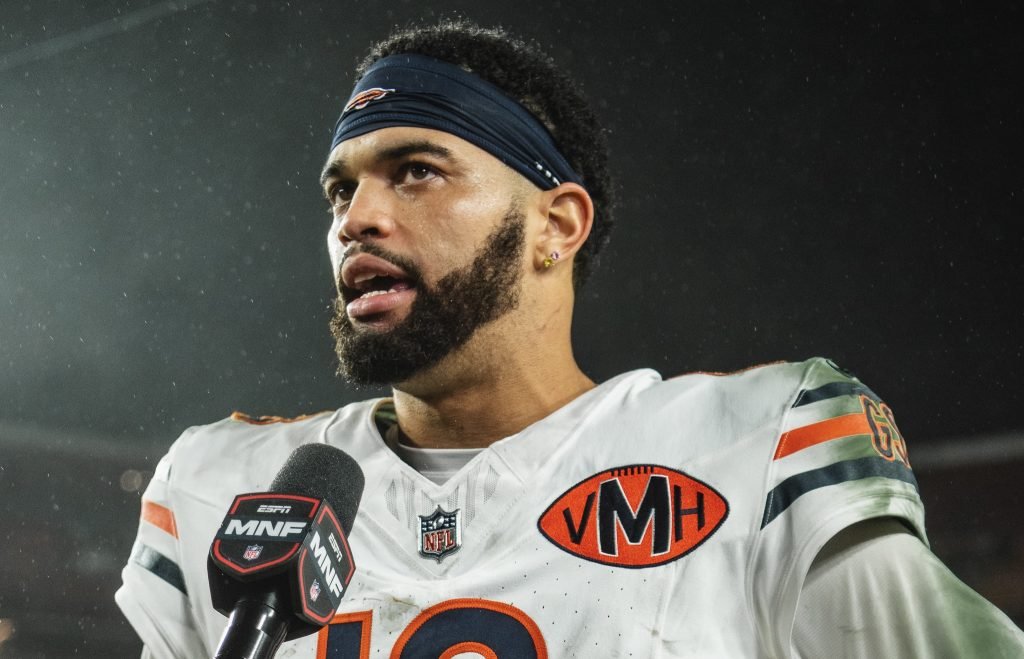
This includes Kyler Murray, Michael Penix, Caleb Williams, and Jayden Daniels.
Roger Goodell decided to continue his social justice stand this year by painting “End Racism” in the back of the end zones again, but he can’t even prevent the systemic racism in the league from wiping out his black quarterbacks.
It sounds preposterous, but it will probably be a topic of discussion on ESPN this week.
I tuned into the Monday Night Football game just long enough to see Jaxson Dart get injured for the Giants, and promptly tuned right back out.
One of the downsides of the league pushing offense and tailoring things to quarterbacks so heavily is that when they get injured, the desire to watch their games absolutely plummets. And the numbers don’t lie.
The major disparity around the league has been between the haves and have-nots when it comes to those rostering a franchise quarterback. There aren’t 32 human beings on earth who can play quarterback at an elite level in the National Football League, and when the ones who can are getting injured en masse at the beginning of the season, it creates a substantially less watchable product.
Thursday Night Football will now feature Michael Penix Jr. starting for the Falcons against the Packers in his first game back after tearing his ACL in week 11 of last season, and Monday Night Football will likely showcase Tyson Bagent under center for the Bears against the Eagles.
Sure, there’s always a chance that somebody steps in and becomes the next Tom Brady. That chance is about one in a billion, but sure, there’s a chance. In the meantime it will produce a lot of lopsided games that end up being stuck in national broadcast and primetime windows.
Sunday Ticket is a huge revenue driver for the league, but it also inhibits them from adapting to these changes on the fly. College Football has every game available on network, cable or ESPN streaming, and will always have the week’s best matchup on national TV.
SATURDAY CAN'T COME SOON ENOUGH 🍿
For the first time since Dec. 1, 2023, there will be SIX AP-ranked games on the same day 🤯🔥 pic.twitter.com/Jzk9DaXUSh
This Saturday, there are six AP-ranked games, the first time it’s happened since 2023. Networks being able to adjust which games are on which windows also gives them an advantage over the NFL. The NFL has the “flex” system to replace bad primetime matchups with better ones, but it’s rarely used and creates more headaches for fans who have already made travel arrangements to see games.
Expect Roger Goodell to introduce a few more rule changes to protect his cash-cow-quarterbacks even further.
The core idea behind the Clarity Act is to clearly define how the government would approach different types of cryptocurrencies and blockchain projects, and give specific roles to the regulatory agencies, including new authority for the CFTC to be a watchdog for crypto spot markets. — CoinDesk
It was unlikely that Democrats would approve anything that President Trump could point to as a victory this close to midterms, in spite of the fact that they essentially got all of the changes to the bill they asked for.
Senate Democrats trying to figure out how to vote NO on the Clarity Act after receiving over 120+ wins and a majority of their ethics requests.
The time for negotiating is over. Let's vote. Let's pass this strong, bipartisan bill. pic.twitter.com/XRaQY5ibT3
This bill does not specifically apply to Bitcoin, which in my article Bitcoin Brain, I defined as something of a blockchain red herring. This bill is about the rails underneath the coming financial system. It never mentions ISO 20022 (the messaging standard the banks have already moved onto) but it decides which tokens are securities under the SEC and which are digital commodities under the CFTC, which is the question the SEC and CFTC already answered for the ISO 20022 coins like XRP in a joint interpretation this March — this bill would write it into law.
Running a validator or staking to secure a network would not, on its own, count as a securities transaction. Exchanges couldn’t pay yield on stablecoins just sitting in your account, but rewards tied to actually using them would still be allowed. Clear rules of the road — the thing institutional money has been waiting on.
Don’t forget – Ripple and XRP stand on settled ground. The 2023 federal Court ruling established XRP is not a security.
And in March the SEC and CFTC issued a joint interpretation naming XRP a digital commodity. SEC Chairman Atkins and a CFTC Chairman Selig understand these… https://t.co/63ML5xmbAP
The SEC and the Commodity Futures Trading Commission (CFTC) have stated that they are moving forward with their own regulations and rules on the implementation of this technology into the financial system.
Adoption is inevitable.
🇺🇸 LATEST: Former CFTC chair Chris Giancarlo says the SEC and CFTC are set to build crypto rules despite the CLARITY Act's Senate setback, Eleanor Terrett reports. pic.twitter.com/jSXIjQozoi
Along with the ‘mainstreaming’ that is going on, certain influencers seem to have gotten the call that the time to inject this into the collective consciousness has arrived. Including Alex Jones. Alex famously states that he predicted 9/11. My question in response to that is, who gave him that information? He’s been a vessel for seeding information prior to significant events for decades, and now he has this to say:
Alex Jones explains WHY he's so bullish on ripple:native:
"XRP has been chosen by the majority of globalist banks and institutions and governments to be the main mode of exchange. So, it's not hard to pick it as the winner." pic.twitter.com/h1i4GVlmSt
This is ironic to me, as The Art of the Empire’s in-universe conspiracy podcaster, Dax Winters, interviewed a man who created a technology not dissimilar from the XRP Ledger. It happens in chapter 16 ofThe Ghost Ledger, book one of TheArtof the Empire series.
In some ways, it feels like the book has either predicted this, or memed it into existence. Of course, I say that with all due humility.
And for those interested, the first draft of its anticipated sequel, Project Naked Sky, has been completed, with a launch date that may still make the end of the year. The surge in post-production work on the manuscript is partly to blame for the reduction in publishing on this site the past few days.
Check out Dax Winters of The Dax Winters Experience interviewing Jonah Kaplan of SunChain Ledger from The Ghost Ledger for a little humor, and a breakdown of the possibilities offered by distributed ledger technology:
TheDax Winters Experience #1206: THE ALCHEMIST – Featuring Jonah Kaplan
Dax leaned into the desk; fingers interlocked.
“Tonight’s conversation isn’t about Bitcoin. It’s not about Dogecoin. It’s not about your favorite meme token of the month. It’s about what happens after all that. When crypto doesn’t just interrupt the financial system, it becomes it.”
He tapped the desk lightly. No theatrics — just message.
“My guest tonight isn’t trying to build a fanbase. He’s trying to rewire the financial nervous system of the entire world. If he’s right, we’re looking at the end of capital bottlenecks, settlement delays, and debt as we know it. If he’s wrong… he’s just the smartest lunatic I’ve ever had on.”
He smiled faintly.
“Either way, you’re going to want to pay attention.”
The screen split.
On the left: Dax in perfect studio lighting, sharp and composed. On the right: a dim office space — a converted lab turned cryptographers sandbox, cluttered but functional, lit by half-watt fluorescents and the soft blink of diagnostic LEDs.
Jonah Kaplan looked like he’d been dragged off a quantum rail project mid-debug.
Faded hoodie. Wireframe glasses. Hair half-tied back. He was scribbling on a tablet with one hand and adjusting something off-screen with the other when he noticed the stream was live.
“Jonah,” Dax said, grinning. “You’re with us.”
Jonah looked up. “One sec. The cooling node on the validator rig just threw a spike. Probably nothing, but I’d rather not start a fire during the interview.”
He leaned out of frame. A sharp metal clack, then silence.
“There we go,” he said, slipping the tablet off. “Sorry. Didn’t mean to be rude.”
“No worries,” Dax said. “You’re famously terrible at introductions. So, I’ll do it.”
He turned slightly toward the camera.
“This is Jonah Kaplan. Some of you know the name. Most of you have no idea how close this guy came to getting disappeared by the same people who now host blockchain conferences for G7 countries. He built the SunChain Ledger. He’s the architect behind its native token, the RAY protocol. He walked away from a classified DARPA lab project in 2014 and started uploading pseudonymous whitepapers that half the industry dismissed — until his code started exposing all the warts in commercial payment rails.”
Dax leaned back, letting that settle.
“He’s not here to pump anything. He’s here because he understands what the world is choking on — and what might clear the air.”
He turned to the screen. “Jonah. Let’s cut through the buzzwords. What is SunChain?”
Jonah nodded once, as if flipping a mental switch.
“It’s a distributed ledger system optimized for frictionless settlement. Global, instant, trustless.”
“Okay,” Dax said, “Talk to me like I’m a CFO. What’s it actually do?”
“It replaces the financial middle layer,” Jonah replied. “All of it. No more days-long wire transfers. No more Swift. No more needing Visa to approve a purchase at midnight on a weekend. If I send money to you across the world — it settles instantly. No bank has to ‘clear it.’ The validators handle that.”
“And what are validators?”
“Decentralized nodes,” Jonah said. “No central server. No third-party clearinghouse. Each node verifies transactions independently. If enough of them agree — the network accepts it as true. The transaction locks in.”
“Why does that matter?”
Jonah’s eyes lit slightly.
“Because right now, we have trillions of dollars locked in escrow accounts. Corporations, banks, governments — they all keep money parked just to cover delays and settlement lag. SunChain removes the lag. That capital comes back online.”
Dax whistled softly. “You’re saying it frees up—”
“Global liquidity,” Jonah said. “That’s the first domino.”
Dax leaned back. “But hang on — for the folks at home who think blockchain is just internet monopoly money — break it down real simple. What is this thing?”
Jonah’s eyes lit up slightly, shifting into teacher mode.
“Think of it like a ledger — a record book. But instead of one bank keeping their own private ledger that only they control, this ledger is copied across thousands of computers worldwide. Every transaction gets recorded on all of them simultaneously. You can’t forge an entry because everyone has the same copy. You can’t delete history because it’s written everywhere at once. And you can’t shut it down because there’s no central office to raid.”
“So, it’s like if everyone in town had an identical copy of the same checkbook, and they all had to agree before any check cleared?”
“Exactly. Except the whole world is the town. And once something’s written, it’s there forever.”
Dax nodded. “And the RAY token?”
“We called it RAY — Reciprocal Asset Yield. Because that’s what this is. Not interest. Not speculation. But a mutual return. You bring value into this ecosystem — RAY makes sure it’s reflected back.”
Jonah adjusted his glasses before continuing.
“It does that because it’s the transfer medium,” Jonah said. “You use RAY to bridge currencies, move value, tokenize assets. And I don’t just mean money. Real Estate. Commodities. Contracts. A shipment of wheat. An intellectual property license. A national bond. If it can be tracked or priced — it can be tokenized and traded 24/7 with no intermediary.”
“You’re talking about a 24/7 global trading desk for everything,” Dax said.
“Yes,” Jonah said. “On-chain, in real time, with zero counterparty risk.”
“Debt?” Dax asked.
Jonah didn’t blink.
“Already solved.”
“No shit? Go on.”
“We tokenize it. The U.S. doesn’t need to owe China anymore. Think Digital Treasuries issued as blockchain assets — fully transparent, interest-bearing, with built-in terms. America can sell that debt on a global market instantly. Anyone in the world can hold a piece; sovereigns, investment banks, retail traders. You remove the geopolitical hostage element — and you gain velocity.”
Dax narrowed his eyes.
“What about the fifty billion RAY tokens still locked up in escrow? You’re telling me SunChain Labs doesn’t control more than half the total supply?”
Jonah didn’t flinch.
“That escrow exists for a reason — over-the-counter sales, seeding the ecosystem, supporting startups that build on our rails. Those coins are time-released. No dumping, no market shock. Structured allocation only.”
Dax cocked his head to the side.
“To who?” Dax pressed him.
“Is it major banks? Remittance networks. Institutional partners. I’ve heard some big players are already under NDA. But I’ve seen names — Western Union, Wall Street firms… even the Fed has been floating the idea of replacing SWIFT.”
Dax shook his head slightly and continued.
“I mean, all of that said, RAY is sitting there at thirty-seven cents right now. Some people think it’s a dead coin.”
The left side of Jonah’s mouth curled slightly.
“There are real-world use cases for RAY, including the ones you just alluded to. Several adoption agreements are waiting on regulatory frameworks. I can’t comment beyond that.”
Dax paused. A silence, weighty and measured, then he spoke.
“Let me tell you who’s trying to hold them.”
The lighting on Dax’s side of the screen dimmed a touch. The studio map shifted — red pulses overtaking blue on the LED screen.
“You think the people at the World Economic Forum haven’t heard this pitch? You think the bankers don’t want real-time settlements — as long as they decide what settles and who gets to transact?”
He held up a finger.
“CBDCs. Central Bank Digital Currencies. Sound familiar? Same tech. Different leash. Instead of open, neutral, and voluntary — it’s mandatory, programmable, and surveilled. You post the wrong meme? They freeze your account. You didn’t take your booster? You can’t board the train.”
Jonah stayed silent. He knew this part of the conversation was de rigueur for a Dax show appearance.
“This interview isn’t about crypto,” Dax said, turning back to the lens. “It’s about control. Either we build a system that liberates… or they’ll build one that enslaves.”
The 2026 NFL season kicks off tonight with a rematch of February’s Super Bowl. The Seahawks unveil their second banner while the New England Patriots visit. We’ll see the debut of A.J. Brown in a Patriots uniform, and Mike Vrabel’s first regular season game coaching since his six year affair with The Athletic’s NFL Insider Dianna Russini was exposed this spring.
The Seahawks should enjoy the ceremony this evening, as Washington has adopted a new “Millionaires Tax,” charging a 9.9% rate to all earnings over $1 million. This will effectively give them 5-7% less cap space per year, depending on their road schedule. It doesn’t take effect until 2028, but it is going to be a consideration every player and agent makes when they sit down to sign a contract in Seattle. This will also be their first game since announcing new ownership. And it’s not very promising either, Vinod Khosla talked lavishly about being a diehard Steelers fan and still watching every one of their games in his introductory presser.
The NFL used to be a way of life for me. I knew nearly every rostered player, would study mock drafts and prospects for months in the spring, knew every coach and most of the coordinators. A lot of that luster has faded. If I had to sum up the reason why, I’d simply say, Roger Goodell. He has been a poor steward of the game in my estimation. I’ll happily dive into that topic another day, but a perfect example is him fining running backs for lowering their shoulder and delivering contact to a defender.
While the NFL isn’t the draw for me it once was, I still like to follow the sport, and in particular like to follow teams with interesting storylines, exciting players, or just straight up trainwrecks I can’t look away from. Teams that actually make the game fun. Matchups, announce crews, broadcast windows all play a factor in whether I tune in or not, but a major factor is whether the teams are actually enjoyable to watch. So without further ado, here is the official 2026 Football Fun Index.
Honorable Mentions
Las Vegas Raiders
In my Pro-Am Triple Crown article, the Raiders were described as a potentially ascendant team with a possible franchise quarterback to be, first overall pick, Heisman trophy winner and National Champion, Fernando Mendoza. But he’s only a part of why they make the list. New acquisitions in free agency, highly talented returning players in Brock Bowers, Maxx Crosby and Ashton Jeanty, and Super Bowl winning offensive coordinator from the Seahawks, Klint Kubiak, in as a first year Head Coach. Also, Kirk Cousins starting the season under center. The new building in Vegas hasn’t played host to a relevant Raiders team yet, and this could have the foundations of getting there in the next few years.
Pittsburgh Steelers
This is it for Aaron Rodgers, back for one more rodeo along with his former Packers Super Bowl winning coach Mike McCarthy, he takes over after Mike Tomlin stepped down at the end of a 19 year run that saw him win a Super Bowl and never once post a losing season.
Rodgers has a talented defense, some new pieces on offense in Michael Pittman Jr., Rico Dowdle and rookie second-rounder Germie Bernard, and has been all smiles since the Anthony Fauci Covid Chronicles were released and the beleaguered former NIAID director invoked the fifth amendment 111 times in a Senate hearing, even though Joe Biden had already handed him a preemptive pardon.
Buffalo Bills
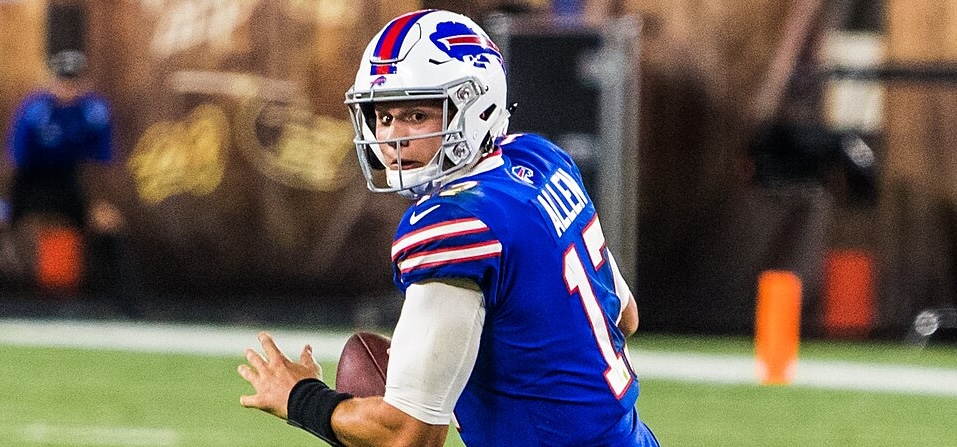
A new stadium, a new head coach, and an old familiar curse. Coach Joe Brady steps into the head coaching role after two and a half seasons as the play-caller for the Bills with the most pressure of any new coach in the league. It’s super bowl or bust for Buffalo, and with a roster that isn’t at the caliber of the other top NFL teams, and an opening five game slate that includes Houston, Detroit, LA Chargers, New England and LA Rams, the Bills could be in a tough position heading into their sixth game in Las Vegas.
But they return Josh Allen two years removed from an MVP season, a true X receiver in DJ Moore, Bradley Chubb and TJ Parker on the edge on defense, and plenty of reason for optimism. I will say, as a Bills fan, their games are only fun when they’re winning. With a tough schedule and little room for error, that could break either way early.
Now onto the top five:
5. New York Giants
This pick may surprise people, but the pieces are in place for something special to begin. First year Head Coach John Harbaugh takes over in New Jersey after 18 years at the helm in Baltimore. Including a super bowl title during that reign. Second year QB Jaxson Dart, fresh off his introduction of the President of the United States that humorously caused a media meltdown, and a brain dead response from teammate Abdul Carter, they have some serious weapons on both sides of the ball. Along with Carter, the pass rush looks stout with Kayvon Thibodeaux and Brian Burns, and as a group they’re probably the best set of edge rushers any team in the league can put on the field. I also think they drafted the best player in the rookie class in Arvell Reese all the way down at number 5 overall. Reese played all linebacker positions for the Buckeyes and has too much athleticism and instinct to not produce on sundays. They also drafted Francis Mauigoa at tackle from the U at number 10. They get elite WR Malik Nabers back from an ACL, and football maniac Cam Skattebo back from a dislocated ankle, fractured fibula and torn deltoid ligament suffered in Week 8 against Philadelphia. How effective they’ll be this year post injury remains to be seen, and they still have the turf of doom that causes so many of these injuries to play on.
4. Detroit Lions
As long as the o-line holds up, I’m calling the Lions being back. Too much talent, too much pride, and too much grit to stay down. Dan Campbell should have his team back in the hunt. I look forward to their games, have plenty of favorites in their roster (Penei Sewell, Aidan Hutchinson, Sam LaPorta, Jack Campbell), and giving them back their underdog status could produce the chip on their shoulder needed to take the next step.
3. Los Angeles Chargers
I love Jim Harbaugh. He’s a football psychopath. It was just a matter of time before he corrected the ship after being hired back to the league from Michigan. There are serious pieces there, and the added dynamic of bringing in Mike McDaniel, the anti-Harbaugh as a head coach, as Offensive Coordinator could give them an explosive and dynamic point-scoring machine they haven’t had under Harbaugh’s current regime. Looking forward to how their season plays out.
2. Chicago Bears
Da Bears are back. Will they compete for a Super Bowl? I highly doubt it. Ben Johnson is the best young coach in the league, and he gets to show off what year two in his program looks like. Caleb Williams has been appearing in public with a more masculine look, and even showing up sans nail polish, so you better believe the NFC North has been put on notice. This team won seven games last year after trailing inside the final two minutes. Plenty of weapons on offense in Rome Odunze, Luther Burden III, Colston Loveland, Cole Kmet and D’Andre Swift, but a defense that got gutted this offseason, losing Tremaine Edmunds, Kevin Byard, Jaquan Brisker and C.J. Gardner-Johnson. While the Bears have a lot of positives, questions about that defense keep them from the top spot. There’s also the fact that DJ Moore is now in Buffalo, so Odunze will have to step into a larger role.
I have been a Rams hater for a while. In my opinion, they appeared to have been gifted the Super Bowl against Cincinnati with endless last drive penalties until they finally got the game winning score. The conspiracy portion of my brain (essentially the whole thing), thought they did so because the Super Bowl was in LA, the Rams had moved back there and weren’t gaining traction, and in crowning them the fairweather fans of the region could hop on board.
Something else that gave me a sour taste was Matt Stafford’s wife going on a podcast to brag about running around with Matt’s backup quarterback at Georgia to make him jealous. Yuck.
On top of that, when Amazon secured Thursday Night Football in a landmark deal with the league, they offered the color commentary position to Sean McVay, who was at the time considering stepping aside from coaching. Instead the position went to my least favorite announcer on earth Kirk Herbstreit. Now Americans are forced to endure his commentary for both the Thursday night game, and the ABC primetime college football game on Saturday, as well as his presence on College Gameday if they’re so inclined to watch that. Personally, I’m more of a Big Noon Kickoff guy myself. Brady Quinn, Matt Leinart and Joel Klatt clear the Gameday crew, even though I love the addition of Nick Saban. McVay could have saved us from Herbstreit, and for that I held a grudge.
But the time to bury the hatchet has come, in spite of Herbie, I’m glad that McVay, who is a brilliant football mind, is still coaching in the league. And the addition of Myles Garrett and the return of Aaron Donald, and cornerback Trent McDuffie have their defense looking nicey. We can’t forget Puka Nacua, who is coming off an all time offseason where he appeared to be inebriated at a UFC card this spring, was sued over an alleged biting incident and an alleged antisemitic remark, entered rehab, and is out in time to rejoin the Super Bowl favorites.
It’s clear I’ve had my issues with this team in the past, but things change. There’s no question they will be the team to watch this year. Their owner Stan Kroenke also just liberated the baseball world from Arte Moreno’s disastrous 23 year tenure as owner of the Angels, and if the Rams can keep the Chiefs, Ravens or Eagles from winning it all, isn’t that a good thing?
The Rams are must see TV, they take the top spot on this year’s index, and they start their quest for the Lombardi tomorrow night in Melbourne against the 49ers.
I’ll have my eye on all of these teams as the season gets underway.
My Super Bowl Prediction:
Lions over Bills
Bills finally get back to the big game, and a curse is at long last ended, but in ironic fashion that only Bills Mafia can truly appreciate, the curse that is broken belongs to their opponent, and the Lions grab their first ever Lombardi trophy.
The conservative party in power has actually presented something that would help the American family.
The Department of Health and Human Services is drafting a rule change that would pay married parents roughly $9,000 a year per child to stay home and raise them. The money comes out of the Child Care and Development Fund, a $12 billion Clinton-era program built to pay for daycare so parents could go to work. To qualify you have to be married, and one spouse has to be putting in at least 35 hours a week. It doesn’t need a bill or a vote — just White House sign-off and a comment period.
This, if followed as presented, would be one of the most pro-family policies to come out of Washington since the mid-20th century.
“Parents who bear the toil, expense and opportunity cost… currently get zero.” — Roger Severino
When our birthrate was declining, I found it mighty peculiar that the only remedy presented for this problem was infinite immigration from all parts of the non-westernized world. It certainly wasn’t to create policy that encouraged and enabled the native population of the nation to start families. (Yes, Americans are a nation. It was considered people living in America of European descent.) Hungary has offered tax incentives for having children — mothers of four or more have paid no income tax for life since 2020, and Orbán has since dropped that threshold to two. Russia pays lump sums for births with regional bonuses stacked on top. China ended the one-child policy in 2015 and finally started cutting checks last year — 3,600 yuan, about $500, every year until the kid turns three. That’s real money in a country where the average rural person lives on about $3,500 a year.
Why worry about the people of your nation reproducing when there’s billions of people ready to flood into your country that you can hand jobs and small business loans to! The SBA refused to even list country of origin for these loans they’re giving out. To this administration’s credit, the SBA finally shut that window in March. Green card holders are barred from 7(a) loans entirely now. It only took until 2026.
The key element of this childcare rule change that must be maintained for it to actually be a “pro-family” policy, is that it must only apply to married individuals. Married-couple households were 74% of this country in 1960. They’ve been under 50% since 2010. Children born to unwed mothers went from 5% to roughly 40% across the same stretch, and the share of kids living with only their mother nearly tripled. It’s as if the Great Society had the opposite effect of its title. The numbers don’t lie.
Automation and AI are coming and will utlimately wreak havoc upon the labor market once the new paradigm is built. The people who want to sell you the idea that “they’ll just create new jobs, someone has to work on the robots!” Yes, someone does have to work on the robots, and at some point it will be another robot. In the meantime, one mechanic servicing a fleet of 500 robots who have replaced 3 human workers each does not offer industrial revolution labor growth.
A lot of people are going to be out of the work force anyway, moving into familial support roles is the most desirable outcome.
This would pair perfectly with a home-school voucher in the $7k per child range. Public schools spent $17,619 per pupil in FY2024, the highest figure ever recorded. The federal slice of that is about $2,500. Tearing down the indoctrinating and ineffective school system would help accelerate the nation’s flight from the grasps of cultural marxism.
Private, cooperative and religious schools would thrive. Sure, the inner cities would be a mess, many of the kids wouldn’t be able to pass basic reading or mathematics proficiency. Oh wait, we’re already there. Five percent of Detroit fourth graders were proficient in reading in 2024. Cleveland was at eight. Nine percent of Baltimore eighth graders were proficient in math.
My instincts, or political whiplash conditioning, tell me this may be another policy that will have been presented first as a good idea, get railroaded by the media and the Democrats, then get walked back, turned into something completely ineffective, and yet still victory will be declared.
But that is certainly not my hope.
This change is one that is worth fighting for.
“Don’t ever take sides with anyone against the family again.” — Michael Corleone
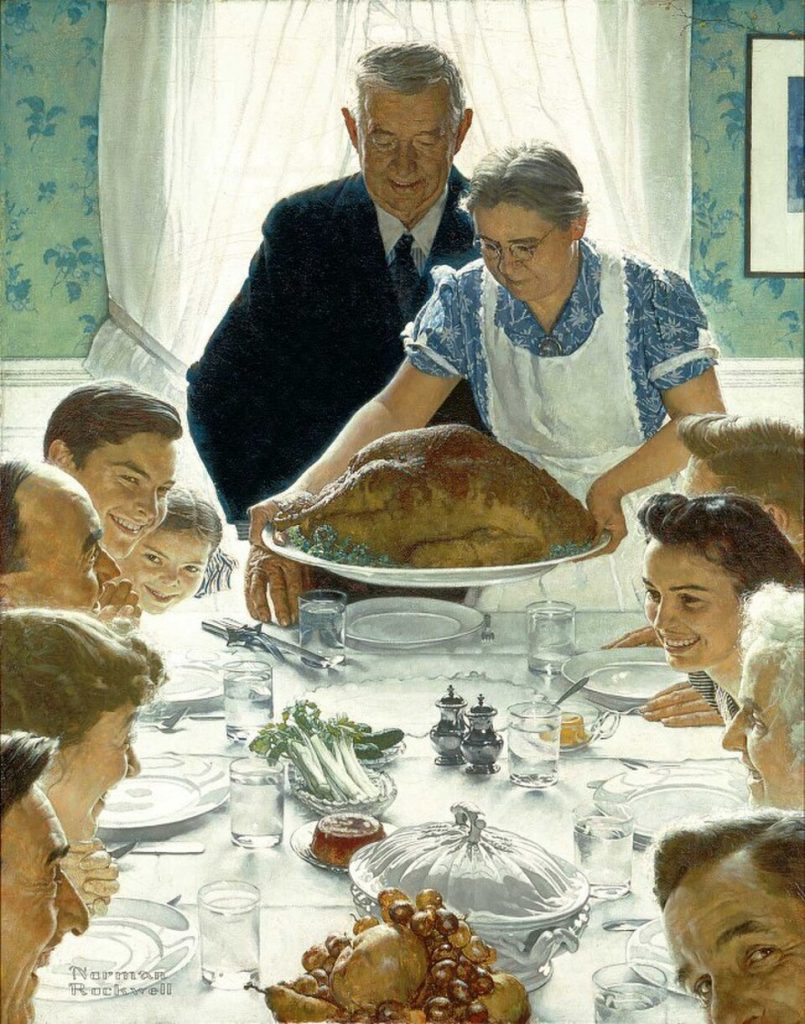
Photo: Norman Rockwell, Freedom of Want (1943), public domain.
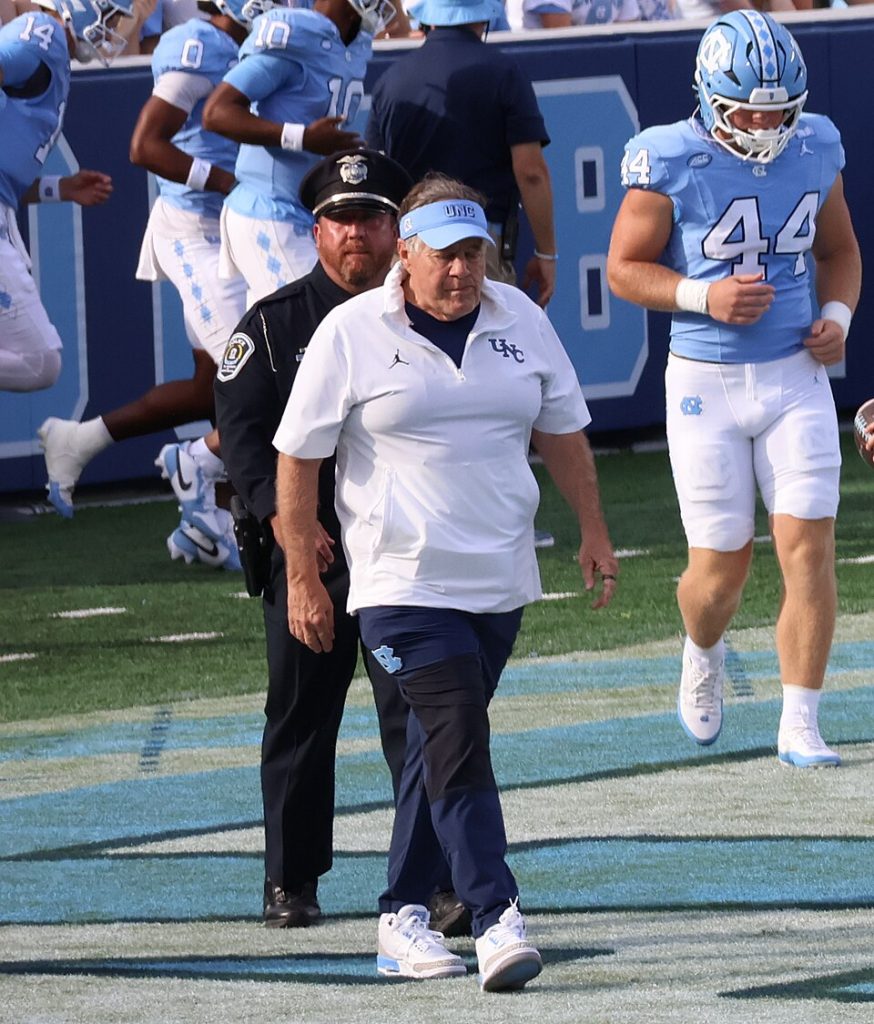
North Carolina came in at number two on our College Football Crisis Rankings, and that may need to be elevated after a decent showing by number one ranked CU last night, oh, and this absolutely insane report about the Tar Heels that came out before the Buffaloes kicked off.
University of North Carolina football general manager Michael Lombardi, the highest-paid general manager in college football, resigned Thursday after a tumultuous tenure in Chapel Hill working alongside Bill Belichick, the university said.
But the investigation is still ongoing, and lawyers hired by the university are now focused on behaviors by defensive coordinator Steve Belichick, people familiar with the investigation tell WRAL.
Colorado went into Atlanta and beat Georgia Tech 14-13, Julian Lewis hitting Charlie Williams for the go ahead touchdown in the final minute. Then blocked the Yellow Jackets’ attempt at a game winning field-goal to secure the victory.
Amazingly, both teams began the season 1-0. Another reason that College Football is the absolute best.
University of North Carolina – Chapel Hill is one of the most epic party schools in the country. And that’s just the Football staff.
Self-described Football Genius, Michael Lombardi abruptly resigned as UNC’s general manager Thursday, a month after being placed on paid administrative leave, and hours before WRAL published what the investigators have actually been asking about. Lawyers hired by the university have been questioning people about whether defensive coordinator Steve Belichick used drugs on the job, or handed them to at least one player. Steve has been on medical leave since early August.
And that’s only half of it. The same lawyers have been asking whether a female member of the recruiting staff had a sexual relationship with a player, and separately, whether assistant coaches were sleeping with the recruiting staff.
Can we add this to the list of benefits to come from women being shoehorned into coaching and staff positions in this sport?
“The head coach’s tenure has generated far more off-field headlines than on-field success.” — WRAL
Bill being Bill, he appears unfazed. And honestly, that’s part of what I love about the guy. The fact that the media, in particular the Boston sports media that has been trying to claim his scalp for years and continues to do so while he’s down in Chapel Hill, still can’t get him to change, apologize, or bow down to their demands. I loved the surly, poker-face press conferences he gave in New England. But I will not pretend he hasn’t done irreparable damage to his reputation since Brady left Foxborough. And many would argue, it wasn’t too hot back then either. In this case, things appear to be getting uglier than they did in Foxborough, Aaron Hernandez aside. And still, they got pretty ugly.
People thought Bill having a 25 year old girlfriend was the craziest thing about the situation. Chapel Bill, one of the many nicknames that he trademark-rushed the second he took the UNC job, or as I am dubbing him, Boner Pill Bill, is the staff member who appears to have his personal life the most together. But clearly his efficacy as the leader of a Power 4 football program is abysmal.
NEW: Bill Belichick's 24-year-old girlfriend Jordon Hudson interjects & shuts down a question during the middle of an interview on CBS.
This is wild.
Hudson reportedly interrupted multiple times.
Interviewer to Belichick: "How did you guys meet?"
Having first-year Tar Heel Offensive Coordinator Bobby Petrino in the house for this really is the perfect garnish. Arkansas fired Petrino for cause in April 2012 after he laid his Harley down on Highway 16 with 25-year-old Jessica Dorrell on the back. He held a press conference two days later in a neck brace and said he was riding alone.
Dorrell was a former Arkansas volleyball player he had just hired onto the football staff at $55,735 a year, picked out of 159 applicants after an unusually short search, four days before the crash. He had also given her $20,000, which she used to buy a car. The state police report was about to go public, so he finally told his athletic director. He lost an $18 million buyout over it.
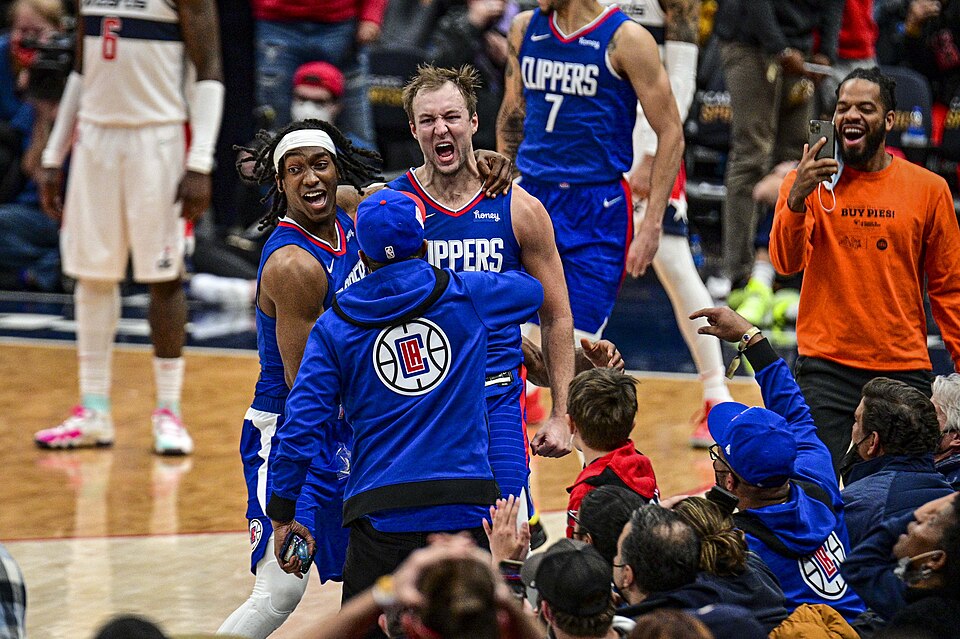
The Los Angeles Clippers have been handed the basketball equivalent of the death penalty.
The NBA has stripped the Los Angeles Clippers of five first-round draft picks and fined owner Steve Ballmer $30 million at the conclusion of its probe into allegations that All-Star Kawhi Leonard received impermissible benefits during his tenure with the team in violation of the league’s salary cap.
The league is also fining Leonard $700,000.
The NBA announced the decision Wednesday. The Clippers will be stripped of first-round picks in the 2029, 2030, 2031, 2032, and 2033 NBA Drafts.
The league is also suspending Ballmer “from all league and team activities for one year.” — Yahoo Sports
And that’s just the top of it. Gillian Zucker, president of business operations, suspended a year without pay — directly culpable, and she lied to investigators. Lawrence Frank, president of basketball operations, six months. Five years of league compliance monitoring. Kawhi’s uncle and former business manager Dennis Robertson barred from doing business with NBA teams on behalf of any player for five years.
Here’s what they were accused of doing. Ballmer put $50 million of his own money into a “green bank” called Aspiration in September 2021. Later that month the Clippers announced a $300 million partnership with the same company. In April 2022 — nine months after Kawhi signed a four-year, $176.3 million max deal — Aspiration signed Kawhi to a four-year, $28 million endorsement contract through his LLC, KL2 Aspire. The contract let Kawhi decline to do anything the company asked. It also voided if he left the Clippers. Aspiration went bankrupt, its co-founder is doing 14 years in federal prison, and Kawhi never publicly endorsed a thing. Pablo Torre reported it, and won a Pulitzer for it. The league’s outside law firm spent a year confirming the details. Aspiration wasn’t alone either — investigators found the same pattern with Boingo Wireless, Daktronics, and Lockton, all of them doing business with the team. The Clippers also covered personal expenses for Kawhi and his family.
“I am deeply disappointed by the flagrant violations of our rules” — Adam Silver
The team shows no signs of surrender. “We vehemently reject the NBA’s findings” — the Clippers, who called the investigation biased and built backward from a predetermined conclusion, and said what the league told them privately doesn’t match what it announced publicly.
Statements from the Clippers and Kawhi Leonard, taking VERY different tones. Clippers saying they "vehemently reject" the NBA's findings & "heavily biased investigation." Meanwhile Kawhi – "I accept full responsibility for lapses in judgment by people within my inner circle." pic.twitter.com/klnm3vAN79
Now compare this to last October. The FBI arrested Blazers head coach Chauncey Billups and Heat guard Terry Rozier on the same morning, 34 people indicted across two cases, rigged poker games backed by the Mafia and insider prop betting on a player faking an injury. Actual crimes. Federal indictments. And what happened to Portland and Miami? Nothing. The league put two men on leave and let the franchises walk. Jontay Porter got a lifetime ban in 2024 and Toronto didn’t lose a second-round pick over it.
Gambling gets individuals in trouble, touching the salary cap gets your franchise gutted for a decade. The NBA actually does draw the line somewhere, at least there’s that.
Ballmer is the white knight who rode in to save the league from Donald Sterling. April of 2014, Sterling’s silly rabbit — her words, V. Stiviano on national television, to Barbara Walters — recorded him telling her not to bring Black people to Clippers games, Magic Johnson by name, and the tape went to TMZ. Adam Silver banned him for life, fined him the maximum $2.5 million, and moved to force a sale. Shelly Sterling had her husband declared incapacitated and sold the team to Ballmer for a then-record $2 billion. Twelve years later another scandal has rocked the team and the league.
Steve Ballmer made his fortune as a pitch-man for Windows. Not a software or engineering background, he did what the nerds can’t always do (Steve Jobs not included), he moved fucking product.
Ballmer paid $2b for a new super state of the art arena in Inglewood, and he is barred from watching his team in it for the next twelve months.
He should have placed a bid on the Angels to keep him busy in the meantime, he has the scratch lying around.
I like Steve Ballmer, he’s an absolute psychopath in a way that makes for great content and sports radio fodder. And he is obsessed with winning, something sports fans claim to want from their owners more than anything else, well that and paying for their own stadiums, which Ballmer also did.
Five first round picks being stripped away, plus California’s 13.3% tax rate, and the big brother Lakers still being the A side in town, the Clippers need a miracle to compete for a title again in the next decade.
But I guess when you put it that way, the sanctions may end up having little effect on them.
This week X, formerly Twitter, began the rollout of X Money. This has been something I have been anticipating since Elon Musk purchased Twitter for $44 billion in 2022.
“X Money is designed to make traditional bank accounts unnecessary for users.” — The Paypers
X Money is not simply a feature of X, but may be the reason Elon acquired the social media platform to begin with. Elon had originally envisioned X.com as a payments system all the way back in 1999. The concept behind it would go on to become PayPal. Elon has long understood the potential for innovation and opportunity when payments and finance finally merge with technology in a truly meaningful way. Far beyond the reaches of what CashApp and PayPal offer today.
X Money is about to rock the entire traditional financial system and now it only costs less than $8/months to access…
• Up to 6.00% APY on cash • 3% cashback on eligible purchases with the X Card • Instant, free, unlimited payments to any X user by handle • Direct… https://t.co/ANKguXXF66pic.twitter.com/Tv4VGk4enR
X is positioning itself to become the WeChat of the rest of the world.
WeChat is China’s everything app, and has been for over a decade. Tencent launched it as a messaging service in 2011. Today it runs about 1.43 billion monthly users. It’s messaging, it’s a social feed, it’s video, and it’s WeChat Pay — roughly 935 million people paying for things by scanning a QR code, from a department store checkout down to a guy selling fruit off a cart. But the part Americans consistently miss is Mini Programs. These are app-like services that run inside WeChat itself, 4.3 million of them, used by around 945 million people a month. You book the doctor, hail the cab, pay the power bill, order dinner, buy the movie ticket, and file your government paperwork without ever leaving the app or downloading a single thing. You don’t have twelve apps, twelve logins, and twelve saved credit cards. You have one.
Yes, the Chinese version is restrictive, surveillance heavy, and censored. That’s not the part I’m pointing at. The singular model is the point. Whether we end up with their version of it here is a separate question.
Nobody in the West has built it — not because it can’t be built, but because the pieces were always owned by different companies with no reason to cooperate. Apple owns the wallet. Meta owns the social graph. Your bank owns the settlement layer. Elon is the first person sitting on all three at once.
BREAKING: 𝕏 recorded a massive 103 million App Store downloads in August, its highest monthly total ever. pic.twitter.com/A3oUQzxqtK
X Money is offering Premium users 4% on their Stored Value Accounts and to its Premium+ users, 6%. Yes, 6% on cash you have parked in the X account, and they’re issuing digital debit cards and physical metal Visa cards. The card drops into Apple Pay and Google Pay, and a virtual version is issued the moment you sign up, so you’re spending before the metal one hits your mailbox. Not in New York, though — no money transmitter license there, which means no APY at all for New York residents. Massachusetts is out entirely. It’s live in 41 states plus D.C.
They have also partnered with Cross River Bank as their sponsor bank. X isn’t a bank and doesn’t hold a charter, so Cross River provides the charter, the FDIC-insured deposits, the compliance backbone and the payment rails. This is the banking-as-a-service model, and Cross River is effectively the bank behind fintech — a state-chartered New Jersey outfit in Fort Lee running more than 120 clients including Stripe, Affirm, Coinbase, Best Egg and Upstart on an $8 billion balance sheet. If you’ve ever financed a purchase through Affirm or moved money through Coinbase, Cross River probably executed it and you never knew their name. Deposits are insured to $250,000, with up to $10 million available through a cash sweep across partner institutions.
And the Stored Value Account doesn’t have to stop at cash. Right now X is paying 4% to Premium and 6% to Premium+ on dollars parked in the app. Let users hold stablecoins in that same account and the yield options widen considerably — tokenized Treasuries, on-chain lending, staking proof-of-stake assets like Ethereum or Solana. Your checking account, your savings account, and your brokerage stop being three separate things you log into.
There has been talk about “paying in crypto” with X Money, but I think that is the wrong angle to look at this. The GENIUS Act that passed in July 2025 by the US and signed by President Trump allows for a company like X to issue its own stablecoin, a cryptocurrency pegged one-to-one to a dollar and backed by reserves the issuer is legally obligated to redeem at face value, but they don’t even need to do that. They can allow X users to hold existing stablecoins (RLUSD, USDC) in their X value accounts, then transact them with merchants, peers, make payments, settling them with a blockchain like Solana, Ripple or Stellar as the middle layer. This will happen instantly and appear just as normal to someone as your standard PayPal transaction, but real-time settlement, with negligible fees on a ledger that confirms it for both sides. The change isn’t sending .0001 Bitcoin or Ethereum to pay for your burrito bowl, it’s that you don’t even see that layer underneath.
Innovation’s most bearish babe, Sen. Elizabeth Warren, wrote Musk in April flagging what she called a “suspicious carveout” that lets a private commercial company like X issue its own stablecoin, and noted that Thune had blocked a bipartisan floor amendment to close it. She’s right about the mechanism. She’s just wrong about which part should worry anyone.
When you swipe a card today, the transaction looks instant. It isn’t. What happened was an authorization — a promise. The real money moves later, batched overnight, run through the card network, settled between the merchant’s bank and yours over the next day or three. Venmo and Cash App are the same trick. Your balance updates the second you hit send because the app is just moving a number from one row of its own ledger to another row of its own ledger. The actual dollars are still sitting at a bank, waiting on ACH.
Distributed ledger technology collapses all of it. The transfer is the settlement. There is no authorization, then clearing, then settlement — there’s one event on a ledger both sides can verify, running 24 hours. That’s the important change. Not the currency, the plumbing. If it seems inconsequential, it frees up trillions of dollars in capital currently kept in limbo when done at scale.
X Money can put that in the palm of your hand. (Yes, perhaps like the Mark of the Beast.)
The move could potentially merge banking, investing, social media and AI into a singular app.
“When I say payments, I actually mean someone’s entire financial life.” — Elon Musk
The concept of the “everything app” is the next evolution in the “everything phone,” the smart phone. A smart-app that allows users to go back and forth between all of these aspects seamlessly, when done well, reduces friction to such a degree that adoption becomes inevitable.
The future is already being born. The good thing about it is that it only comes one day at a time.
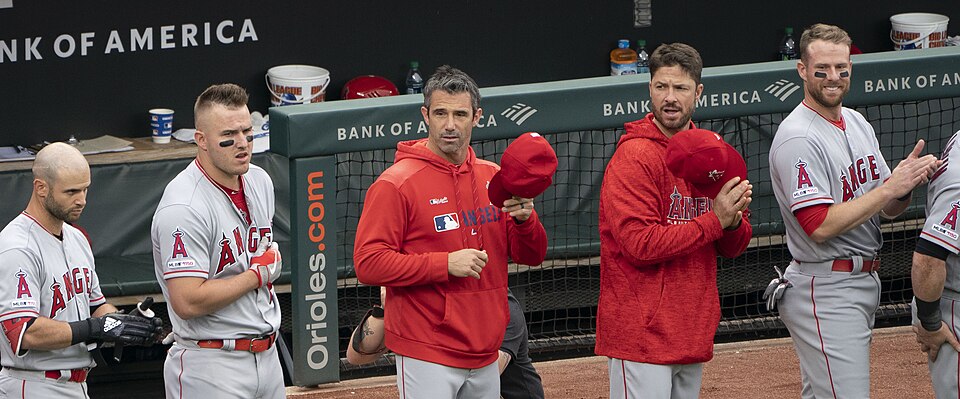
Arte’s disastrous run as owner of the Angels finally comes to an end. After years of “Sell the team!” chants, and fumbling having both Mike Trout and Shohei Ohtani on the same team, in their prime, in the nation’s second largest media market with nary a postseason appearance. Not even a freaking Wild Card. They just concluded their 11th consecutive losing campaign. They haven’t played an October game since 2014 — eleven straight postseasons missed, the longest active drought in baseball. The Butcher of Anaheim has finally relinquished the reins.
Kroenke continues to build his sports empire. Kroenke Sports & Entertainment owns the Rams, the Denver Nuggets, the Colorado Avalanche, the Colorado Rapids, the Colorado Mammoth, and Arsenal — and now a controlling interest in the Angels, pending MLB approval, with the deal expected to close in the first quarter of 2027.
Kroenke has proven to be a very successful owner. Arsenal won the Premier League this past May, their first title in 22 years, and came a penalty shootout away from a Champions League double. The Nuggets won the NBA title in 2023. The Avalanche took the Stanley Cup in 2022, the Mammoth won the NLL Champion’s Cup that same year, and the Rams won Super Bowl LVI in February 2022. Five different leagues, five trophies, five years.
Rams… Champs. Rapids… Champs. Nuggets… Champs. Mammoth… Champs. Avalanche… Champs. Arsenal FC… Champs. Arsenal WFC… Champs.
Stan Kroenke was born to win. Stan Kroenke will fix the Angels.
Also interesting that with the Dodgers potentially being up for sale in some capacity later this year, he opted for the Angels instead. Perhaps preferring outright ownership to being part of a group.
This brings up the question, is Stan Kroenke, with a net worth of $24.3 billion, in favor of a salary cap as an MLB owner?
Mets owner Steven Cohen net worth: $23 billion (per Forbes)
Stan Kroenke: $24.3 billion (also Forbes, some sites have it even higher)
MLB's new richest owner is of the Los Angeles Angels.
The NHL appears ready to expand into either Houston or Austin, with Houston having the current edge, and then beyond.
The league currently has 32 teams, and in many ways I feel this is the perfect number, they could mirror the NFL model. Eight divisions of four teams apiece, two sixteen-team conferences. It all fits together so nice and neat, and makes postseason seeding much easier to formulate.
I have even mocked this up for the NHL, done with respect to history and regional rivalries:
Eastern Conference
Atlantic — Boston, Montreal, Toronto, Buffalo
Metro — NY Rangers, NY Islanders, New Jersey, Philadelphia
East — Pittsburgh, Washington, Columbus, Ottawa
South — Carolina, Tampa Bay, Florida, Nashville
Western Conference
Central — Chicago, St. Louis, Detroit, Dallas
North — Winnipeg, Minnesota, Colorado, Utah
Pacific — Vancouver, Calgary, Edmonton, Seattle
West — San Jose, LA, Anaheim, Vegas
Instead, the NHL is currently at four divisions of eight teams that aren’t even geographically aligned, and their playoff seeding format is incredibly confusing. Their point allocation for wins and overtime is designed to keep teams closer together, which last season led to Vegas winning the Pacific Division at 39-26-17 while Anaheim, who won four more actual hockey games at 43-33-6, finished third in the same division. Vegas banked seventeen overtime losses, worth a point each against the two a team nabs for a W. San Jose won exactly as many games as the division champions and missed the playoffs by nine points. Vegas went on to lose the Stanley Cup Final.
The NHL has no interest in fixing this issue, or the currently constructed divisional format, instead they’re hungry for expansion. The league’s seven Canadian based franchises mean there are only twenty-five American markets with NHL teams. Leaving opportunities in places like Houston, Austin, Atlanta, and Phoenix.
Atlanta has already failed twice as an NHL city, but the times have changed considerably since their last outing. Corporate sponsorships, which the ATL can provide the team en masse, and the boom in live sporting events, makes it a relatively safe bet for success if given a third chance.
The NHL is working with potential owners of an expansion team in Texas, and it's becoming less likely that Canadian hockey fans will see an eighth franchise land in their country: https://t.co/HfG8jHfxZ0
Phoenix just lost their team to Salt Lake City over an arena. The Coyotes were pushed out of Glendale in 2022 and spent their last two seasons playing in Arizona State’s 4,600-seat Mullett Arena while chasing a permanent home. When Tempe voters rejected a $2.1 billion arena and entertainment district referendum in May 2023, the clock started. The franchise was sold and moved to Utah eleven months later.
What may come as a surprise to some, Phoenix is actually a city with a prominent hockey culture. Suburban families out there have money, and when it’s 115 degrees for four months a year, an ice rink is the best place in town to take your kid.
Sabres center and franchise cornerstone Tage Thompson was born in Phoenix while his father was in the Coyotes organization. Maple Leafs captain Auston Matthews, the 2016 first overall pick, moved to Scottsdale as an infant and got into the game watching the Coyotes play. The Tkachuk brothers, Matthew and Brady, now both on the Florida Panthers, were both born in the Valley during Keith’s run as Coyotes captain. Sabres winger Josh Doan, son of Coyotes franchise scoring leader Shane Doan, was born in Scottsdale and came up through the Phoenix Jr. Coyotes program. Phoenix hockey culture is a significant factor in what brought home the gold for the USA at this year’s Winter Olympics, the country’s first since 1980.
It makes sense the NHL would want to expand into more markets in the United States, but crossing the thirty-two team threshold will water down the talent pool, and potentially weaken the excitement of the game.
What would, say, a thirty-seven team league in major American sports look like? Is there enough elite talent to fill out that many rosters and maintain the level of quality game-to-game? Is the thirty-two team concept just the current psychological barrier based on where the NHL and NFL currently sit?
Greg Wyshynski on The Sheet Podcast about expansion/talent dilution: "Also Daly is saying the quiet part loud, which is: the more dilution of talent you have, the more sloppy play gets, the more ineffective defensive systems become, and the more scoring that we see, and more… pic.twitter.com/hEBYeXlrNX
Teams being added in low-tax states would spur more competition at the top, but may make the gap between them and the rest of the field even wider.
The league sees dollar signs with new franchises going for two billion dollars — three times what Seattle paid and four times Vegas — with the arena build pushing the total investment to $3.5 billion for the Friedkin family, who will own the new Texas franchise should it be greenlit. Greater inventory of games to sell to broadcasters, more arenas to fill, more markets to sell merchandise, and so forth. The current 32 teams pull about $625 million a year from Disney and Warner Bros. Discovery, and the next media rights negotiation starts after the 2027-28 season. The lowest grossing of the big four American sports leagues being the first to test the ceiling for teams sounds risky.
I’d prefer to see Austin get the nod. Houston may be the larger TV market, but ATX would be the better cultural fit and be home to more people who actually care. Austin FC showed there’s a sporting culture outside the Longhorns, and the corporate suites would sell out immediately. The Spurs already play home dates at the Moody Center — Austin is San Antonio’s B town for basketball. Put the NHL in Austin and San Antonio becomes the same for the Capital.
On the upside, it would likely make it even harder for Canada to bring home the Stanley Cup. Thirty-three teams with Houston? One team for every season since a Canadian club last raised the Cup.