I’m counting down the five biggest crisis situations in College Football. This isn’t the worst overall programs. This factors in failing to meet expectations, mismanagement, financial and conference status, consistent losing, scandals, and falling from grace. These are situations that are faltering in the ever changing landscape of college football. Some have more viable paths back to success than others.
Honorable Mention: Michigan State
Three head coaches in four years. They fired Mel Tucker for cause in 2023 with $79 million left on his deal, a designation he’s still suing to overturn. Then they gave Jonathan Smith seven years and fired him after two, eating $32.5 million. Then they replaced him with Pat Fitzgerald, two years out of the game after Northwestern fired him amid a hazing scandal.
And I still see Fitzgerald as a potentially stabilizing force with upside. He won 110 games in Evanston with none of the resources he’ll have now.
They’ll be fine either way. Big Ten full shares averaged nearly $80 million in 2024-25 and Michigan State collects that annually. Conference status is their saving grace. The Spartans can eat the $32.5 million they owe Smith, but if Tucker settles for as much as that or more, things get a little hairy. It’s not all doom and gloom in East Lansing, but the gap between the Spartans and the Wolverines, Buckeyes, Nittany Lions, and Hoosiers has only grown wider. Not to mention how much further the additions of USC, Washington and Oregon drop them down the conference pecking order.
#5 Florida State
The ACC fell behind. Its schools pull in the mid-forties per year while the Big Ten and SEC each clear $70 million, so Florida State sued its own conference to get out early. They settled in March 2025 — a bigger cut of the ESPN money, exit fee cut to $165 million and dropping to $75 million by 2030-31, media rights included on the way out. They bought themselves a door.
The problem is there may not be a room on the other side. The Big Ten only admits AAU members — Miami got in in 2023, along with North Carolina, Duke, Virginia and Pitt. Florida State isn’t one. The SEC doesn’t need them either, since Florida already owns the state, and Finebaum’s read is they’d rather have UNC and Virginia. And if the SEC does want to expand its footprint into Florida, Miami is the more lucrative option.
And they’re stuck with the coach. Norvell is 3-13 in league play over two years, 7-19 overall, and drew a unanimous 5.0 on the CBS hot seat scale, the worst grade there is. He’s back anyway, because the buyout runs north of $50 million.
The silver lining is real. The $265 million Doak renovation is finished, the $138 million football-only facility opened last fall, and athletic spending topped $200 million for the first time.
There may be programs in worse shape overall. But for one that won a national title in the last fifteen years, this is quite a fall.
#4 Stanford
Stanford took a 30% share of ACC media money to get into the league. That discount runs seven years and leaves them roughly $15 million a year behind the rest of the conference, with a full share not arriving until the final three years of the ESPN deal. The nearest conference opponent aside from Cal is 2,000 miles away.
The football has matched the finances. No bowl game since 2018. Third head coach in three years after Troy Taylor was fired and Frank Reich filled in for a season. Andrew Luck runs the program as general manager now, and Tavita Pritchard, a first-time head coach, runs the team. CFN projects the worst quarterback situation in the conference.
The alumni network is the counterargument, and it is a real one. Stanford graduates founded the world we live in today: Google, Nike, Netflix and Instagram, and the list goes on. The university sits on an endowment north of $37 billion. There is more capital in that donor base than in any five athletic departments combined.
It hasn’t mattered. Money moves toward things people want to be part of, and right now nobody wants to be part of Stanford football. Admissions standards don’t bend for a $23 million roster market. The travel doesn’t shorten. The media share doesn’t change until the next decade, and by then their best case scenario may be a spot in the Big 12. They are one of the big losers of the Pac-12 collapse, but not as big as the next team.
#3 Oregon State
This is the Pac-12 collapse’s biggest casualty. Ten schools left, Oregon State and Washington State were not invited anywhere, and the two of them kept the conference name and rebuilt it with Mountain West level teams. The 2026 Pac-12 is Boise State, Colorado State, Fresno State, San Diego State, Texas State, Utah State and Gonzaga for basketball.
The money tells the story. The CBS and CW deals are projected to pay roughly $7 to $10 million per school through 2031, against the $20.8 million per school the old Pac-12 averaged from Fox and ESPN. The Big Ten averages around $80 million, and its top programs clear $90 million.
On the field it has been worse. Oregon State went 2-10 last year. They fired Trent Bray at 0-7, the worst start since 1991, and the school said the roughly $4 million buyout would come out of donor money. That is a program passing the hat to fire its own coach. JaMarcus Shephard, a 42-year-old first-time head coach, takes over. This was a top-ten team in 2023.
On a personal note, I grew up a Pac-10 kid, and I’m glad to see the name live on. The conference may end up being one of the most exciting top to bottom in the FBS. But that doesn’t change the reality of the business side of things.
For a school that was spurned by the Big 12, their prospects for a better situation in the next round of realignment look meek. A dominant run in the new Pac-12 is their best hope to return to some form of national relevance.
#2 North Carolina
The Tar Heels made a splash last offseason with the hiring of NFL GOAT, eight-time Super Bowl winner, Bill Belichick. BB was given his “mutual” separation with the Patriots after a string of strange decisions, like having a defensive coordinator coach the offense, regressing Mac Jones from year two on, and missing the playoffs two years running, among a host of other issues.
I love Bill Belichick. I know that’s not a common sentiment from most fans, or even the media. I liked his surly press conferences and his casual trolling. I found him to be extremely entertaining, even if that was never his intention. The Boston sports media does not share that sentiment. They haven’t stopped dancing on his NFL head coaching grave since he left town.
After being passed over for the Falcons job, Coach Belichick spent a season in media, making weekly appearances on the Pat McAfee show and hosting his own podcast on YouTube. In each of these appearances there was a real sense that BB was attempting to rehab his image for one more crack at holding the reins for an NFL team. He sits just 15 wins away from Coach Shula’s record of 347.
He shocked the world by agreeing to a five year deal with the Tar Heels, but it conveniently included a reasonable opt out fee if he got an NFL offer after one year. The buyout was $10 million before June 1, 2025, and $1 million after. He brought in self-diagnosed football genius Michael Lombardi, his son Steve as defensive coordinator after a year as Washington’s DC, and perhaps most notoriously his 24 year old girlfriend Jordon Hudson.
After a horrendous first year on the field, and banning the Patriots from scouting players in person, his promise to be the 33rd NFL team that would prepare players for the league better than any other school in the nation looks thin. UNC finished 4-8 and had zero players drafted, ending a streak of at least one Tar Heel selected every year since 2016.
Just in the last few weeks, Lombardi has been placed on paid administrative leave while the university investigates a human resources complaint, UNC has retained outside counsel to run that investigation, and Steve has stepped away as DC for medical reasons. The noise surrounding the program has never been louder. The last five years have not done his legacy any favors, but I still love when he’s a part of football.
North Carolina may have a bright future if they’re able to exit the ACC for the Big Ten in 2031, but that will be long after the short term pain being induced upon them right now. If UNC fires him without cause after this season, they owe him the balance of the guarantee through December 2027 — one year, $10 million.
The question of whether Chapel Bill still has it in him to produce a winner the Belichick way is one of my favorite storylines going into the season. Game one in Dublin, Ireland on August 29th against a TCU team that dog-walked them last year will have the eyes of the college football world upon it, and it can’t get here soon enough.
#1 Colorado
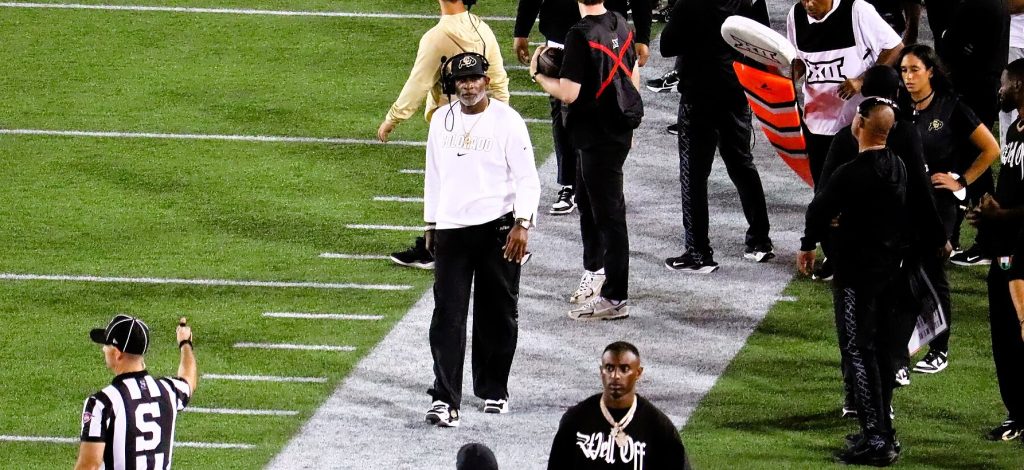
What can be said about this program that Jason Whitlock hasn’t already called out? Deion came over from Jackson State with a head full of steam. He brought Shedeur and Travis Hunter as his top holdovers from Jackson, and the “Louis” luggage he had jump in the portal. They stormed out to a 3-0 start, including a big season opening win on the road at TCU, and then the wheels fell off and they limped out to a 4-8 record. Reports came out from former players about the standoffish nature of Coach Prime Time, refusing to even speak to a significant portion of them.
In his second year they had their best record of his tenure at 9-4 and an Alamo Bowl loss to BYU. That might not sound great to you, but it was in fact enough to get two-way star Hunter the Heisman trophy. And as far as accomplishments for Deion in his time at CU, that’s the highwatermark, and frankly, nothing to sneeze at.
It appeared the CU move was just an attempt to get Shedeur into the NFL. ESPN did the best they could to assist with that, hyping him as QB 1A of the draft. Shedeur fell to the fifth round where he was selected by the Cleveland Browns, who had already selected Dillon Gabriel in the third round of that same draft. Shedeur’s time in Cleveland is well documented. I felt he held onto the ball for far too long in college to be a viable NFL starter, and some of those bad habits continue to plague his game today. Hunter was taken second overall by the Jags, who let him play both offense and defense his rookie season until he was hurt. He looked undersized in the NFL.
The run by the two athletes was enough to get their jersey numbers retired in Boulder. A move that would have been palatable had it only been Hunter’s. It seemed like Deion would mentally and emotionally check out after Shedeur moved on. He spent the CU offseason dealing with a bladder cancer issue, had a new bladder constructed, and returned in time for the start of the season. A disappointing one as the Buffs ended with a 3-9 record and won a single Big 12 game. Sanders enters year 4 having signed a five-year, $54 million extension in March 2025 that pays him an average of $10.8 million per year, making him the highest paid coach in the Big 12.
Footage has come out of Colorado’s fall camp practices this month, and the players looked extremely undersized.
In response to the negative publicity, CU placed a comprehensive gag order on reporters attending practice. They were not allowed to report on anything, that’s right, anything they saw at the session. The email read that nothing observed may be reported, published, posted, broadcast or otherwise shared in any form, on any platform, at any time, and that if you’re uncertain whether something is reportable, the answer is that it is not. If that wasn’t enough bad publicity, footage was then released of their female strength and conditioning coach giving a folksy, “y’all” laced speech to hype up the team that went over like a description of Linda Blair in The Exorcist at the family dinner table.
The AD who hired Deion is gone — Rick George stepped down in July after 13 years. The Buffaloes are in worse financial shape than when they hired him, and it isn’t close. Colorado projected a $27 million deficit for the fiscal year ending in June 2026, the largest in the athletic department’s 135-year history, with football alone accounting for $60.4 million in expenses. Add institutional support and student fees and the university is filling a hole north of $41 million.
The Big 12 is underfunded compared to the big two conferences. Their conference wide Monster Energy jersey patch sponsor is $20 million for the entire league, which comes out to about a million a school. Notre Dame’s SoFi patch is worth $18 to $20 million for just them. Yes, the Fighting Irish patch is equal to the entirety of the Big 12.
NIL is part of the issue, but it doesn’t make it any less real. Deion thrived when it was hype and swagger and attitude that sold young men on the program. Now years of missed expectations, excuses, and negative stories have soured prospects on calling Boulder home, and when they can’t match the checks being written by mid to bottom tier Big Ten schools, it’s easy to see why.
I expect this to be Deion’s last season on the sidelines. If he makes it through the year, he can agree to a buyout, step down due to “health reasons,” and sign a lucrative deal with ESPN to be featured on College GameDay where he can be a well-compensated media personality. Which is one of the things I believe he does best. His segments on NFL Network were usually very enjoyable. Back when they had the dream team of Marshall Faulk, Warren Sapp, Michael Irvin, Kurt Warner and Steve Mariucci. The program was actually fun, entertaining and informative. Contrast that with the media slop offered up by ESPN. Suffice to say, Deion, the Buffaloes, and ESPN may all be the better for this being his rocky mountain swan song.
Photo by 2C2K Photography (cropped) via CC BY 4.0