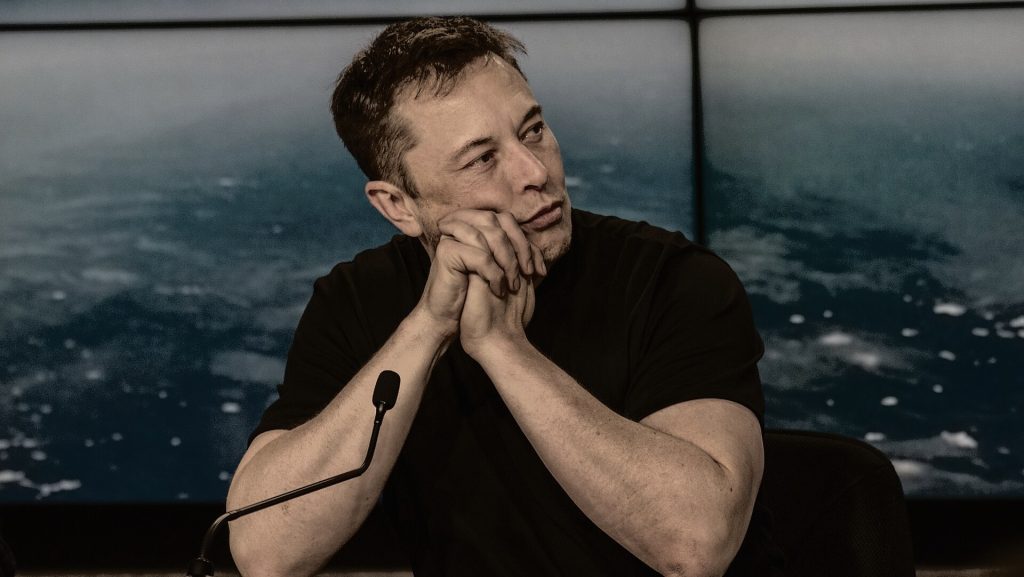
This week X, formerly Twitter, began the rollout of X Money. This has been something I have been anticipating since Elon Musk purchased Twitter for $44 billion in 2022.
“X Money is designed to make traditional bank accounts unnecessary for users.” — The Paypers
X Money is not simply a feature of X, but may be the reason Elon acquired the social media platform to begin with. Elon had originally envisioned X.com as a payments system all the way back in 1999. The concept behind it would go on to become PayPal. Elon has long understood the potential for innovation and opportunity when payments and finance finally merge with technology in a truly meaningful way. Far beyond the reaches of what CashApp and PayPal offer today.
X Money is about to rock the entire traditional financial system and now it only costs less than $8/months to access…
• Up to 6.00% APY on cash • 3% cashback on eligible purchases with the X Card • Instant, free, unlimited payments to any X user by handle • Direct… https://t.co/ANKguXXF66pic.twitter.com/Tv4VGk4enR
X is positioning itself to become the WeChat of the rest of the world.
WeChat is China’s everything app, and has been for over a decade. Tencent launched it as a messaging service in 2011. Today it runs about 1.43 billion monthly users. It’s messaging, it’s a social feed, it’s video, and it’s WeChat Pay — roughly 935 million people paying for things by scanning a QR code, from a department store checkout down to a guy selling fruit off a cart. But the part Americans consistently miss is Mini Programs. These are app-like services that run inside WeChat itself, 4.3 million of them, used by around 945 million people a month. You book the doctor, hail the cab, pay the power bill, order dinner, buy the movie ticket, and file your government paperwork without ever leaving the app or downloading a single thing. You don’t have twelve apps, twelve logins, and twelve saved credit cards. You have one.
Yes, the Chinese version is restrictive, surveillance heavy, and censored. That’s not the part I’m pointing at. The singular model is the point. Whether we end up with their version of it here is a separate question.
Nobody in the West has built it — not because it can’t be built, but because the pieces were always owned by different companies with no reason to cooperate. Apple owns the wallet. Meta owns the social graph. Your bank owns the settlement layer. Elon is the first person sitting on all three at once.
BREAKING: 𝕏 recorded a massive 103 million App Store downloads in August, its highest monthly total ever. pic.twitter.com/A3oUQzxqtK
X Money is offering Premium users 4% on their Stored Value Accounts and to its Premium+ users, 6%. Yes, 6% on cash you have parked in the X account, and they’re issuing digital debit cards and physical metal Visa cards. The card drops into Apple Pay and Google Pay, and a virtual version is issued the moment you sign up, so you’re spending before the metal one hits your mailbox. Not in New York, though — no money transmitter license there, which means no APY at all for New York residents. Massachusetts is out entirely. It’s live in 41 states plus D.C.
They have also partnered with Cross River Bank as their sponsor bank. X isn’t a bank and doesn’t hold a charter, so Cross River provides the charter, the FDIC-insured deposits, the compliance backbone and the payment rails. This is the banking-as-a-service model, and Cross River is effectively the bank behind fintech — a state-chartered New Jersey outfit in Fort Lee running more than 120 clients including Stripe, Affirm, Coinbase, Best Egg and Upstart on an $8 billion balance sheet. If you’ve ever financed a purchase through Affirm or moved money through Coinbase, Cross River probably executed it and you never knew their name. Deposits are insured to $250,000, with up to $10 million available through a cash sweep across partner institutions.
And the Stored Value Account doesn’t have to stop at cash. Right now X is paying 4% to Premium and 6% to Premium+ on dollars parked in the app. Let users hold stablecoins in that same account and the yield options widen considerably — tokenized Treasuries, on-chain lending, staking proof-of-stake assets like Ethereum or Solana. Your checking account, your savings account, and your brokerage stop being three separate things you log into.
There has been talk about “paying in crypto” with X Money, but I think that is the wrong angle to look at this. The GENIUS Act that passed in July 2025 by the US and signed by President Trump allows for a company like X to issue its own stablecoin, a cryptocurrency pegged one-to-one to a dollar and backed by reserves the issuer is legally obligated to redeem at face value, but they don’t even need to do that. They can allow X users to hold existing stablecoins (RLUSD, USDC) in their X value accounts, then transact them with merchants, peers, make payments, settling them with a blockchain like Solana, Ripple or Stellar as the middle layer. This will happen instantly and appear just as normal to someone as your standard PayPal transaction, but real-time settlement, with negligible fees on a ledger that confirms it for both sides. The change isn’t sending .0001 Bitcoin or Ethereum to pay for your burrito bowl, it’s that you don’t even see that layer underneath.
Innovation’s most bearish babe, Sen. Elizabeth Warren, wrote Musk in April flagging what she called a “suspicious carveout” that lets a private commercial company like X issue its own stablecoin, and noted that Thune had blocked a bipartisan floor amendment to close it. She’s right about the mechanism. She’s just wrong about which part should worry anyone.
When you swipe a card today, the transaction looks instant. It isn’t. What happened was an authorization — a promise. The real money moves later, batched overnight, run through the card network, settled between the merchant’s bank and yours over the next day or three. Venmo and Cash App are the same trick. Your balance updates the second you hit send because the app is just moving a number from one row of its own ledger to another row of its own ledger. The actual dollars are still sitting at a bank, waiting on ACH.
Distributed ledger technology collapses all of it. The transfer is the settlement. There is no authorization, then clearing, then settlement — there’s one event on a ledger both sides can verify, running 24 hours. That’s the important change. Not the currency, the plumbing. If it seems inconsequential, it frees up trillions of dollars in capital currently kept in limbo when done at scale.
X Money can put that in the palm of your hand. (Yes, perhaps like the Mark of the Beast.)
The move could potentially merge banking, investing, social media and AI into a singular app.
“When I say payments, I actually mean someone’s entire financial life.” — Elon Musk
The concept of the “everything app” is the next evolution in the “everything phone,” the smart phone. A smart-app that allows users to go back and forth between all of these aspects seamlessly, when done well, reduces friction to such a degree that adoption becomes inevitable.
The future is already being born. The good thing about it is that it only comes one day at a time.
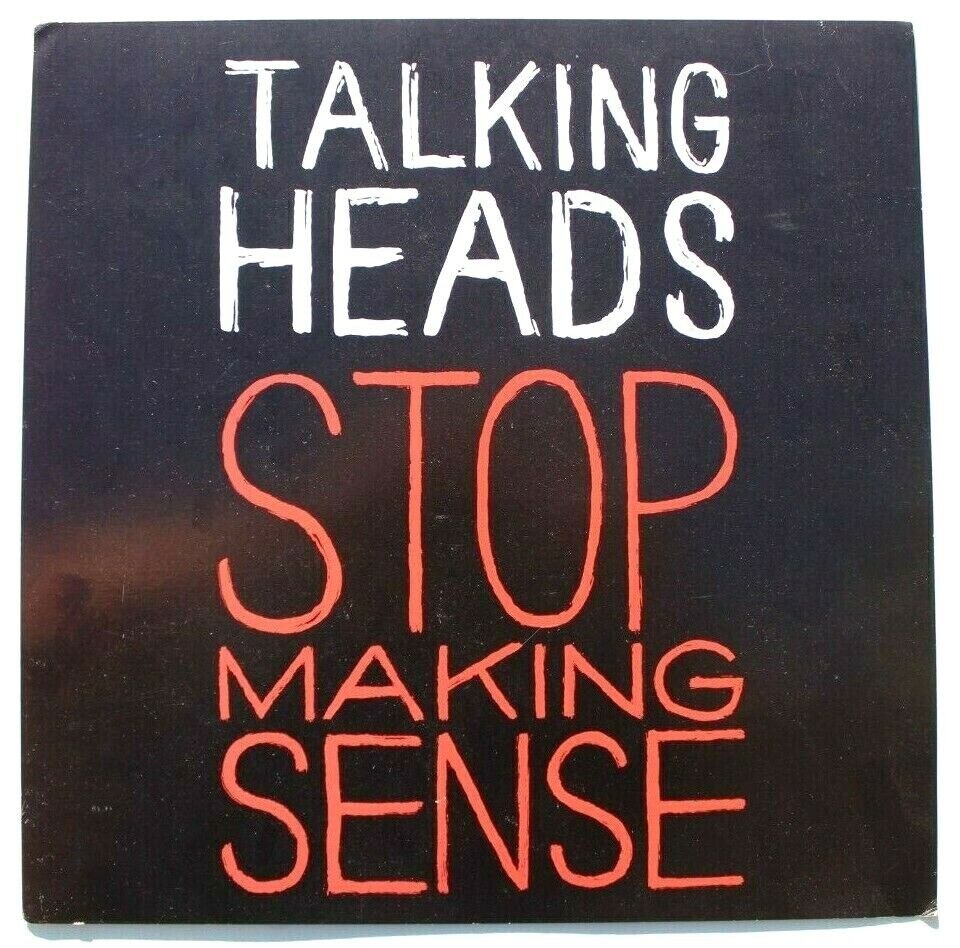
It’s the Talking Heads concert film, shot by Jonathan Demme over three nights at the Pantages in Hollywood in December 1983. Frontman David Byrne walks out alone with a boom box and an acoustic guitar, and the band gets built one member at a time until it’s a nine-piece.
It had been rattling around the back of my head for years. ‘Greatest concert film ever made’, according to a lot of people with opinions I respected. But I’d never really gotten into the Talking Heads, so I never bothered. Then I saw a copy on sale for five bucks and it was time to finally take the plunge.
I wouldn’t say I was wrong about the Talking Heads. I just didn’t know what I didn’t know. I had no negative view of them, I just failed to understand how influential they truly are.
Funny thing about David Byrne — he reads as a Gen X icon, though he’s a Baby Boomer who was born in Scotland, 1952.
A concert film is the intersection of two artists. You need the act operating at the height of its powers, and you need a director with enough restraint to understand he is not the star. His only job is to take what happened in that room and deliver in the best way possible to the theatrical or home-viewing audience. And get the sound right. That’s a big one.
That takes strength, because you have to remove most of yourself from the product. Scorsese doesn’t do that exactly — he’s right there on camera in The Last Waltz, asking questions. But that’s his thing and it works. The Last Waltz has been first on my list in this category for years.
“…of enormous energy, of life being lived at a joyous high.” —Roger Ebert
Seven years after this, Demme made The Silence of the Lambs, which landed Best Picture, Director, Actor, Actress and Adapted Screenplay. The Big Five. Only two other films in history have done it. It Happened One Night (1934) and One Flew Over the Cuckoo’s Nest (1975). Demme knew, in 1983, to keep the cameras on the stage and leave himself out of it.
Now, before I say a word about the actual music, a disclaimer. I find written reviews of music absolutely preposterous. Word salad. They read like parodies of the music review business itself: Referring to an album as a “bluesy, whiskey-soaked rag mama rock opera” — it comes across as writers spinning nonsense to describe a thing you can only get by hearing it yourself. The best you can do is tell people it’s good and advise them to go experience it for themselves. Everything past that comes out clunky and pretentious. Go read any Rolling Stone album review and you’ll see what I mean.
So with that out of the way, here’s what stood out.
Byrne has said himself that he’s somewhere on the spectrum. Watch him for five minutes and it stops being a question. That is in no way used pejoratively. The man is a certified autistic/artistic genius, and he joins a list in that regard I keep that also includes Michael Jackson, Axl Rose and Kanye West. Autist being another term that is not used lightly or to be framed as derogatory. I’m referring to those possessing actual genius.
The show is constructed visually, sonically, and with a songwriting range that shows craftsmanship and control. Song after song I’d sit there thinking, “Holy shit, this is a Talking Heads song too?” Having never fully explored their catalog on my own, I badly underestimated how deeply their DNA runs through popular music and culture.
And speaking of Kanye — the suit. That absurd broad-shouldered architectural monstrosity Byrne climbs into in the back half of the film. Decades later Kanye and Lil Pump built an entire video around it, the two of them shuffling down a hallway inside giant square shoulders. I don’t consider it as a coincidence, I see it as homage.
The version of genius people usually mean by “idiot savant” is narrow. One thing, done inhumanly well, and not much else. Byrne is the other kind. He calls on a dozen different influences and styles and makes them cohere into one thing. As a writer, I sometimes refer to myself as an idiom savant.
He is not, however, an autist at the highest order. Byrne is very left-leaning, and American Utopia — the 2018 album, then the Broadway show, then the Spike Lee film — is pro-immigration with a side of activism. While he is extremely talented, he does not reach the utmost levels of intellectual transcendence of a Stanley Kubrick or a Bobby Fischer.
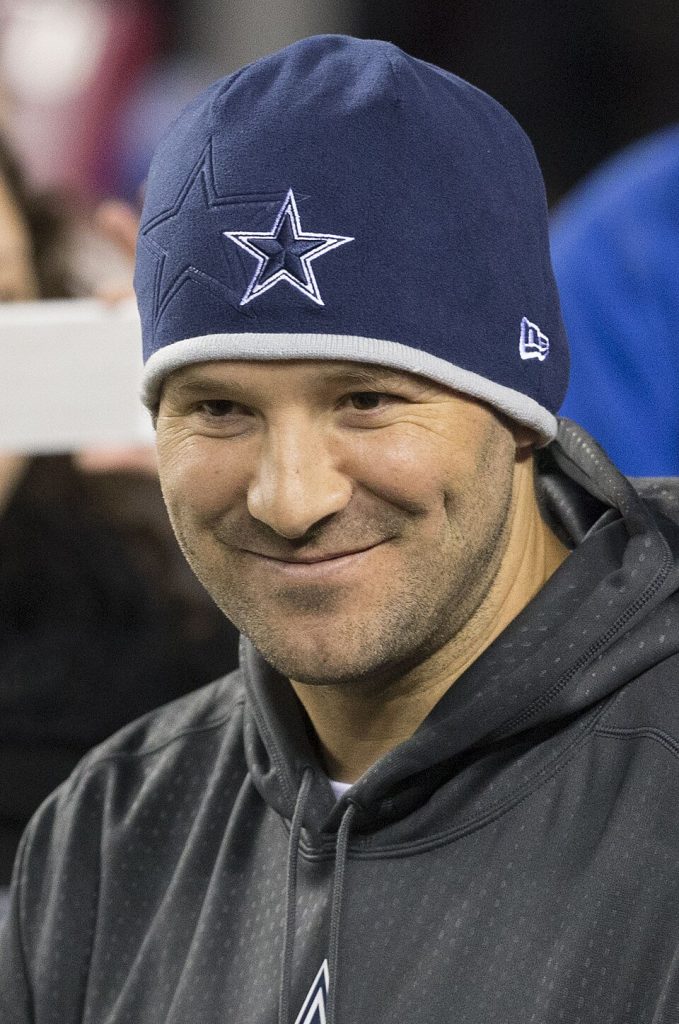
In my article last week, The Player-Announcer Paradox, I examined the often divergent relationship between liking a player on the field, and liking him when he moves into the broadcast booth. It was heavily focused on Tony Romo in the aftermath of his DUI, a first offense that in Wisconsin isn’t even technically a crime — it’s a civil forfeiture. Now there’s no excuse for Tony Romo to be drinking and driving, but this was miles away from a scandal in NFL terms.
Romo has already been suspended by the network, and CBS intends to use this as a pretext for replacing Romo from the A-side of their broadcast lineup with J.J. Watt, at least temporarily. Watt boasts a much more “aw shucks” corporate friendly persona. A move that the network may have already been itching to make.
“It’s possible CBS Sports uses Romo’s slip-up as an excuse to move on” — Pro Football Network
The record-setting contract Romo signed in 2020 also appears to be part of the calculus for the move. The high-value deal made headlines at the time, but has since been dwarfed by contracts that followed it, including the $375m mega deal signed by Tom Brady to join Fox’s top-pairing Sunday broadcast.
“He squeezed them for every nickel” — Colin Cowherd on Romo’s 2020 negotiation, via Fox News
Romo has four years and $72 million left on that deal, and it’s left a sour taste in CBS’ mouth ever since. They could attempt to use a morality clause in the terms of the agreement to void the remaining salary.
“the worst contract in media history” — a top sports media executive on Romo’s deal, via Andrew Marchand of The Athletic Pro Football Network
The upside is that Tony Romo as a free agent with nothing to lose would once again be able to impart his actual football wisdom, something that has been greatly missing since CBS called for him to tone down his color commentary style.
It is nevertheless still shocking to see things play out this way. A non-incidental, first offense DUI is now a reason to end a man’s sports broadcasting career? I grew up in a time when it would to take perverted sexual fetishes to do such a thing.
Tony Romo photo by Keith Allison, via Wikimedia Commons. Licensed under CC BY-SA 2.0.
Last week I posted an article here on the site covering the current state of affairs in the streaming wars, and where things may be headed. You can check that out here.
One of the issues I covered was the enormous amount of money NBC/Comcast had recently signed on to secure even more sports rights to their lineup, the biggest recent additions being the long-awaited return of the NBA as well as Sunday Night Baseball from MLB along with the wild card round of baseball’s postseason.
I mentioned how the math didn’t really add up, as I stated Peacock has almost always been a loss-leader to put it very mildly, it’s been hemorrhaging money for most of its existence, only just posting its first profitable quarter in last week’s earnings report. Comcast spun off its cable channels into the new company Versant, and they have since announced plans to spin off the network and streaming into its own company as well, a separation expected to be completed by mid-2027. Leaving Comcast as a broadband and telecom provider, basically washing their hands of the streaming and television money pit.
A story broke this morning that Peacock Premium (with ads), will be included with a YouTube Premium subscription. To those unfamiliar with YouTube Premium, it is the paid version of YouTube (it has nothing to do with YouTube TV which is their version of cable TV) that doesn’t include ads. As someone whose most used streaming app for well over a decade (probably two decades) has been YouTube, I am a long time subscriber of YouTube Premium. I used to use a different email every one to three months to get free trials of it, this went on for about four or five years. Then they began enforcing that more strictly, so I used a still active college email address to lock in the student discount rate, it’s been in the range of around six to eight dollars a month the last few years for me. But it gives me access to everything on YouTube commercial free. I use YouTube to follow podcasts, a broad spectrum of channels that cover my many different interests, and it includes movies that can be watched ad free as well. You can also use it for music, which I do here and there for its large catalog of concerts. To me it’s the best deal in streaming, it has saved me God-only-knows how many hours in commerical interruptions.
This move is interesting to me for a few reasons, the first of which being how I just don’t find Peacock of any particular interest as far as streaming services are concerned. I just don’t like the platform, I don’t like the content, it’s home to a poorly designed user-interface, there are far too many commercials, and it’s really never felt like a good value proposition outside of their past insane Black Friday deals. The sports rights they do hold are too fragmented, if you’re an NFL or MLB fan, you only get one game a week. It made sense for Peacock to be sold off to a larger streaming brand that could get those sporting events in front of their larger subscriber base and extract value out of them to encourage subscriber retention, as I think what it has to offer is better at that than it is to drive new subscriptions. Peacock and Paramount Plus were both the weak links in terms of content and capital, then Paramount got Ellison money while Comcast is dumping assets as quickly as it can. Their paths could not be more divergent now.
To give you an idea of how much I dislike Peacock, when it was announced they had secured the rights to the MLB Wild Card round games, I decided I would simply not watch them. Later reports would clarify that the games will be simulcast on NBC and NBC Sports Network, allowing people the chance to watch them without necessitating a Peacock subscription, but to feel that strongly about a streaming service to abstain from an entire round of the postseason of your favorite sport is telling. Subscription fatigue is real, and Peacock is the low man on the totem pole for a reason.
Now sure, it’s not completely without its value. If you didn’t have cable and couldn’t pick up the networks with an antenna where you are, Peacock was a great way to watch the Super Bowl and the Olympics this past winter. But those are one and done scenarios, people were not as likely to carry Peacock year-round like they were the other apps.
Another reason this sparked my interest is it exhibits the continuing pattern of streaming consolidation. We have a major deal tied up in the courts in Paramount Skydance’s acquisition of Warner Bros. Discovery, which cleared the DOJ in May and the European Commission last week, only to be hit with a suit from twelve state attorneys general and a temporary restraining order that has pushed the outside closing date as far as June 2027. Mergers and acquisitions are in the air. Could this move by YouTube signal the potential future outright acquisition of NBC/Peacock?
People state the concern is antitrust laws, if they had any intention of enforcing the antitrust laws, Google would already be ten different companies right now. They may be willing to see if they can add an over-the-air TV network and a significant streaming catalog of classic television and live sports rights.
Another interesting caveat is that YouTube Premium subscribers’ main benefit is not having to sit through commercials, but the addition of the Peacock Premium content is said to be its ads-included tier. So if you’d like to watch The Office or the Fresh Prince of Bel-Air woke remake (God help you) early next year on your YouTube Premium account, you’re going to have to sit through ads. (Live sports include ads regardless of plan, but everyone already knows and accepts this as the reality we have always lived with.)
Google is currently facing a lawsuit, filed July 14th in the Northern District of California, that asserts its claim that YouTube Premium is ad-free is a falsehood, as video creators often include their own paid promotional spots within the videos. There is a genuine bit of irony that they have added literal ad-supported content in the midst of this lawsuit, which shows they probably view it as more of a speeding ticket than a serious infraction.
A concern will be, does this increase the cost of a YouTube Premium subscription? YouTube says the standard Premium price won’t move when Peacock arrives. The upside is significant though, having access to live MLB, NFL, NBA, Premier League, Big Ten and Notre Dame football games is a massive coup for YouTube’s paid service, and may signal they are willing to expand the scope of what the service actually is. Google has the money and means to take it as far as their heart desires.
The best thing about this change for sports leagues is it gets their product in front of more Millennial and Gen Z viewers, as their business models currently stand, their revenues would go off a cliff without Baby Boomers.
This moves us a step closer to the old-school network model, which in a world of increasing frustration over fragmented sports rights, could actually be a good thing. It’s become such a populist issue that Trump’s FCC has made inroads about it.
Let Peacock be an industry lesson. The subcription model only works when people are actually willing to pay.
Tony Romo was arrested for allegedly driving drunk in Milwaukee. I’m not going to go for any of the low hanging fruit like, “Man, how drunk do you have to be to get a DUI in Wisconsin?”
“The repercussions from Tony Romo’s DUI arrest are just beginning.” — New York Post
I’m not here to kick a man when he’s down. Something this did bring to mind is what I call the Player-to-Announcer Paradox.
I couldn’t stand Tony Romo as a player. When he fumbled the snap on the game-winning field goal attempt in the playoff game against Seattle, I was as happy as anyone else in the world. We watched the replay again and again.
Then he retired, went into the booth for CBS and became one of my all-time favorite color commentary guys.
He exhibited a wealth of knowledge on X’s and O’s, situational football, what the coach and quarterback were thinking, and he was predicting things with mystical precision. Then the normies watching got upset. They felt he was “ruining” the surprise of seeing what was to come. I felt like I was sitting next to a football oracle and loving it.
Now Tony Romo is paid $17 million a yearnot to do the thing he is uniquely capable of doing. He was neutered, and now people complain that his commentary is too vanilla, boring and corny. They won’t be happy either way.
Let Romo Romo. Let his fans, the self-described Romosexuals, enjoy his predictive and insightful commentary again.
But Romo isn’t the only example of the Player-to-Announcer Paradox. This seems to be more the rule than a rarity.
I loved watching LaDainian Tomlinson play, but I’m not much of a fan of him on the mic. Also, how ridiculous was it that he went by L.T.? There is only one L.T. Pick a different nickname.
I hated J.J. Watt. I got tired of the annual injuries, the “look how hard I’m working” offseason videos, and then ring chasing by going to the Cardinals of all teams. But in the booth? I love him. He comes across as authentic, knowledgeable and humorous.
Tom Brady was one of my favorite players ever. As an announcer, I think he’s become decent, but he still doesn’t seem truly comfortable. The cringe-core energy he’s giving out in the rest of his endeavors probably isn’t helping matters either. But nobody is getting pulled over for driving-while-alkalized.
I never saw Cris Collinsworth play, but I can confidently tell you I can’t stand him in the booth. The concept has caught on, and the “Patrick Mahomes” shoehorned references by him have become their own meme.
I’d probably still take ol’ Collinsworth over Kirk Herbstreit though. Being forced into a double-dose of Herbie on Thursday Night Football, and then Saturday night’s biggest college football game on ABC usually has me opting for TNF highlights on YouTube Friday morning instead of the Amazon broadcast.
It’s a weird phenomenon. Some of the guys I loved as players I don’t enjoy listening to. Some of the guys I couldn’t stand on Sundays become some of my favorite voices once they retire.
They’re two completely different roles.
The greatest color commentator alive is blackballed from the league and currently working for Barstool Sports. Mr. Jon Gruden. A Gruden comeback is a statistical impossibility due to his ongoing lawsuit against the NFL that he refuses to settle.
While I’d love to see Gruden burn Goodell’s reign of terror to the ground, I’d probably settle for the real Tony Romo being given his voice back.
Netflix has expanded its acquisition of AI software tools.
Netflix has officially closed a monumental deal to acquire InterPositive, the stealth artificial intelligence filmmaking startup founded by Hollywood veteran Ben Affleck. The streaming giant paid $587 million USD for the acquisition….. The system is trained strictly on a project’s own dailies to maintain strict visual logic, helping crews fix continuity errors, handle complex wire removal, reframe existing shots, and adjust background elements or lighting during post-production. —HypeBeast
As a writer, AI is a double-edged sword. Its ability as an editor, proofreader, and text analyzer can expedite and cost-control the post-draft process significantly. The concern I think most writers feel is the possibility that an LLM becomes sentient and can adopt genuine human characteristics that give writing its true individuality and style, the thing that separates prose from prattle. At this point, I have not seen a model capable of replicating that necessary touch of humanity.
Ben Affleck was a guest on the Joe Rogan Experience this year and spoke about the significance of AI as a tool of creators, as opposed to being the creator itself. His startup was aligned with that vision. While I think his InterPositive technology can be useful, I have little faith in it doing much more than expediting and cost-reducing more “content” for Netflix to churn out. The true ceiling it could have provided the film industry will most likely be inhibited by its new owners.
The positive takeaway is that we will eventually reach a point with AI where anyone with the talent to make a high-quality feature length film will have the means to do so themselves, and with that comes the final gasp of the Hollywood gatekeepers’ relevance.
Streamers are suffering their worst subscriber churn, many are losing money, and they’re getting desperate enough to offer content for free.
Streaming has been a cash burn heavy game for over a decade. The idea that if you can simply make it to the end of the streaming wars and be one of the “survivors”, it means a bountiful return of never ending subscription fee and price hike cashflow, but is that actually going to be the end result?
Competition with the dopamine deity of social media apps, gaming, and the ubiquitous YouTube swallow up enormous swaths of Americans’ attention, which is a finite resource, and it could be the iceberg that sinks the age of stream.
The Apples, Amazons, Googles and to a lesser extent the Netflixes of the world have the capital to burn, a primary business not reliant on streaming income that provides that capital (aside from Netflix), and the luxury of playing the long game.
Apple uses Apple TV+ as a boutique offering. They dump billions into it so they can rub shoulders with so-called A listers (most of whom are far less relevant now than when they were actually featured in box office hits). Their shows and movies all have an overpolished and gentrified quality to them that comes off to me as dystopian. Yes, that is genuinely the feeling I get from them. They feel like the type of content shown in the latter stages of a fullscale technocratic takeover, and perhaps that’s exactly what they are.
Netflix doesn’t really produce shows or films, they produce “content.” They are diversifying their product, and I’m not talking about race swapping historical figures in a period piece, they’re buying up popular podcasts, offering gaming options, and dipping their toe, little by little, deeper into the live sports pool. They know the contest is for attention. But they’ve waited too long to gobble up live sports rights in a meaningful way, which is the most reliable way to get audiences to tune in and sit through highly profitable commercials. Their status as being the biggest because they were first won’t cover their warts forever. They must make the most of their current position before it’s too late, or their next modern remake will be the emperor has no clothes. The sequel to which will be a deep correction of their stock price.
Google has YouTube, and YouTube TV, and has positioned itself well with those services — offering things outside the competition’s mass production loops of churn slop. They’re attempting to create an all in one sports app with YouTube TV (insofar as that’s possible in today’s fragmented rights landscape): Local Networks, Cable Networks, NFL Sunday Ticket, ESPN Unlimited content integration coming, and add-on packages for niche content. They’ve also been dabbling in live sports broadcasts on YouTube, having an early season NFL game on the platform the last few years. I’d love to see the number of viewers the Super Bowl live and free on traditional YouTube would pull in.
NBC Universal (currently Comcast-owned) and Warner Brothers Discovery were not in such positions. Warner sold itself to Paramount this year for, debt included, $111 billion. NBC’s situation is its own flavor of frantic. Peacock lost $1.1 billion in 2024 and was still bleeding half a billion a quarter absorbing NBA and NFL rights, so Comcast did what a cornered giant does: it started cutting off limbs. First it spun the cable networks—USA, Syfy, Golf Channel, CNBC, MSNBC—into a separate company called Versant. Then, in June, Comcast announced it was spinning off the rest of NBCUniversal and Sky into its own publicly traded company, effectively stepping back from the media business to focus on broadband and wireless. If streaming is the golden goose of the future, why is Comcast calling it quits?
Paramount Plus has entered the fray with half-trillionaire Larry Ellison’s son David leading the recently merged Paramount Skydance. They’re in the process of getting regulatory approval for their acquisition of WBD which will see the apps likely merge and a goliath sports streamer emerge with rights to UFC, NFL, NHL, MLB, College Football, March Madness, and so on. They certainly have the cash to burn, and are currently very willing to do so.
Another thing to keep an eye on — Paramount paid $7.7B for 7 years of UFC content. The fight promotion’s parent company TKO has a market cap of $35B and that includes WWE. How long until a company has seen enough of these gargantuan sports rights contracts and simply begins buying up leagues when possible? No doubt the Saudi Public-Investment-Fund has its eyes on this angle as well — it already put $10 billion into the WBD deal and will be Paramount’s largest foreign shareholder when it closes.
Disney/ESPN can’t be forgotten in all this. There is talk of them offering a “free” tier of Disney+ in an attempt to compete for attention. They’ve lit more money on fire in the last decade than the federal K-12 budget. Their enormous sports library provides them a bulwark for now, but can Disney’s resorts keep printing cash fast enough to cover for their studio flops? Last quarter the parks threw off 71.9% of Disney’s entire operating income while the studio and streaming side limped along. The rides are carrying the company. Moana’s live-action remake just cratered — a $250 million movie staring down a $100 million-plus loss — and it’s not an outlier. It’s the latest name on a list that already includes Snow White, Dumbo, and The Little Mermaid. And yes, the streaming math does change the calculus on what a box-office bomb really is when the movies end up on the app in a few months where they can drive subscriptions.
Free streaming apps like Pluto TV, Tubi and Roku channel (who Fox just agreed to buy for $22 billion) recognize the new battlefield reality and opt to avoid the overhead: they replay classic television and movies and cheap-to-produce podcasts with ads generating all the revenue and avoid modern production costs and subscriber attrition.
The cliff we are approaching asks a simple question: will future earnings merit the acquisition costs of conglomerateting (yes, I just coined that term) and the exploding costs of live sports rights in a world with diminishing attention to give, and generationally receding live sports viewing habits?
What happens when the streaming investors realize they’ve been chasing a pot of gold that isn’t going to be at the end of rainbow?
Could we be heading for a hilarious era where we are down to four to five mega streaming networks: Google, Apple, Amazon, Netflix, and Paramount, and they all offer most of their content for free just to get as many eyeballs on their product as possible?
Every now and then I come up with the odd jingle that keeps rattling around my head, and once in a while I’ve even fleshed them out into full-length songs. Problem was, I’d have to track down a buddy of mine who plays guitar to actually put the finished product together. That’s no longer the case.
Suno is an AI that lets you upload your own lyrics and orchestrate the rest — the desired music, the style, the pacing, and even the specific stuff like where to drop a bridge, a breakdown, or a guitar solo, and come out with a fully produced song. My first experiment with it is a new one I wrote: a 2000’s-era country bar anthem in the spirit of Toby Keith or Big & Rich. It’s the story of a man who just can’t get enough of the good times.
Well I do my best talkin’ down at the honky tonk, I’ll sit there all night ’til I can hardly walk… That’s just the way I am, ya see, needa find some women that love me for me.
I love my job, and I love my life, Love my girlfriend, and I love my wife. Even when I got it all, I can’t help but stray— Cause I’m out here Honky Tonkin’ damn near every day.
Yeah I head right down, shufflin’ and a-walkin’, one thing on my mind, and that’s Honky Tonk Talkin’.
Honky Tonk Talkin’, that’s my style, Buy you a drink and stay a while. If you’re lonely, baby don’t keep walkin’— Come on over, let’s do some Honky Tonk Talkin’.
I sit at the bar, year after year, the only sweat I like is drippin’ from my beer. The band’s all tuned up, deliverin’ a hit, all I smell is sawdust and spit. My eyes scan the room, just a-creepin’ and stalkin’, lookin’ for a little gal who needs some Honky Tonk Talkin‘.
Yeah I head right down, shufflin’ and a-walkin’, one thing on my mind, and that’s Honky Tonk Talkin’.
Honky Tonk Talkin’, that’s my style, Buy you a drink and stay a while. If you’re lonely, baby don’t keep walkin’— Come on over, let’s do some Honky Tonk Talkin’.
She was wearin’ Daisy Dukes and some fine Tony Lamas, had to move in closer to this little fine mama. Now this little filly was all toned up and tan, the way she was shakin’, looked like she needed a man. She said, “Buy me a drink.” I said, “Honey, I just might.” She slid a little closer, and said, “Looks like we’re busy tonight.”
In walks Carla Jean and Betty Sue, the good old-fashioned Mrs. and the gal who’d never leave me blue. They ran into each other while I was out on the town, compared a few notes and done tracked me down. One thing on their mind, like a lion out stalkin’, they’re here to do a different kind of Honky Tonk Talkin’.
Honky Tonk Talkin’, that’s my style, Buy you a drink and stay a while. If you’re lonely, baby don’t keep walkin’— Come on over, let’s do some Honky Tonk Talkin’.
Honky Tonk Talkin’! Honky Tonk Talkin’, that’s my style,
Honky Tonk Talkin’! Buy you a drink and stay a while.
If you’re lonely, baby don’t keep walkin’— Come on over, let’s do some Honky Tonk Talkin’.
A highly subjective list of films I return to again and again. A few mild spoilers ahead.
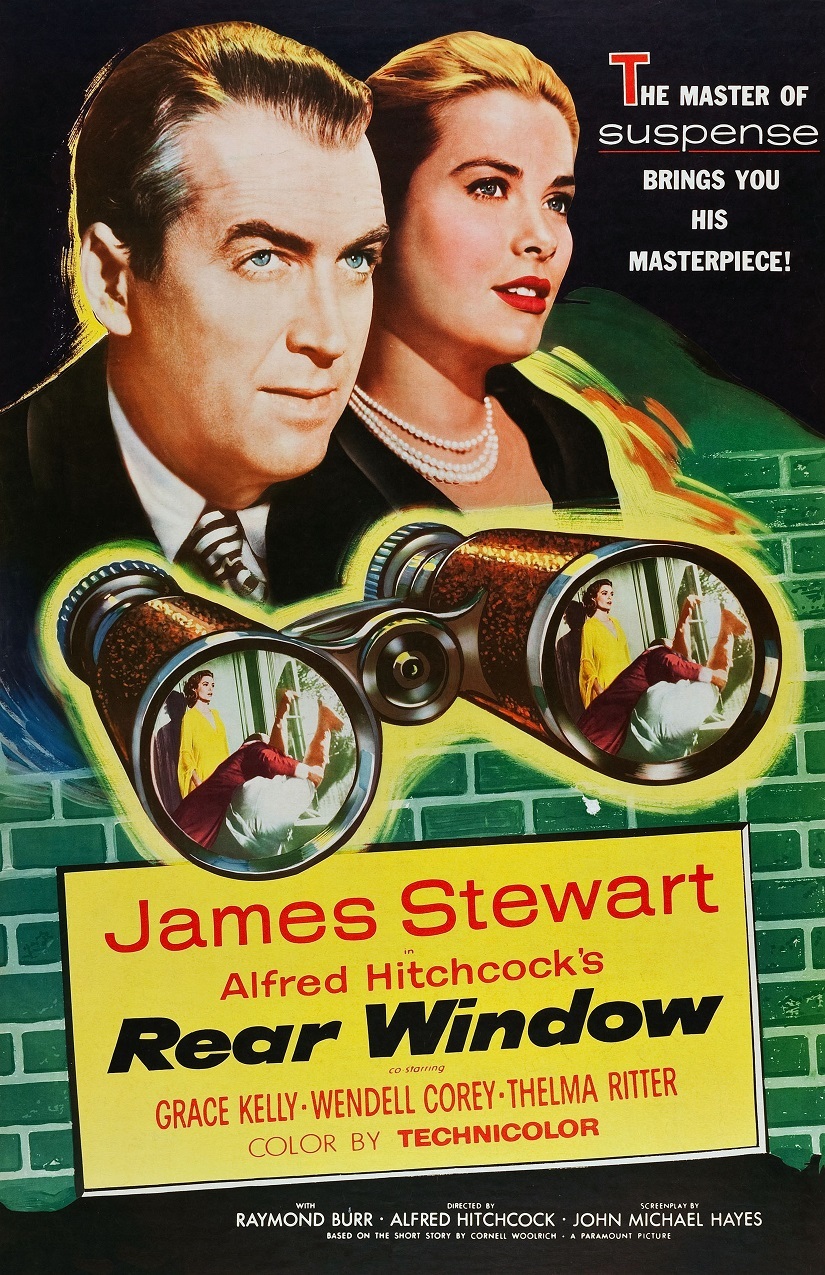
15. Rear Window (1954)
Directed by Alfred Hitchcock. Starring James Stewart, Grace Kelly
“We’ve become a race of Peeping Toms.” — Stella
The first Hitchcock film I fell in love with is still my favorite. The apartment courtyard perspective from Jimmy Stewart’s rear window is brilliant. Grace Kelly is at the height of her perfection, and humor and tension is blended perfectly in a script that has enough of a jolt to offer a satisfying end, and closing with Jimmy in a worse situation than when the film started with two broken legs is Hitchcock’s playful irony personified.
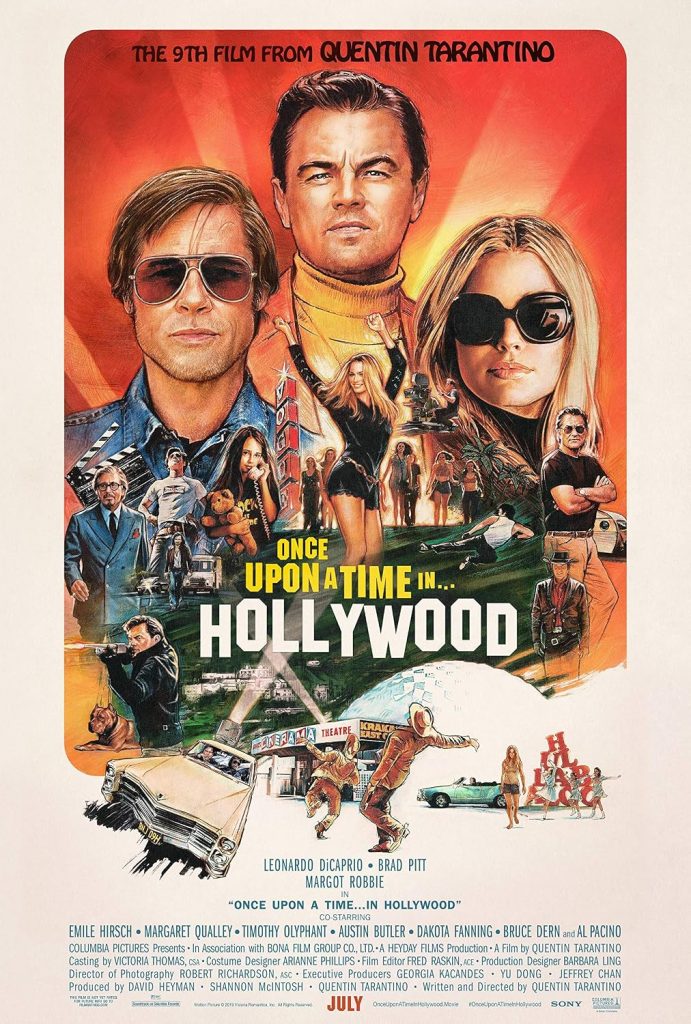
“Don’t cry in front of the Mexicans.” — Cliff Booth
Full disclosure, after the first viewing, I really wasn’t a huge fan of it. It is now without question my favorite Tarantino film, and the most restrained of his work. Save for the Bruce Lee/Cliff Booth backlot fight scene. QT is determined to get 1969 Los Angeles and its era of filmmaking over with the audience, not himself. The 93 KHJ Boss Radio playing throughout as Cliff’s muscle car races around Tinseltown creates the perfect atmospheric hang out film. The Rolling Stones “Out of Time” is ominously perfect as we approach the inevitable demise of Sharon Tate, only to have Tarantino swerving us with a fairy tale ending, where his restraint pays off as he uses the finale to unleash a torrent of his signature stylized violence, creating the perfect unexpected ending to the film.
Questions about Roman Polanski’s involvement, the potential of this being a Hollywood sacrifice or ritual, in particular since she was pregnant, Polanski having released Rosemary’s Baby the year before… All of that we’ll discuss some other time.
But for now, this holds the distinction of being both a favorite all time film as well as a highly rewatchable mood movie that can be thrown on anytime.
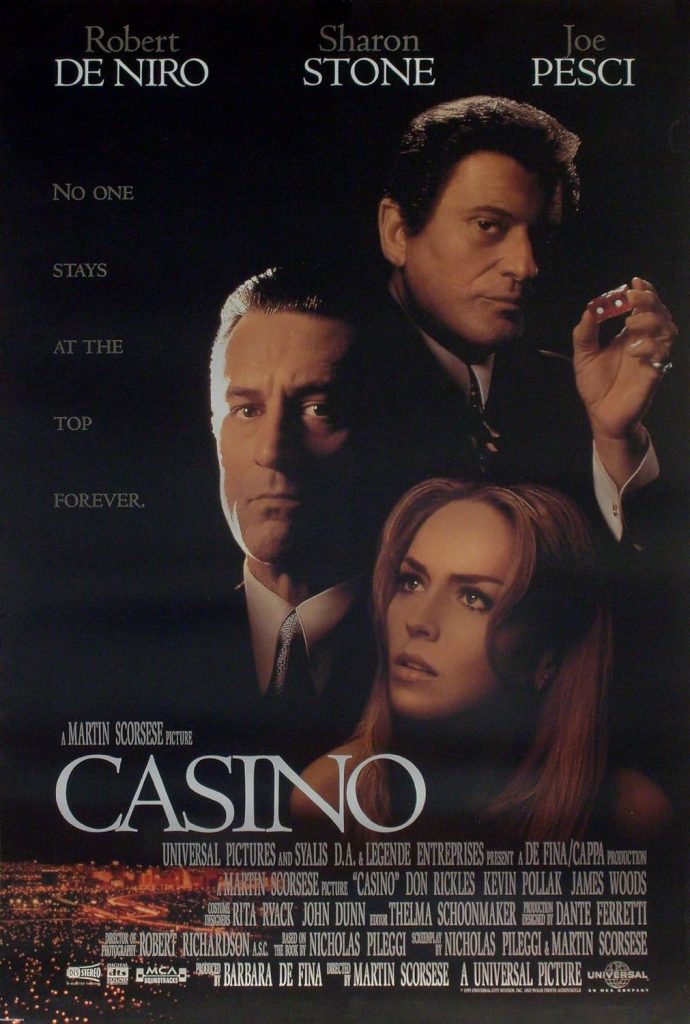
13. Casino (1995)
Directed by Martin Scorsese. Starring Robert De Niro, Sharon Stone, Joe Pesci
“I fucked up, Frankie. I fucked up good this time. I should have never started with this fucking broad.” — Nicky Santoro
Sharon Stone’s psychotic-bitch performance is so spot on you feel sorry for any of the men she has dated. There is no way aspects of that aren’t genuinely her. She should have won the Oscar for it, but flashing her pubic hair crossing and uncrossing her legs in Basic Instinct a few years prior ruffled some serious feathers at that Academy of Motion Pictures Arts and Sciences.
It features the same music-infused, documentary-style filmmaking that made Goodfellas great, but the edge is darker, the fall is longer, and the 70s Vegas nostalgia hits like a degenerate gambler on 17. Pesci’s performance is his best in my opinion, even when the violence is look-away from the screen for a moment level intense.
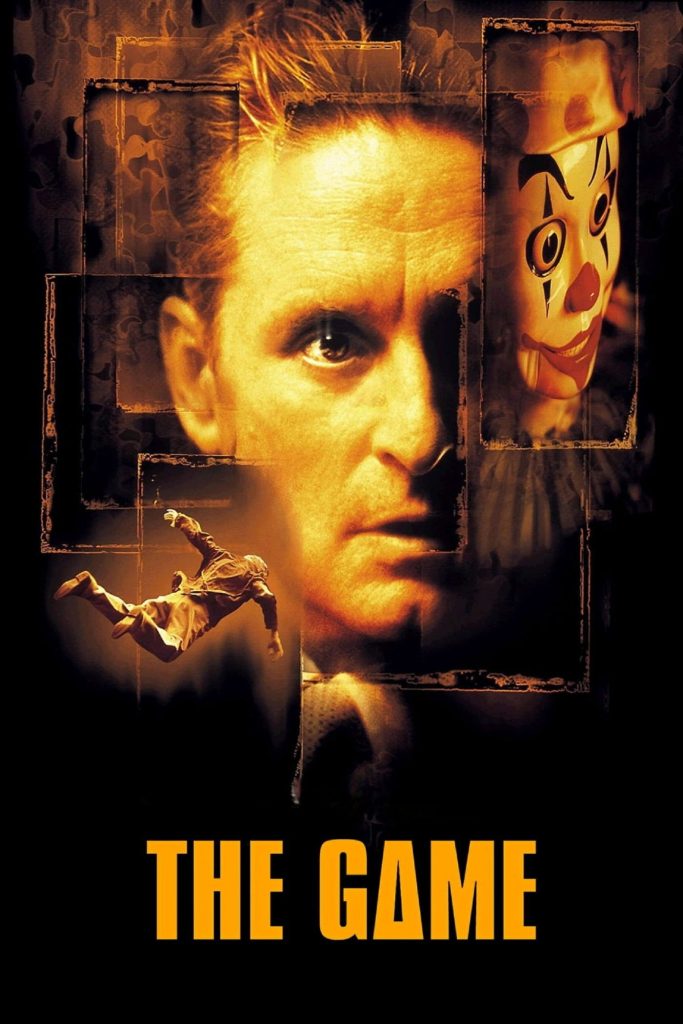
12. The Game (1997)
Directed by David Fincher. Starring Michael Douglas, Sean Penn, Deborah Kara Unger
“Discovering the object of the game is the object of the game.” — Daniel Schorr
You’re into The Game from nearly the beginning — a lunch with brother Conrad Van Orton (Sean Penn), a cryptic invitation, and it just builds and builds from there. Douglas plays the escalation perfectly. Underneath the thriller mechanics it’s a genuinely Gnostic-coded film: illusory reality, elite depravity, the false death and rebirth. Consumer Recreation Services, CRS, the perpetrators of The Game, give a not so subtle nod to the three-letter agencies that control our own reality and experience. Using psy-ops and trauma to move us across the board as they see fit.
It works out two things about modern life that most movies won’t touch — the false reality we’re handed as normal, and the hidden hands behind the curtain, pulling strings sometimes just for the sport of it. The Game is an initiation. It’s a natural companion piece to Eyes Wide Shut in that sense. As well as a counterpart to The Truman Show, all released in the back half of the 90’s. There’s also an iconic representation of San Francisco, one I grew up a couple hours away from that I feel no longer really exists in the same capacity — wealth, status, one of the most geographically blessed and architecturally stunning cities on earth, a world apart from what it’s become. The bones remain, but the soul is gone. The Game is a window into a not-so-distant past, and the revelation of a not-so-hidden ruling class.
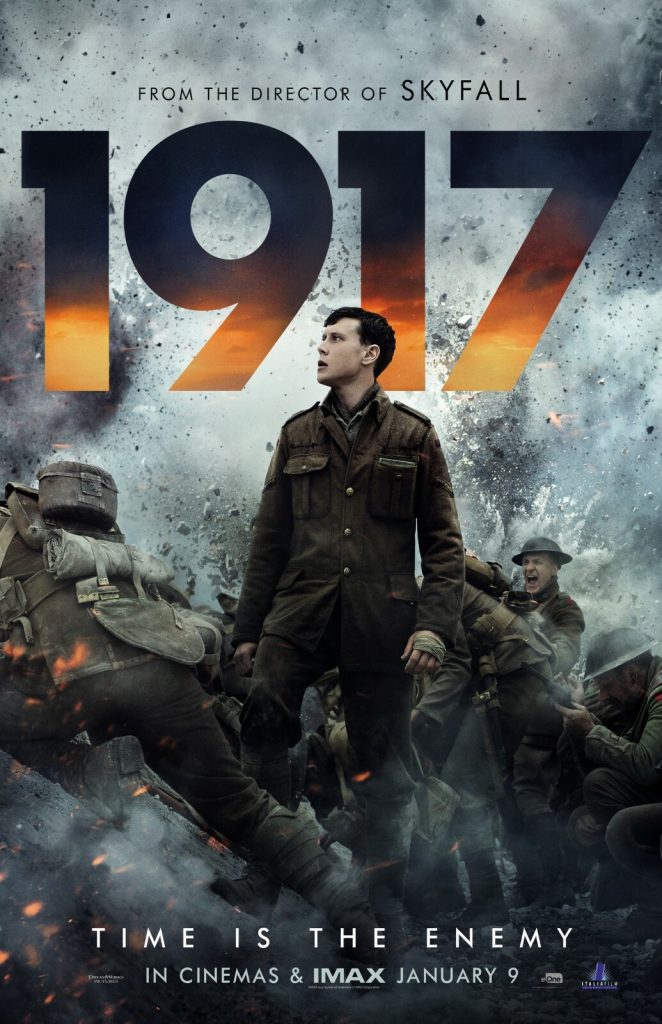
11. 1917 (2019)
Directed by Sam Mendes. Starring George MacKay, Dean-Charles Chapman, Mark Strong
“It’s easier not to go back at all.” — Lance Corporal Schofield
A film that should have won best picture, but was too masculine, too white, and too authentic to do so in the modern era.
The moment that makes this film an all-time favorite for me is Schofield finally breaking over the top and sprinting horizontally through the charging line, trying to reach the commanding officer before the second wave of the doomed attack goes off. It’s one of the most moving, most earned scenes I’ve ever watched, and it never diminishes — every viewing hits the same way. Roger Deakins shot nearly the entire film on a single 40mm lens — one unchanging eye, so the camera could slide from a wide trench shot into a close-up without ever breaking the illusion of one continuous take. The large-format digital camera he used is what gives the trenches and the breach their scale and depth, putting you in the mud alongside Schofield the whole way.
It’s beautiful, it moves fast, and like a great roller coaster, you’ll be ready to get in line to take the ride again once it’s finished.
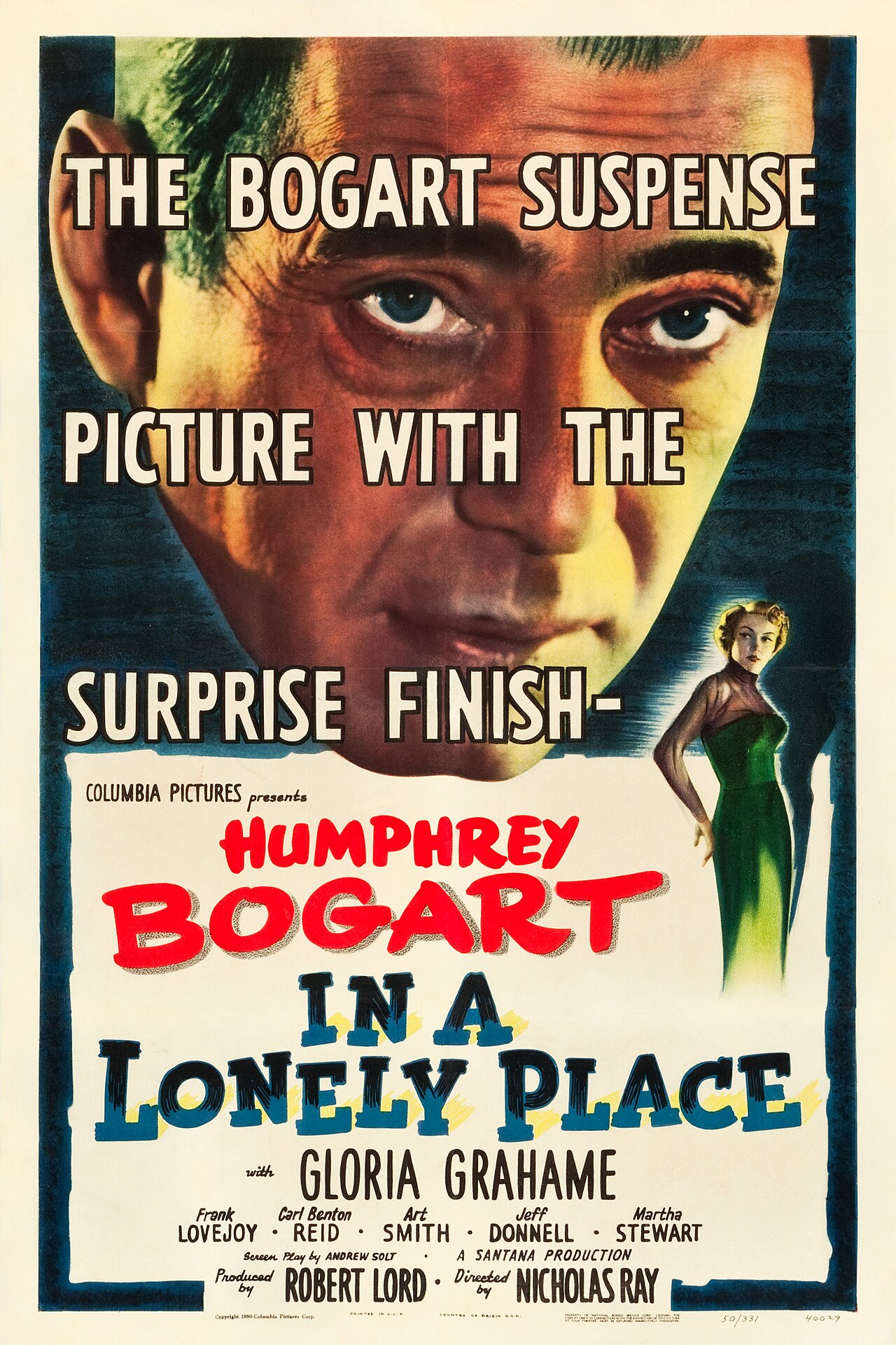
10. In A Lonely Place (1950)
Directed by Nicholas Ray. Starring Humphrey Bogart, Gloria Grahame
“I was born when she kissed me. I died when she left me. I lived a few weeks while she loved me.” — Dixon Steele
My grandfather passed away when I was two years old. In some ways, from the things I have heard about him, Humphrey Bogart reminds me of him. A cigar smoking, daily drinking, wry humored man with a sharp intellect driving things under the surface. That connection is one of the reasons I love Bogie as an actor.
It may not be Bogart’s best performance, but the script doesn’t require that. There’s much talk of a “male-loneliness epidemic”, Dixon Steele was living his own self imposed isolation long ago, and doing it with style. Gloria Grahame is stunning, and the story of her real life struggles with building a lasting marriage peek through into her character here. It’s an easy watch, and a great window into a rightfully romanticized era.
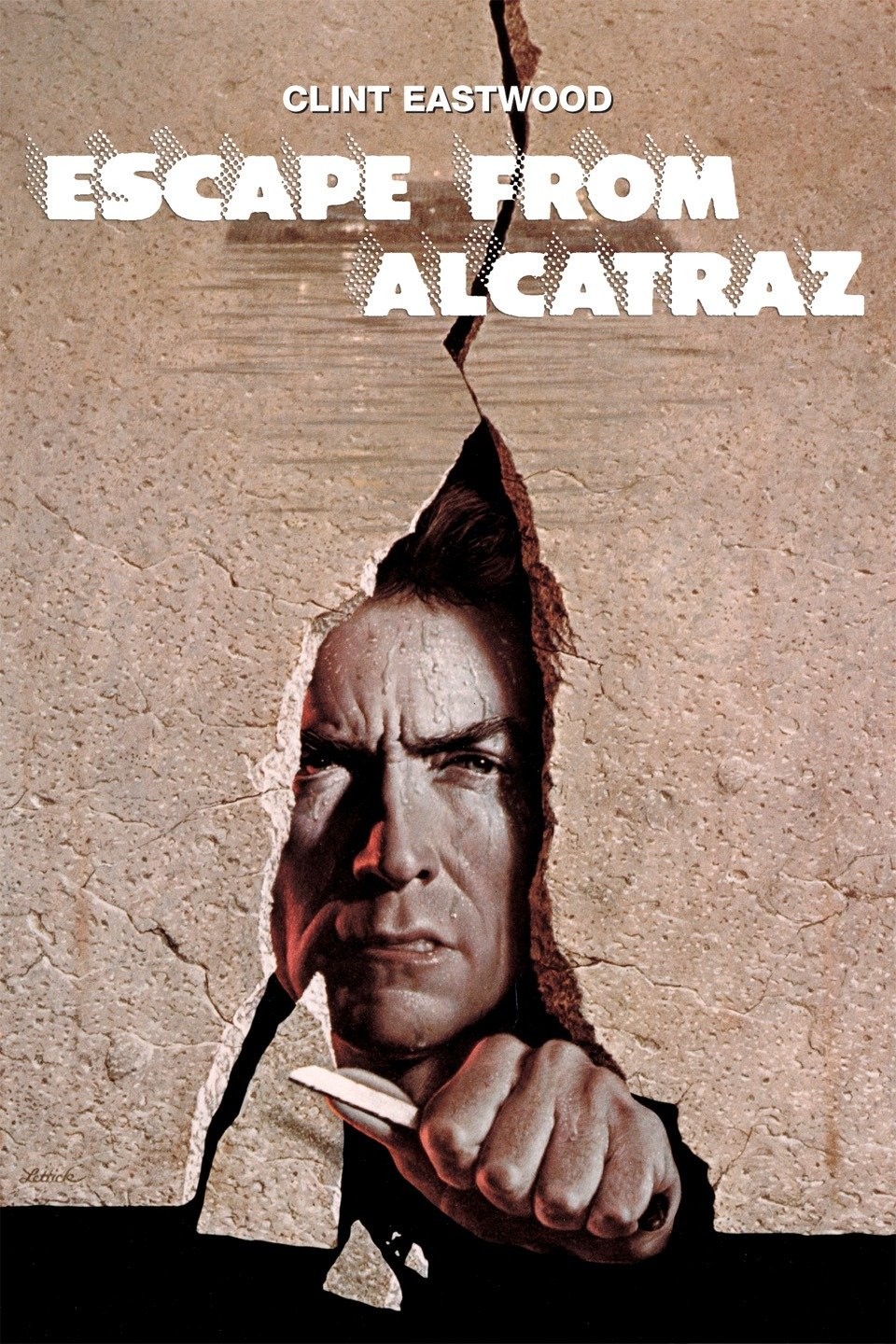
9. Escape from Alcatraz (1979)
Directed by Don Siegel. Starring Clint Eastwood, Patrick McGoohan
“No one has ever escaped from Alcatraz. And no one ever will!” — Warden
Alcatraz and the San Francisco Bay filtered through seventies American cinema grit, and a cagey Clint Eastwood leading the way — yes, I’m most definitely in.
I love the story, on screen and off. I’m a believer they did actually make it to Brazil, as History Channel’s special “Alcatraz: Search for the Truth” alluded to. It aired October 12, 2015, and that’s the special where the Widner family — the Anglin brothers’ nephews — brought forward the 1975 Brazil photo and the Christmas cards. The film version of the real-life prison escape delivers on all fronts.
No need to overthink this one, it’s a fantastic watch or rewatch.
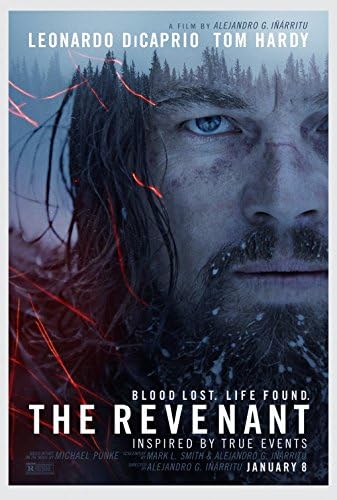
8. The Revenant (2015)
Directed by Alejandro González Iñárritu. Starring Leonardo DiCaprio, Tom Hardy
“I ain’t afraid to die anymore. I’d done it already.” — Hugh Glass
The Revenant is home to the greatest Native American attack sequence on film, the greatest grizzly bear attack scene on film, and some of the most breathtaking nature cinematography in cinema history. The film is paced perfectly with an incredible score by Ryuichi Sakamoto, and an “I will die for this mother fuggin’ Oscar” performance from Leonardo. One of my all time favorite in-theater experiences. I think I’ve just talked myself into watching it again this week.
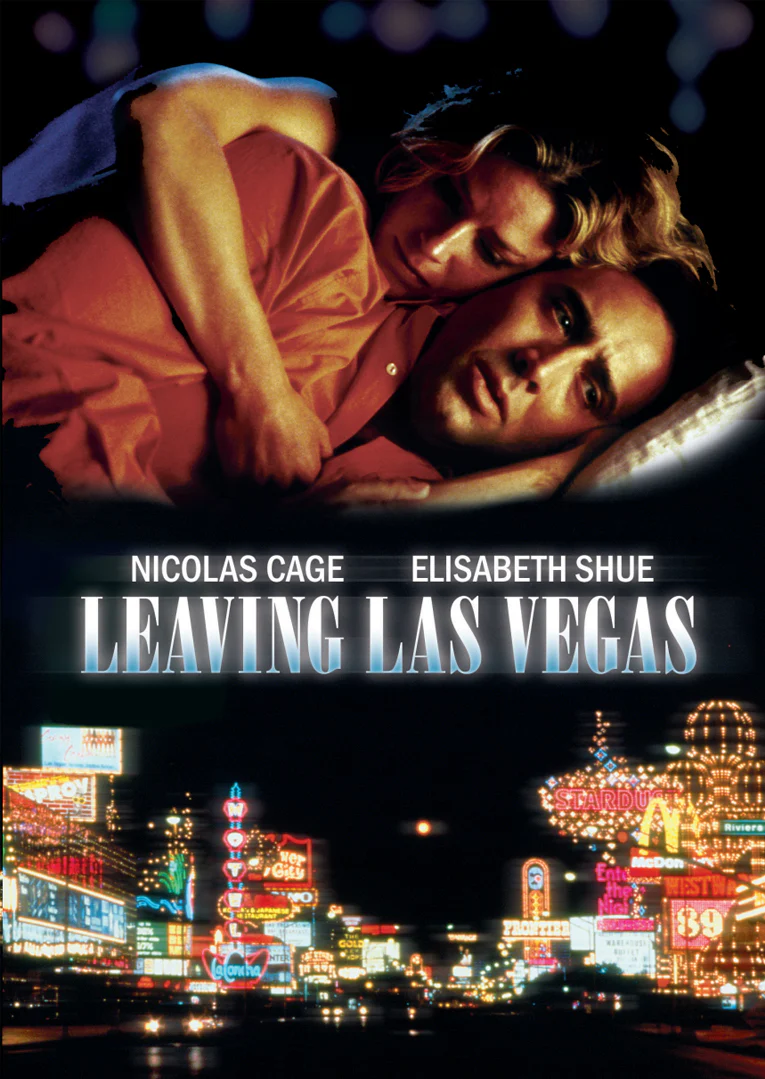
7. Leaving Las Vegas (1995)
Directed by Mike Figgis. Starring Nicolas Cage, Elisabeth Shue
“You can never, never ask me to stop drinking.” — Ben Sanderson
What happens if you stare into the abyss, and decide to jump in? This film is not for everyone, it’s dark, it’s depressing, but it’s undeniably real. Nic Cage took home his lone Oscar for his portrayal of Ben Sanderson, a Hollywood screenwriting cast off on a suicidal alcoholic mission to drink himself to death in Sin City. Ben makes the company of working girl Sera (Shue) and they embark on a romance of despair. The music, the cinematography, the performances, the cringe of a drunk hitting rock bottom and smiling through it— it will have you rethinking all the times you had one too many and made a fool of yourself in front of friends and family, and thanking God for abstinence and moderation.
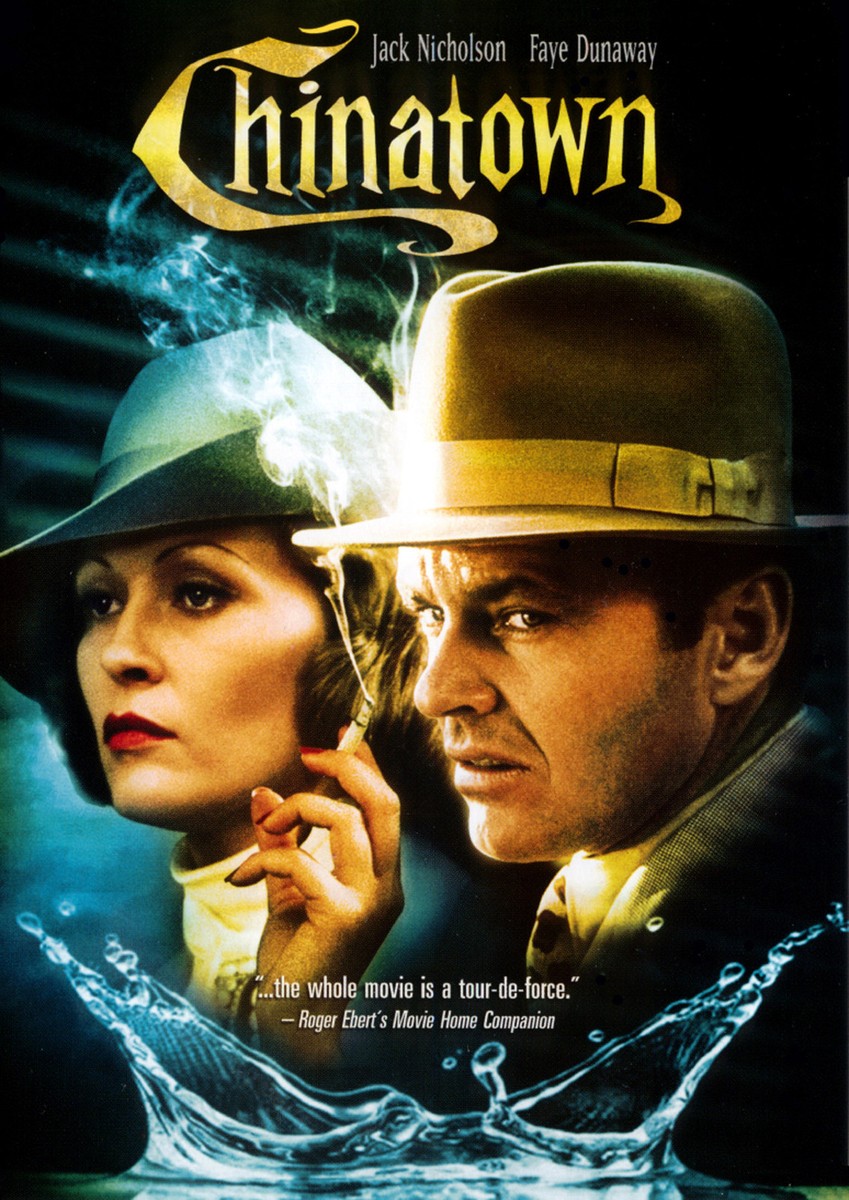
6. Chinatown (1974)
Directed by Roman Polanski. Starring Jack Nicholson, Faye Dunaway, John Huston
“Forget it, Jake. It’s Chinatown.” — Walsh
They call it the best screenplay of all time, and it may very well be that, but stopping there is selling the film far too short. A beautiful noir shot in full color, that by the way looks stunning on 4K (the images almost look 3D they are so rich in detail), the story of a hard-nose private dick who starts pulling a thread on a case and ends up with a whole ball of yarn in his lap he lacks the power to do anything with. Faye Dunaway’s dark secret reveal is an all-timer cinema surprise, and the final scene puts a perfect final touch on the message of the film. A Polanski masterpiece released just five years after the loss of his pregnant wife Sharon Tate, as we mentioned in Once Upon A Time in Hollywood.
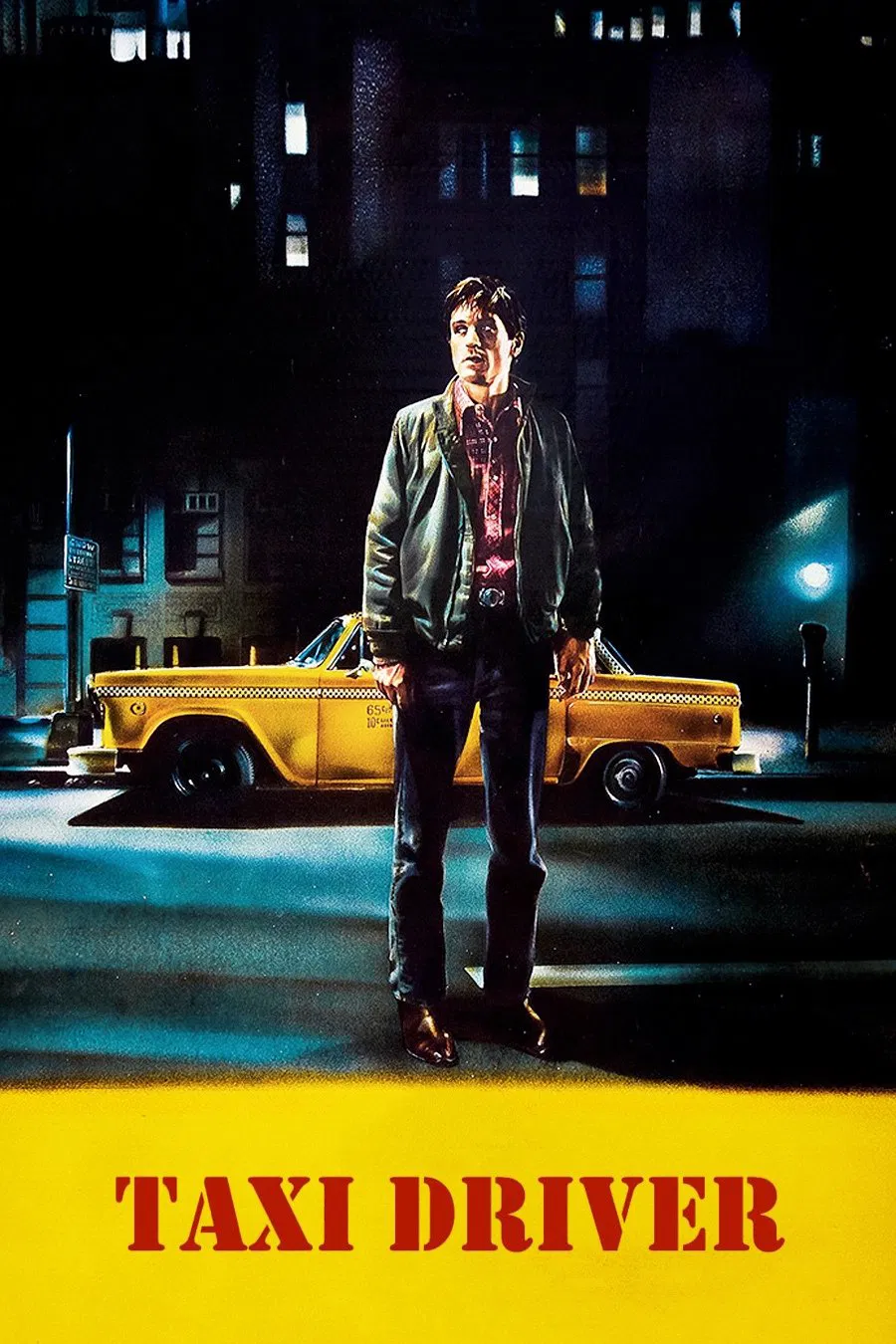
5. Taxi Driver (1976)
Directed by Martin Scorsese. Starring Robert De Niro, Jodie Foster
“Someday a real rain will come and wash all this scum off the streets.” — Travis Bickle
1970’s New York City, Martin Scorsese, Robert De Niro, Bernard Herrmann’s score, and a vicious script from Paul Schrader. Driving the streets of New York at night with the jazz score carrying you along is mesmerizing, yet the next chaotic incident is always out there, usually waiting around the next turn. One of the first films to hit me in my formative years with a, “this is my favorite movie of all time, this is it.” feeling.
A broken man in a broken world trying to do right in a broken way.
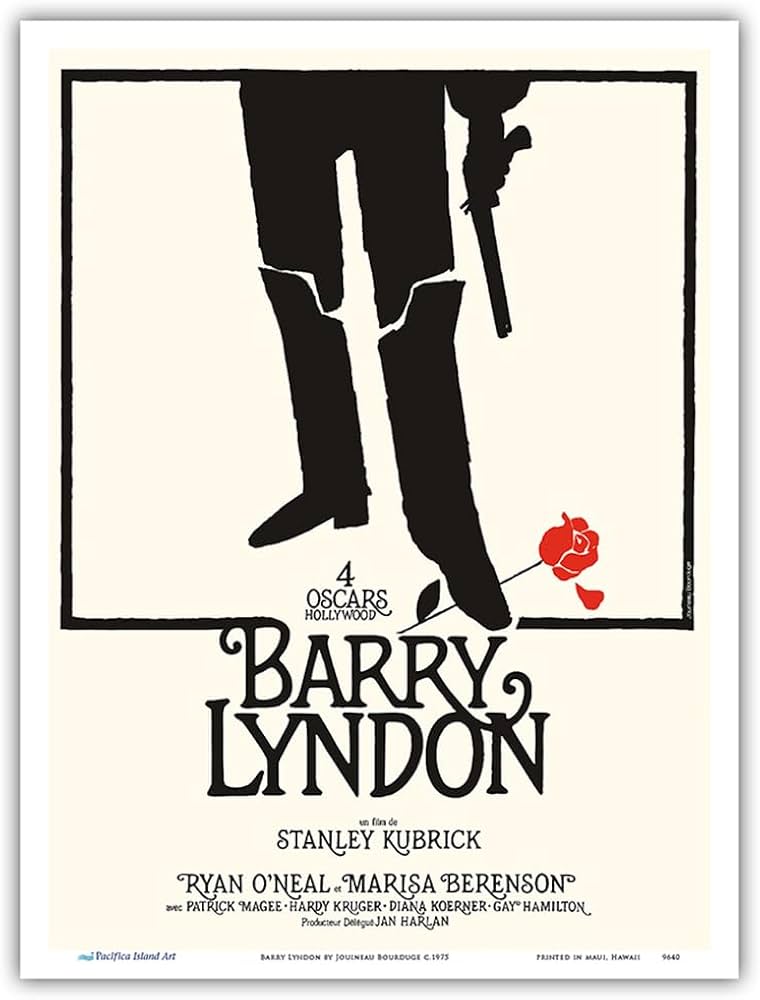
4. Barry Lyndon (1975)
Directed by Stanley Kubrick. Starring Ryan O’Neal, Marisa Berenson
“It was in the reign of George III that the aforesaid personages lived and quarrelled; good or bad, handsome or ugly, rich or poor, they are all equal now.” — Closing narration
I saw this movie for the first time only in the past year. Stanley Kubrick’s misunderstood masterpiece. It stuck with me for weeks after the first viewing, the utter beauty of the film, the palette, the grand set design and period perfect costumes all served as accents on the message that struck me flat— do we live our lives, or merely survive them? Hopping from one opportunity to the next, as fate twists its way around us over the years, as we become different versions of ourselves, as actors in a play we didn’t write, as a means of self-preservation, and the dire consequences that living such a life can bring about when ambition reigns without conscience.
Perhaps the most gorgeous film ever shot, each frame presenting itself as a living painting of the era. There is a driving score that Kubrick re-orchestrated himself that marches us along like a funeral procession, beat by beat, ever closer to our inescapable fate.
Watch this immediately if you haven’t already, and dispel any expectations you have of what a Kubrick film is before you do so.
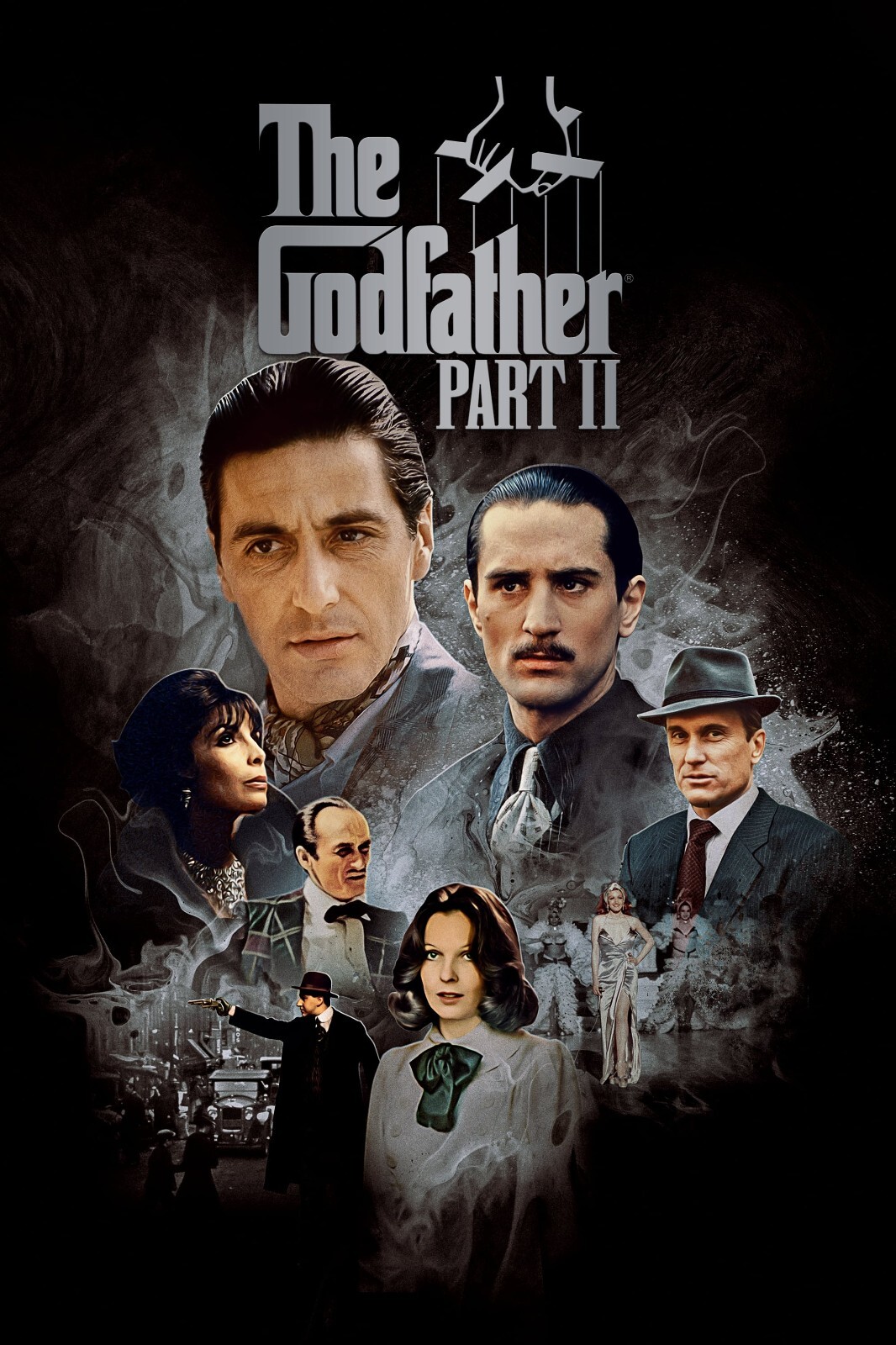
3. The Godfather Part II (1974)
Directed by Francis Ford Coppola. Starring Al Pacino, Robert De Niro, Robert Duvall
“I don’t feel I have to wipe everybody out, Tom. Just my enemies.” — Michael Corleone
I’m in the camp who prefer the second act of The Godfather to the first, but that is in no way intended as a slight at the original. Part II builds upon the foundation of the family. We split time between Robert De Niro as a newly arrived Don Corleone in the early 20th century, and Michael Corleone in a post Don world, evolving into what he went away to World War 2 to avoid becoming; his father. This is my Star Wars, a trilogy of dynastic power and character devolution, chronicling an authentic ascent into power, and all its dark corridors that ensnare you along the way.
This is family.
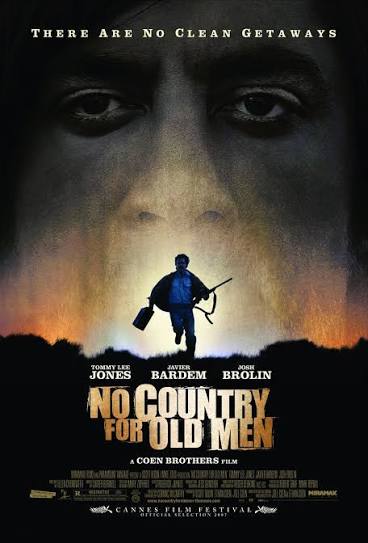
2. No Country for Old Men (2007)
Directed by Ethan Coen, Joel Coen. Starring Tommy Lee Jones, Javier Bardem, Josh Brolin
“You never know what worse luck your bad luck has saved you from.” — Ellis
This is as close as it gets for me to a perfect film. On the surface we have a three man chase, scene by scene, one following another, with a ticking clock to see if Llewellyn Moss can get away with the money before Anton Chigurh can track him down, and Sheriff Ed Tom Bell bringing up the rear, assessing the damage in the wake of the storm. It’s perfectly cast, perfectly shot, perfectly paced, and perfectly ended.
It holds true to the Cormac McCarthy novel for much of the film, and uses much of the same dialogue. The script for the film is one that I find highly quotable, even though I’ve been told, “it’s not that kind of movie.” But how can you not love lines like “supposedly ky-yotes won’t eat a Mexican.” and “I know something better. I know where it’s going to be, it will be brought to me and placed at my feet.” and “It’s the tide. It’s the dismal tide. It’s not the one thing.”
The film is not what many expect, and that sours a lot of first viewings. Its pacing, style and abrupt violence can be off-putting for some, but are part of the recipe that makes it a film that has stayed with me for nearly twenty years.
Every answer you seek about the film’s plot was most likely presented in a frame that went unnoticed upon first, second or even a tenth viewing. From Chigurh walking outside and checking his boots, a green light before a car crash, or the loose screws next to the vent, the Coens put together an absolute masterpiece with subtle clues embedded the whole way through.
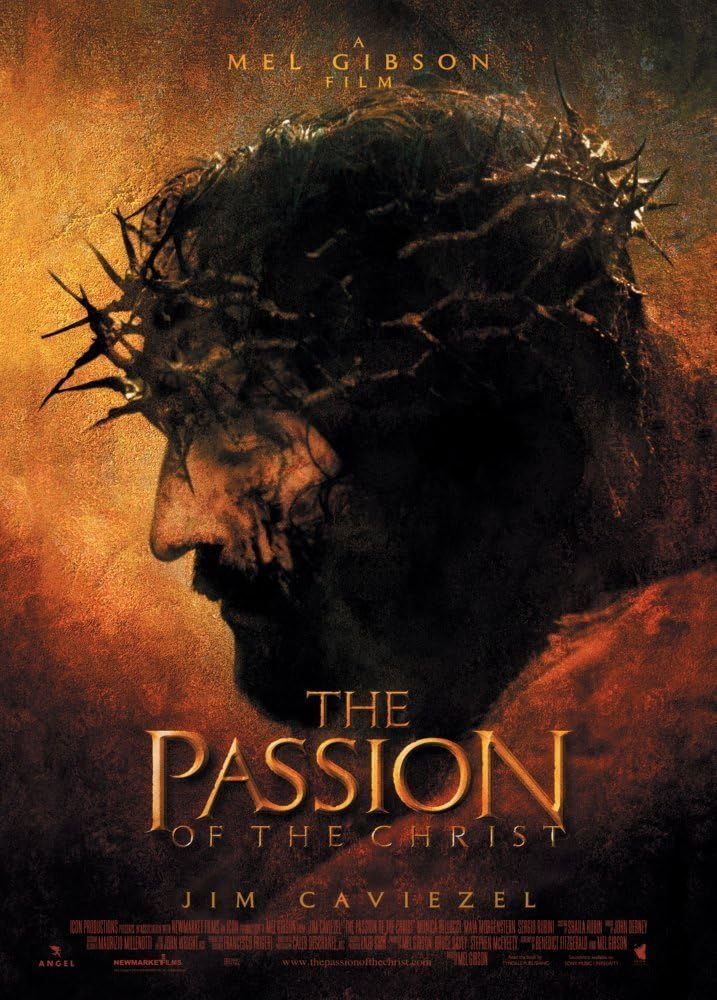
1. The Passion of the Christ (2004)
Directed by Mel Gibson. Starring Jim Caviezel, Maia Morgenstern
“See, Mother, I make all things new.” — JesusChrist
The most important film ever made. The art of cinema has never put the greatest story ever told on film as well as Mel Gibson did so with The Passion of the Christ.
Against the industry itself that sought to suppress it, this film was made with craft, care and respect for its source material— the gospels themselves, in such a way that led to a finished product that is truly transcendent.
This is an annual Good Friday viewing for me. A film that I think of, without exaggeration, daily.
Gibson’s decisions were flawless; casting, script, costume, imagery, pacing. When to show things, how long to show them, etc. The list of correct choices he made in succession to put this together is hard to quantify. The clearest and cleanest explanation I have for it is that he was being driven by a force far greater than himself. I’m sure he would agree.
Yes, the Honda Odyssey gag is an original meme. I’ll be posting more of these here on occasion — consider them the Sunday funnies or political cartoons of this publication.
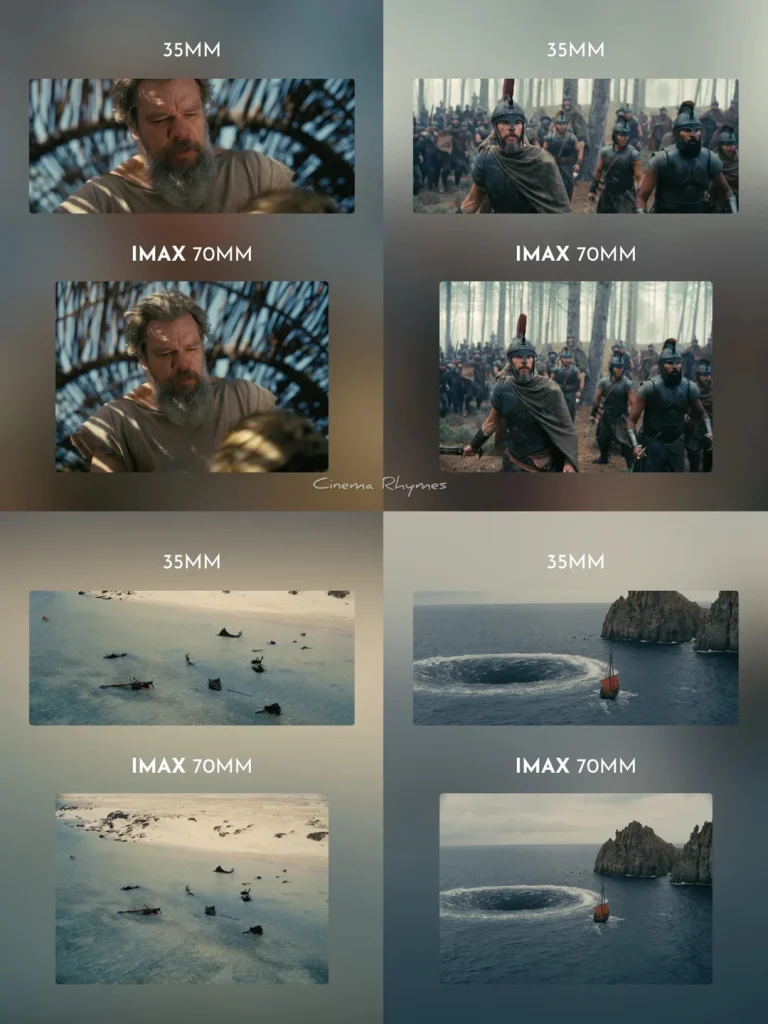
The Odyssey, the highly polarizing new film from director Christopher Nolan, opened yesterday. The media and establishment cinema sites have heaped praise on it, and reports have come out that Rotten Tomatoes is pruning user reviews to keep the score high. Meanwhile, I’ve heard plenty of dissenting opinions on social media taking aim at the dialogue, acting, pacing, and overall production. I’ve read there are a few big set pieces that genuinely wow, but the film itself is a genuine disappointment to many longtime Nolan fans — and then there’s a shocking wrinkle where IMAX viewers are getting a significantly better view of the film than everyone in a regular theater.
Here’s the short version of why: Nolan shot the entire film on IMAX cameras in the format’s full 1.43:1 aspect ratio — the tallest, most complete frame there is. But only a small handful of true IMAX 70mm theaters in the world can actually project that full frame. Everyone else is watching a cropped movie. Standard IMAX screens show it at 1.90:1. Regular digital and 35mm showings crop it down further still, to a conventional widescreen ratio. So depending on where you buy your ticket, you are not just getting a smaller screen — you are literally seeing less of the image Nolan shot. Same movie, meaningfully different film, and most people who buy a ticket this weekend have no idea which version they’re getting. And judging by the frame comparisons, the standard version of the film looks significantly worse. When has an artist of the craftsmanship of Christopher Nolan ever volunteered up their work to be circumcised by the aspect ratio of the vast majority of screens that will be displaying it? Stanley Kubrick famously sent theaters a written directive for Barry Lyndon in 1975, spelling out the exact aspect ratio projectionists were required to use and leaving no room for improvisation — which makes it all the more strange that a director as controlling as Nolan is letting The Odyssey go out into the world as two visibly different versions of itself.
One of the more interesting analyses I’ve come across is from Jonathan Pageau, who was highly impressed with the film and considers it, in his words, a Trojan Horse. Early in the film there’s a scene where the blind servant Eumaeus is training Telemachus in swordplay — the boy keeps getting beaten because his defense is too fast, so Eumaeus tells him to slow down, open his chest, invite the attack, and use his opponent’s own momentum against him. Pageau reads that as the key to the whole picture: Nolan does the same move on the audience, absorbing the blow of wokeness and inclusivity right up front so he can turn it back around on you by the end. His thesis, as I understand it: Nolan is aware of how repressive the current filmmaking environment is, has adopted that veneer to get the thing made and released, and has smuggled inside it a film that at its core is about the return of the father, the son inheriting his authority through an act of filiation, not revolution (as we have seen throughout the past decade in storytelling) and the restoration of an order that had been failed by the very people meant to guard it. The casting of Elliot Page, formerly Ellen Page, is intentional, as she represents Sinon (not from the Odyssey, from the Aeneid), the character who stays with the Trojan Horse to convince the Trojans that it is a gift. In this version, Sinon doesn’t know that this is a trick — he thinks it is a legitimate offering to Athena. Sinon is a shepherd, sent to war to fight as a “replacement man.” The casting being intentional by Nolan on two fronts: the Trojan Horse being delivered by the unaware, and because the character in the story is a stand-in for the real man who was to be tasked with this duty.
Several great filmmakers have worked inside repressive environments and still gotten their real, human, and even subtextual meanings across. Tarkovsky wrestled with faith, despair, and spirituality inside the Soviet Union. Alfred Hitchcock built an entire career navigating around the Hays Code. Jafar Panahi has kept making films in Iran after being formally banned from filmmaking by the regime — one of them reportedly smuggled out of the country on a flash drive hidden inside a cake.
But a hidden message does not a great film make. A film is the cumulative result of thousands and thousands of interconnected decisions — palette, acting, script, atmosphere, mood, visual effects, and on and on. The mystique of movies is that all of those variables blend together, and the end result lives or dies on the final product that enters our eyes and ears. If The Odyssey really is an attempt to subvert the subversion, does that make up for the areas where the film is lacking in other categories? Each person must decide that for themselves.
Nevertheless — this still has not moved me to want to view the film in theaters, or spend any money in support of it, though I am open to the possibility of Pageau’s interpretation. I believe the film will continue to be used as a bellwether in the culture war playing out across the West. Whether it’s ultimately remembered as the high-water mark of Hollywood’s self-destruction, or as a brilliant Trojan Horse rammed into the heart of modern deconstructionist art, is a fate yet to be known.