The Ghost Ledger is (Almost) Live


The real Ghost Ledger that is.

The Clarity Act failed to pass cloture yesterday on the Senate floor.

The core idea behind the Clarity Act is to clearly define how the government would approach different types of cryptocurrencies and blockchain projects, and give specific roles to the regulatory agencies, including new authority for the CFTC to be a watchdog for crypto spot markets. — CoinDesk

Senator John Kennedy believes the bill isn’t dead. He said he wasn’t surprised by the vote, but that “it’s gonna have to wait until the lame duck session.”

It was unlikely that Democrats would approve anything that President Trump could point to as a victory this close to midterms, in spite of the fact that they essentially got all of the changes to the bill they asked for.

This bill does not specifically apply to Bitcoin, which in my article Bitcoin Brain, I defined as something of a blockchain red herring. This bill is about the rails underneath the coming financial system. It never mentions ISO 20022 (the messaging standard the banks have already moved onto) but it decides which tokens are securities under the SEC and which are digital commodities under the CFTC, which is the question the SEC and CFTC already answered for the ISO 20022 coins like XRP in a joint interpretation this March — this bill would write it into law.


Running a validator or staking to secure a network would not, on its own, count as a securities transaction. Exchanges couldn’t pay yield on stablecoins just sitting in your account, but rewards tied to actually using them would still be allowed. Clear rules of the road — the thing institutional money has been waiting on.

The SEC and the Commodity Futures Trading Commission (CFTC) have stated that they are moving forward with their own regulations and rules on the implementation of this technology into the financial system.

Adoption is inevitable.

Along with the ‘mainstreaming’ that is going on, certain influencers seem to have gotten the call that the time to inject this into the collective consciousness has arrived. Including Alex Jones. Alex famously states that he predicted 9/11. My question in response to that is, who gave him that information? He’s been a vessel for seeding information prior to significant events for decades, and now he has this to say:

This is ironic to me, as The Art of the Empire’s in-universe conspiracy podcaster, Dax Winters, interviewed a man who created a technology not dissimilar from the XRP Ledger. It happens in chapter 16 of The Ghost Ledger, book one of The Art of the Empire series.

In some ways, it feels like the book has either predicted this, or memed it into existence. Of course, I say that with all due humility.

And for those interested, the first draft of its anticipated sequel, Project Naked Sky, has been completed, with a launch date that may still make the end of the year. The surge in post-production work on the manuscript is partly to blame for the reduction in publishing on this site the past few days. 

Check out Dax Winters of The Dax Winters Experience interviewing Jonah Kaplan of SunChain Ledger from The Ghost Ledger for a little humor, and a breakdown of the possibilities offered by distributed ledger technology:


The Dax Winters Experience #1206: THE ALCHEMIST – Featuring Jonah Kaplan 

Dax leaned into the desk; fingers interlocked.

“Tonight’s conversation isn’t about Bitcoin. It’s not about Dogecoin. It’s not about your favorite meme token of the month. It’s about what happens after all that. When crypto doesn’t just interrupt the financial system, it becomes it.”

He tapped the desk lightly. No theatrics — just message.

“My guest tonight isn’t trying to build a fanbase. He’s trying to rewire the financial nervous system of the entire world. If he’s right, we’re looking at the end of capital bottlenecks, settlement delays, and debt as we know it. If he’s wrong… he’s just the smartest lunatic I’ve ever had on.”

He smiled faintly.

“Either way, you’re going to want to pay attention.”

The screen split.

On the left: Dax in perfect studio lighting, sharp and composed. On the right: a dim office space — a converted lab turned cryptographers sandbox, cluttered but functional, lit by half-watt fluorescents and the soft blink of diagnostic LEDs.

Jonah Kaplan looked like he’d been dragged off a quantum rail project mid-debug.

Faded hoodie. Wireframe glasses. Hair half-tied back. He was scribbling on a tablet with one hand and adjusting something off-screen with the other when he noticed the stream was live.

“Jonah,” Dax said, grinning. “You’re with us.”

Jonah looked up. “One sec. The cooling node on the validator rig just threw a spike. Probably nothing, but I’d rather not start a fire during the interview.”

He leaned out of frame. A sharp metal clack, then silence.

“There we go,” he said, slipping the tablet off. “Sorry. Didn’t mean to be rude.”

“No worries,” Dax said. “You’re famously terrible at introductions. So, I’ll do it.”

He turned slightly toward the camera.

“This is Jonah Kaplan. Some of you know the name. Most of you have no idea how close this guy came to getting disappeared by the same people who now host blockchain conferences for G7 countries. He built the SunChain Ledger. He’s the architect behind its native token, the RAY protocol. He walked away from a classified DARPA lab project in 2014 and started uploading pseudonymous whitepapers that half the industry dismissed — until his code started exposing all the warts in commercial payment rails.”

Dax leaned back, letting that settle.

“He’s not here to pump anything. He’s here because he understands what the world is choking on — and what might clear the air.”

He turned to the screen. “Jonah. Let’s cut through the buzzwords. What is SunChain?”

Jonah nodded once, as if flipping a mental switch.

“It’s a distributed ledger system optimized for frictionless settlement. Global, instant, trustless.”

“Okay,” Dax said, “Talk to me like I’m a CFO. What’s it actually do?”

“It replaces the financial middle layer,” Jonah replied. “All of it. No more days-long wire transfers. No more Swift. No more needing Visa to approve a purchase at midnight on a weekend. If I send money to you across the world — it settles instantly. No bank has to ‘clear it.’ The validators handle that.”

“And what are validators?”

“Decentralized nodes,” Jonah said. “No central server. No third-party clearinghouse. Each node verifies transactions independently. If enough of them agree — the network accepts it as true. The transaction locks in.”

“Why does that matter?”

Jonah’s eyes lit slightly.

“Because right now, we have trillions of dollars locked in escrow accounts. Corporations, banks, governments — they all keep money parked just to cover delays and settlement lag. SunChain removes the lag. That capital comes back online.”

Dax whistled softly. “You’re saying it frees up—”

“Global liquidity,” Jonah said. “That’s the first domino.”

Dax leaned back. “But hang on — for the folks at home who think blockchain is just internet monopoly money — break it down real simple. What is this thing?”

Jonah’s eyes lit up slightly, shifting into teacher mode.

“Think of it like a ledger — a record book. But instead of one bank keeping their own private ledger that only they control, this ledger is copied across thousands of computers worldwide. Every transaction gets recorded on all of them simultaneously. You can’t forge an entry because everyone has the same copy. You can’t delete history because it’s written everywhere at once. And you can’t shut it down because there’s no central office to raid.”

“So, it’s like if everyone in town had an identical copy of the same checkbook, and they all had to agree before any check cleared?”

“Exactly. Except the whole world is the town. And once something’s written, it’s there forever.”

Dax nodded. “And the RAY token?”

“We called it RAY — Reciprocal Asset Yield. Because that’s what this is. Not interest. Not speculation. But a mutual return. You bring value into this ecosystem — RAY makes sure it’s reflected back.”

Jonah adjusted his glasses before continuing.

“It does that because it’s the transfer medium,” Jonah said. “You use RAY to bridge currencies, move value, tokenize assets. And I don’t just mean money. Real Estate. Commodities. Contracts. A shipment of wheat. An intellectual property license. A national bond. If it can be tracked or priced — it can be tokenized and traded 24/7 with no intermediary.”

“You’re talking about a 24/7 global trading desk for everything,” Dax said.

“Yes,” Jonah said. “On-chain, in real time, with zero counterparty risk.”

“Debt?” Dax asked.

Jonah didn’t blink.

“Already solved.”

“No shit? Go on.”

“We tokenize it. The U.S. doesn’t need to owe China anymore. Think Digital Treasuries issued as blockchain assets — fully transparent, interest-bearing, with built-in terms. America can sell that debt on a global market instantly. Anyone in the world can hold a piece; sovereigns, investment banks, retail traders. You remove the geopolitical hostage element — and you gain velocity.”

Dax narrowed his eyes.

“What about the fifty billion RAY tokens still locked up in escrow? You’re telling me SunChain Labs doesn’t control more than half the total supply?”

Jonah didn’t flinch.

“That escrow exists for a reason — over-the-counter sales, seeding the ecosystem, supporting startups that build on our rails. Those coins are time-released. No dumping, no market shock. Structured allocation only.”

Dax cocked his head to the side.

“To who?”
 Dax pressed him.

“Is it major banks? Remittance networks. Institutional partners. I’ve heard some big players are already under NDA. But I’ve seen names — Western Union, Wall Street firms… even the Fed has been floating the idea of replacing SWIFT.”

Dax shook his head slightly and continued.

“I mean, all of that said, RAY is sitting there at thirty-seven cents right now. Some people think it’s a dead coin.”

The left side of Jonah’s mouth curled slightly.

“There are real-world use cases for RAY, including the ones you just alluded to. Several adoption agreements are waiting on regulatory frameworks. I can’t comment beyond that.”

Dax paused. A silence, weighty and measured, then he spoke.

“Let me tell you who’s trying to hold them.”

The lighting on Dax’s side of the screen dimmed a touch. The studio map shifted — red pulses overtaking blue on the LED screen.

“You think the people at the World Economic Forum haven’t heard this pitch? You think the bankers don’t want real-time settlements — as long as they decide what settles and who gets to transact?”

He held up a finger.

“CBDCs. Central Bank Digital Currencies. Sound familiar? Same tech. Different leash. Instead of open, neutral, and voluntary — it’s mandatory, programmable, and surveilled. You post the wrong meme? They freeze your account. You didn’t take your booster? You can’t board the train.”

Jonah stayed silent. He knew this part of the conversation was de rigueur for a Dax show appearance.

“This interview isn’t about crypto,” Dax said, turning back to the lens. “It’s about control. Either we build a system that liberates… or they’ll build one that enslaves.”

He tapped the desk once more. Quiet.

“You have the map now. Choose your path wisely.”

The screen faded to black.


Going Nuclear

The conservative party in power has actually presented something that would help the American family.

The Department of Health and Human Services is drafting a rule change that would pay married parents roughly $9,000 a year per child to stay home and raise them. The money comes out of the Child Care and Development Fund, a $12 billion Clinton-era program built to pay for daycare so parents could go to work. To qualify you have to be married, and one spouse has to be putting in at least 35 hours a week. It doesn’t need a bill or a vote — just White House sign-off and a comment period.

This, if followed as presented, would be one of the most pro-family policies to come out of Washington since the mid-20th century.

“Parents who bear the toil, expense and opportunity cost… currently get zero.” — Roger Severino

When our birthrate was declining, I found it mighty peculiar that the only remedy presented for this problem was infinite immigration from all parts of the non-westernized world. It certainly wasn’t to create policy that encouraged and enabled the native population of the nation to start families. (Yes, Americans are a nation. It was considered people living in America of European descent.) Hungary has offered tax incentives for having children — mothers of four or more have paid no income tax for life since 2020, and Orbán has since dropped that threshold to two. Russia pays lump sums for births with regional bonuses stacked on top. China ended the one-child policy in 2015 and finally started cutting checks last year — 3,600 yuan, about $500, every year until the kid turns three. That’s real money in a country where the average rural person lives on about $3,500 a year.

Why worry about the people of your nation reproducing when there’s billions of people ready to flood into your country that you can hand jobs and small business loans to! The SBA refused to even list country of origin for these loans they’re giving out. To this administration’s credit, the SBA finally shut that window in March. Green card holders are barred from 7(a) loans entirely now. It only took until 2026.

The key element of this childcare rule change that must be maintained for it to actually be a “pro-family” policy, is that it must only apply to married individuals. Married-couple households were 74% of this country in 1960. They’ve been under 50% since 2010. Children born to unwed mothers went from 5% to roughly 40% across the same stretch, and the share of kids living with only their mother nearly tripled. It’s as if the Great Society had the opposite effect of its title. The numbers don’t lie.

Automation and AI are coming and will utlimately wreak havoc upon the labor market once the new paradigm is built. The people who want to sell you the idea that “they’ll just create new jobs, someone has to work on the robots!” Yes, someone does have to work on the robots, and at some point it will be another robot. In the meantime, one mechanic servicing a fleet of 500 robots who have replaced 3 human workers each does not offer industrial revolution labor growth.

A lot of people are going to be out of the work force anyway, moving into familial support roles is the most desirable outcome.

This would pair perfectly with a home-school voucher in the $7k per child range. Public schools spent $17,619 per pupil in FY2024, the highest figure ever recorded. The federal slice of that is about $2,500. Tearing down the indoctrinating and ineffective school system would help accelerate the nation’s flight from the grasps of cultural marxism.

Private, cooperative and religious schools would thrive. Sure, the inner cities would be a mess, many of the kids wouldn’t be able to pass basic reading or mathematics proficiency. Oh wait, we’re already there. Five percent of Detroit fourth graders were proficient in reading in 2024. Cleveland was at eight. Nine percent of Baltimore eighth graders were proficient in math.

My instincts, or political whiplash conditioning, tell me this may be another policy that will have been presented first as a good idea, get railroaded by the media and the Democrats, then get walked back, turned into something completely ineffective, and yet still victory will be declared.

But that is certainly not my hope.

This change is one that is worth fighting for.

“Don’t ever take sides with anyone against the family again.” — Michael Corleone

Photo: Norman Rockwell, Freedom of Want (1943), public domain.

X Money X Problems


This week X, formerly Twitter, began the rollout of X Money. This has been something I have been anticipating since Elon Musk purchased Twitter for $44 billion in 2022.

“X Money is designed to make traditional bank accounts unnecessary for users.” — The Paypers

X Money is not simply a feature of X, but may be the reason Elon acquired the social media platform to begin with. Elon had originally envisioned X.com as a payments system all the way back in 1999. The concept behind it would go on to become PayPal. Elon has long understood the potential for innovation and opportunity when payments and finance finally merge with technology in a truly meaningful way. Far beyond the reaches of what CashApp and PayPal offer today.

X is positioning itself to become the WeChat of the rest of the world.

WeChat is China’s everything app, and has been for over a decade. Tencent launched it as a messaging service in 2011. Today it runs about 1.43 billion monthly users. It’s messaging, it’s a social feed, it’s video, and it’s WeChat Pay — roughly 935 million people paying for things by scanning a QR code, from a department store checkout down to a guy selling fruit off a cart. But the part Americans consistently miss is Mini Programs. These are app-like services that run inside WeChat itself, 4.3 million of them, used by around 945 million people a month. You book the doctor, hail the cab, pay the power bill, order dinner, buy the movie ticket, and file your government paperwork without ever leaving the app or downloading a single thing. You don’t have twelve apps, twelve logins, and twelve saved credit cards. You have one.

Yes, the Chinese version is restrictive, surveillance heavy, and censored. That’s not the part I’m pointing at. The singular model is the point. Whether we end up with their version of it here is a separate question.

Nobody in the West has built it — not because it can’t be built, but because the pieces were always owned by different companies with no reason to cooperate. Apple owns the wallet. Meta owns the social graph. Your bank owns the settlement layer. Elon is the first person sitting on all three at once.

X Money is offering Premium users 4% on their Stored Value Accounts and to its Premium+ users, 6%. Yes, 6% on cash you have parked in the X account, and they’re issuing digital debit cards and physical metal Visa cards. The card drops into Apple Pay and Google Pay, and a virtual version is issued the moment you sign up, so you’re spending before the metal one hits your mailbox. Not in New York, though — no money transmitter license there, which means no APY at all for New York residents. Massachusetts is out entirely. It’s live in 41 states plus D.C.

They have also partnered with Cross River Bank as their sponsor bank. X isn’t a bank and doesn’t hold a charter, so Cross River provides the charter, the FDIC-insured deposits, the compliance backbone and the payment rails. This is the banking-as-a-service model, and Cross River is effectively the bank behind fintech — a state-chartered New Jersey outfit in Fort Lee running more than 120 clients including Stripe, Affirm, Coinbase, Best Egg and Upstart on an $8 billion balance sheet. If you’ve ever financed a purchase through Affirm or moved money through Coinbase, Cross River probably executed it and you never knew their name. Deposits are insured to $250,000, with up to $10 million available through a cash sweep across partner institutions.

And the Stored Value Account doesn’t have to stop at cash. Right now X is paying 4% to Premium and 6% to Premium+ on dollars parked in the app. Let users hold stablecoins in that same account and the yield options widen considerably — tokenized Treasuries, on-chain lending, staking proof-of-stake assets like Ethereum or Solana. Your checking account, your savings account, and your brokerage stop being three separate things you log into.

There has been talk about “paying in crypto” with X Money, but I think that is the wrong angle to look at this. The GENIUS Act that passed in July 2025 by the US and signed by President Trump allows for a company like X to issue its own stablecoin, a cryptocurrency pegged one-to-one to a dollar and backed by reserves the issuer is legally obligated to redeem at face value, but they don’t even need to do that. They can allow X users to hold existing stablecoins (RLUSD, USDC) in their X value accounts, then transact them with merchants, peers, make payments, settling them with a blockchain like Solana, Ripple or Stellar as the middle layer. This will happen instantly and appear just as normal to someone as your standard PayPal transaction, but real-time settlement, with negligible fees on a ledger that confirms it for both sides. The change isn’t sending .0001 Bitcoin or Ethereum to pay for your burrito bowl, it’s that you don’t even see that layer underneath.

Innovation’s most bearish babe, Sen. Elizabeth Warren, wrote Musk in April flagging what she called a “suspicious carveout” that lets a private commercial company like X issue its own stablecoin, and noted that Thune had blocked a bipartisan floor amendment to close it. She’s right about the mechanism. She’s just wrong about which part should worry anyone.

When you swipe a card today, the transaction looks instant. It isn’t. What happened was an authorization — a promise. The real money moves later, batched overnight, run through the card network, settled between the merchant’s bank and yours over the next day or three. Venmo and Cash App are the same trick. Your balance updates the second you hit send because the app is just moving a number from one row of its own ledger to another row of its own ledger. The actual dollars are still sitting at a bank, waiting on ACH.

Distributed ledger technology collapses all of it. The transfer is the settlement. There is no authorization, then clearing, then settlement — there’s one event on a ledger both sides can verify, running 24 hours. That’s the important change. Not the currency, the plumbing. If it seems inconsequential, it frees up trillions of dollars in capital currently kept in limbo when done at scale.

X Money can put that in the palm of your hand. (Yes, perhaps like the Mark of the Beast.)

The move could potentially merge banking, investing, social media and AI into a singular app.

“When I say payments, I actually mean someone’s entire financial life.” — Elon Musk

The concept of the “everything app” is the next evolution in the “everything phone,” the smart phone. A smart-app that allows users to go back and forth between all of these aspects seamlessly, when done well, reduces friction to such a degree that adoption becomes inevitable.

The future is already being born. The good thing about it is that it only comes one day at a time.

Photo: Daniel Oberhaus, CC BY-SA 4.0

Any Way You Slice It

Earlier this week I asked, Where’s the Beef?, and mentioned how Trump’s plan to import 300,000 metric tons of beef from overseas at 25% below market value can offer a little relief to the symptoms, but doesn’t address the disease. Including how the big four meatpackers have a pseudo-monopoly on the game.

POTUS has responded to that this week. Not directly to me, but — Mr. President, if you have been checking the site, please read till the end.

It’s an important step, one that actually provides some relief to our ranchers. But not one that will be felt immediately (or on your next trip to the grocery store).

Next up, please wipe out the national debt using crypto, return the nation to a gold-backed currency, and deport the 50 million foreign-born people living in the country today. (According to former Border Patrol commander Greg Bovino, the real number of illegals alone is more than double that.) Then seize all the farmland owned by China and every other foreign nation, along with whatever the transhumanists like Bill Gates and the climate agenda outfits are sitting on.

That should get rising food costs back under control.

What’s for dinner?

Where’s the Beef?

After beef prices hit another all-time high last week — ground beef at $6.89 a pound, an 83% climb since 2017 — President Trump has announced a plan to import 300,000 metric tons of ground beef from overseas, tariff-free for the next 90 days, to be brought into the market at a 25% discount below market price.

“We have a commitment that this beef will be sold at 25% below current market prices.” — President Donald Trump

It’s estimated that 12% of the population eats around half of the supply. I’m happy to be part of this dietary elite.

In the era of 5th Generation warfare, everything is the battlefield. The schools, the media, healthcare, and you absolutely better believe the food supply.

With greater attention being shown to the declining quality of our cuisine, RFK Jr.’s MAHA push, and Tucker Carlson openly referring to it as “goy-slop”, the movement has gone mainstream.

One of the biggest issues is the loss of small cattle ranchers. We’ve been losing over 21,000 independent cattle producers a year — call it 58 a day — and more than half of every beef operation that existed in 1980 is already gone.

Rep. Massie has been reminding everyone about his PRIME Act, which would let small producers use a local custom slaughterhouse and sell in-state. It would provide some relief but doesn’t go nearly far enough to course correct the cliff we’re heading towards. It also doesn’t touch labeling. We killed mandatory country of origin labels in 2015 because Canada and Mexico complained to the WTO. 

The nation’s cattle supply is at its lowest point since 1951. 86.2 million head. The beef cow herd hasn’t been this small since 1961.

I understand President Trump is looking for short term relief heading into the midterms, but the need for comprehensive reform is a critical issue that without exaggeration has national security implications. More than a third of 17-to-24 year olds are ineligible to serve at least in part because of obesity, and 11% are disqualified on weight alone.

If the government subsidized grassfed beef the way they do corn we’d quite literally be far better off. And in many ways our entire food supply is already subsidized in a negative way.

There’s been no discussion about how much EBT raises the price of groceries for the rest of Americans.

The Battle of the Beef ties into the climate agenda and the WEF Great Reset. They’ve spent decades telling you how bad red meat is for your health, and how terrible cows are for the environment.

The fact that they’re so desperate to stop us from eating it tells me it’s probably the fountain of youth.

Remember Beyond Beef? And Impossible? At least we can claim victory over the collapsed value of those companies. And the closure of Kevin Hart’s Vegan restaurant chain.

The “consensus” on cholesterol is even being questioned now, with citizen-funded imaging studies out of Cholesterol Code turning up lean, high-LDL subjects with no detectable plaque. How far does the deception really go?

“I take a vitamin every day. It’s called a steak.” — Jim Harbaugh

Inflation, foreign investment, the big four meat processors and regulation have all led us to this point. Tyson, Cargill, JBS and National Beef handle roughly 85% of the beef processed in this country, and two of the four are Brazilian owned. A country in decline struggles to feed its people, as does one under attack.

Generational debates are happening online about how much one should spend on lunch, and while frugality is always wise, being forced to eat literal slop because our monetary policy and agricultural industry are completely out of whack is nothing to be proud of.

I’m reminded of William Wallace in Braveheart, “squabbling for the scraps from Longshanks’ table.”

We were not founded to be a nation of subjugated fools, encouraging one another to cook their hamburger helper with beans instead of ground beef.

Europe has authorized cricket powder in bread, pasta, and pizza. NSF money is funding labs trying to engineer lettuce into mRNA delivery vehicles. And our own herd is being eaten alive from the inside by New World screwworm, a flesh-eating parasite we wiped out in the 1960s and then let walk right back up through Central America into Texas. That’s what closed the Mexican border to cattle for a year and pulled 795,000 head out of the supply. They’re all tied together with a common thread, and one that needs to be addressed.

Remember, you are what you eat.

A Thousand Pieces

Newly declassified intelligence documents were the centerpiece of President Trump’s address to the nation last night — documents detailing Chinese interference in our elections, widespread vulnerabilities in our election infrastructure, and declassification of materials exposing that the CIA had this information beginning in 2018 and withheld it from the President during his first term.

“The Chinese government wanted the U.S. president to lose the next election, and the reason they wanted me to lose is because they knew I was wise to them…. The Chinese government sought to identify U.S. journalists who had reported negatively on the U.S. president and pay them large sums of money to write more negative articles about him.” —President Donald Trump (via Newsweek)

Meddling in a foreign nation’s elections (as the CIA has done for several decades) is either an attempted or successful coup, depending on the result, both of which are tantamount to an act of war.

Journalists accepting payment from a foreign adversary to slander a sitting president is giving comfort and aid to an enemy. An act of treason.

The President also spoke about FBI investigations into voter fraud, directing Director Kash Patel to reopen the bureau’s 2020 case into a Michigan voter registration drive — canvassers in the Muskegon area allegedly signed registration forms in other people’s names and submitted fraudulent registrations for voters who don’t exist, and were paid in gift cards per the number of applications. He also cited a DHS review identifying more than 275,000 noncitizens registered to vote across just four states.

For the many of us who were aware of the 2020 heist as it took place, and lived through the most destructive administration in American history as a consequence of it, this has been a long time coming.

The question is not whether the allegations in these declassified documents truly happened, it is the same question that we had in the weeks preceding January 20, 2021. Will President Trump cross the proverbial Rubicon, and do whatever is necessary in his power as Commander-in-Chief to restore the republic?

That is the singular lens by which I view this administration and have done so since the second term began. While my reaction to the day-to-day news and operations of the second Trump Administration vary widely, ultimately what it will be defined by is whether President Trump was willing to assert his power to expose the depths of corruption in our intelligence agencies, in our media, and within our elected officials — how they have all been influenced and compromised by foreign nations, and then take steps to remedy that for the future of the United States.

That, in partnership with returning us to a nation of citizens, would be an extraordinary course correction for America. They are, however, not the only issues plaguing the nation.

For that to happen, this would need to be the first step in a series of bold and decisive actions which are not inhibited by negative coverage from the very press who was alleged to have been compromised. And not subject to the wavering public opinion polls that may come out of it. This must be done without reservation or purpose of evasion, head on.

As long as foreign influence by nations such as China, Russia, and Iran is at the forefront, there will continue to be an elephant in the room regarding the foreign nation that demonstrably has, without question, the most influence over our elected officials, their policies, and our media.

As far as the CIA is concerned, it has been functioning as an apparatus outside of executive oversight to the detriment of American sovereignty, and the stability of the world, for several decades. The essential aspects of intelligence gathering can be done by other salvageable three letter agencies and through military intelligence.

There is but one solution for the Company, and it was reportedly stated by President John F. Kennedy in the aftermath of the Bay of Pigs, that he would splinter the CIA “into a thousand pieces and scatter it to the winds.”

Sunshine Affectiveness Disorder

Is this the fabled “Dark Winter” of which Joe Biden hath warned us?

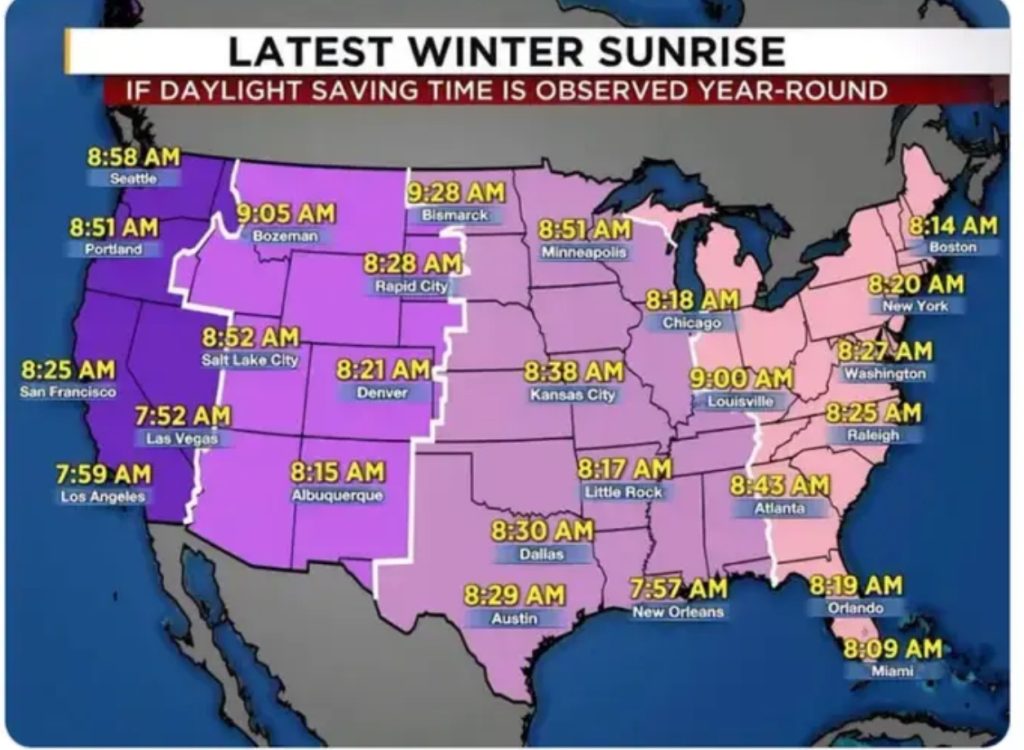
The annual clock changes are not something I look forward to either time, and have long been in opposition to. It feels like such a government mandated absurdity. We don’t merely want to control you, we want to control time itself. It reads like a line from a Dr. Strangelove scene that didn’t make the final cut. I refer to it as the 23 hour day in spring and the 25 hour day in fall. Typically, an extra hour added into a weekend would be something I’d support, but Fall Back leads to the dark winter officially kicking off. When suddenly the sunset begins creeping back towards, and even prior to, 5 PM. And as difficult as that is, it is far better than what the House of Representatives had cooked up to remedy it.

The Sunshine Protection Act would lock the entire country into permanent daylight saving time — the summer clock, all year long. “Permanent daylight savings time was repealed within a year because it didn’t work,” warned Rep. Mary Gay Scanlon as the bill moved through committee. —CBS News

This was, surprisingly, a bit surprising to me. Congress had a 50/50 shot to get this right, with a simple Google they could have found which setting to lock us into year round, and yet they still chose the wrong one. A broken clock may be right twice a day, but a broken congress never is.

If the U.S. were to adopt year round Daylight Savings time, northern states (and I don’t mean that in a Civil War sense) would face sunrises as late as 9:30 AM — places like Bismarck, ND would be hardest hit. I can assure you that a Bismarck winter is hard enough to endure without the sun coming up an hour and a half after school begins. Clearly there are also issues of safety; work commutes, school buses, roads getting plowed and salted, it would all be thrown off by the extended morning darkness. Another crucial factor is circadian rhythms being thrown off. Morning light is the master reset button for the body clock. When sunlight hits the eyes shortly after waking, it signals the brain to shut off melatonin production and start the day’s hormonal cycle — cortisol up in the morning, melatonin back at night, each roughly 24 hours apart. That first dose of daylight is how the body knows when to wake, and it sets the schedule for everything downstream. Get that light late, and the whole rhythm drifts with it.

Congress just voted 308-117 to put half the country on shift fatigue. And yes, if you wake up at 4 AM every day already, go to work when it’s dark out, and are dying to let us know, we salute your service. But it’s not viable for our entire society to operate on such a model.

Permanent daylight savings time has been tried before, in the US in 1974. Nixon signed it as an energy-saving response to the oil crisis, and clocks sprang forward that January with no plans of ever falling back. Support sat at 79 percent when it started and collapsed to 42 percent after one winter of children waiting for school buses in the dark, some carrying flashlights, and after lawmakers cited the deaths of eight Florida schoolchildren in the weeks following the change. The promised energy savings turned out to be barely measurable. By October, the experiment was dead and Ford signed the repeal. It was also tried more recently in Russia, in 2011, which, due to the country’s broad latitudinal range, endured even larger negative effects than in the US. Winter sunrises in the northern regions were delayed until after 10 AM, morning road accidents went up, and the stress and health complaints grew loud enough that Putin signed the reversal in 2014. They have since adopted Standard Time all year long.

Standard is the standard. Do we need sunlight until 10 PM in June? As spring overtakes winter, day by day the sunset pushes back enough that the winter blues are still shaken off without jolting us into the much longer days in mid-March.

It looks like this won’t become law anyway, because Sen. Tom Cotton is putting a stop to it. I’m not quite sure how this bill affects Israel, though, as that is typically the only reason I see Cotton taking any decisive action in Congress these days. Here’s the thing: the medical and sleep-science consensus is overwhelmingly on the side of permanent standard time, and Congress knows this — sleep researchers and health groups have been on record about it for years. Yet the bill that sailed through the House is the one every expert says is the wrong setting. It’s as if Congress chose the wrong time format to lock us into intentionally, knowing it would fail and returning us to the twice a year change as though that is the only alternative, when Standard Time is right there, shining down upon us like the morning sun, just waiting for us to look up and realize it.

Is the Swamp Draining or Leaking?

“U.S. Senator Lindsey Graham … died at age 71 from a heart ailment, specifically an aortic dissection caused by arteriosclerotic cardiovascular disease.”

— Reuters

Another long-time establishment Republican will no longer be a member of the U.S. Senate, joining a list that includes several not seeking reelection this fall—Mitch McConnell (KY), Thom Tillis (NC), Joni Ernst (IA), Cynthia Lummis (WY)—as well as primary loser John Cornyn (TX), and now Lindsey Graham (SC).

I’m sure it’s all just a coincidence.

Goon Squad

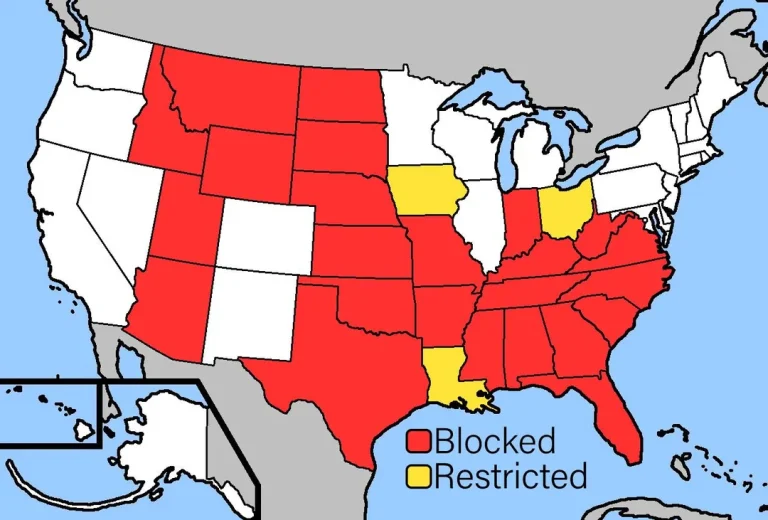
What do you call PornHub being blocked in 25 states?

A good start.

The explicit tube site Pornhub is now blocked in 25 U.S. states.

This is due to age-verification laws. These laws vary state by state, but typically require visitors of a site with over a third of explicit content to submit a government ID or other form of age authentication. Louisiana was the first state to enact such a bill a couple of years ago, and now others have followed suit. In June, the Supreme Court deemed Texas’s age-verification law constitutional, setting a precedent for such bills that come before and after.

— Source: Mashable