Something Brewing


The Milwaukee Brewers have sent the two-time defending World Series Champion Los Angeles Dodgers home for what may be a long winter after completing a four-game sweep in the NLCS last night in Dodger Stadium.

The Brewers now advance to their first World Series appearance in 44 years, their 1982 showing being the only one in their history. They have never won a World Series title.

The Brewers returned the favor as the Dodgers swept Milwaukee 4-0 in the 2025 NLCS. A series in which Shohei Ohtani displayed superhuman abilities on the mound and in the batter’s box. He pitched six scoreless innings in the clinching Game 4, allowing two hits and striking out 10, and went 5-for-14 at the plate in the series with three home runs and four RBIs — all three of those homers coming in that same Game 4, where he went 3-for-3. As otherworldly as that version of Ohtani was last fall, he was every bit as human in the rematch this year. Ohtani did finally bust out of a months-long home run slump with a three-run blast in the second inning. The typically demure Ohtani flipped his bat after cracking the homer, looked back toward his dugout and let out a cathartic release of emotion. Dealing with a knee injury had hampered his power and hitting ability, but he finally found his stroke. It appeared to be enough to get the Dodgers to the next game. But the Brew Crew fought all the way back. Jake Bauers cut the lead in half with a two-run double in the fourth. In the fifth, David Hamilton singled home a run and Bauers drew a bases-loaded walk to tie it. Garrett Mitchell led off the sixth with a solo shot off Tanner Scott to give Milwaukee its first lead of the night, and Hamilton tacked on an insurance homer off Edwin Díaz in the ninth.

The NLCS rematch sweep brings to mind a sports psychology concept that doesn’t make the stat sheet. When teams have been beaten, and often in heartbreaking or humiliating fashion, they seem to do quite well when given an opportunity for revenge in future years.

A few examples of this that come to mind beyond the 2025 & 2026 NLCS between Dodgers and Brewers are the National Championship games between Clemson and Alabama, the 2015 season ended with Bama slipping by Clemson, the next season saw Clemson return the favor with Deshaun Watson throwing a late touchdown to seal it for the Tigers.

The Philadelphia Eagles lost to the Kansas City Chiefs in the 2022 season’s Super Bowl, and then got their rematch two years later and absolutely decimated the Chiefs in that game, 40-22. It can happen when a team loses badly in a championship opportunity, as the Denver Broncos were lampooned by the Seattle Seahawks in Super Bowl XLVIII, the only “cold weather” Super Bowl, having been played at MetLife Stadium. The game opened with the snap going past Peyton Manning’s head and into the end zone for a safety, things continued to go downhill from there, with the Seahawks running out to a 43-8 victory. Just a few years later, the Broncos were back in the Super Bowl, again with Peyton under center, and were underdogs against Cam Newton’s Panthers. They played like a team that knew the bitter taste of defeat and would do anything to avoid partaking in it once more, and snatched a 24-10 victory in Super Bowl 50 over Carolina.

Is there precedent for this to occur generationally? As the Seahawks and Patriots rematched 11 years after the famous Malcolm Butler goal line interception that snagged Tom Brady his fourth ring. Can this really play a factor that many years later when both rosters are completely turned over? Well, the Seahawks demolished the Patriots in this past February’s Super Bowl, perhaps it was the matchup, and maybe the organization had the mental edge after what had transpired more than a decade ago.

Sports psychology sidebar aside, the Brewers victory last night does something truly incredible, it leaves three teams in contention for the World Series, all of which are in the bottom half of the league in terms of payroll. Milwaukee ranks 19th, Tampa Bay 25th, and Cleveland dead last.

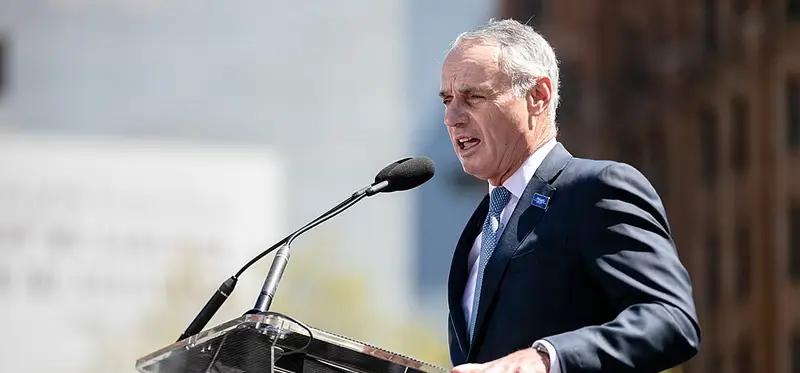
Commissioner Rob Manfred has dug his heels in for an impending labor fight this offseason that looks as contentious as any since the 1994 dispute cost the MLB a World Series. The majority of owners are determined to implement a cap and floor system. Their latest proposals have set those numbers at a $245.3 million cap and a $171.2 million floor. The MLB Players Association, their union, is staunchly opposed to this.

Thus far in the public negotiation posturing, neither side is speaking the same language, and a long, protracted work stoppage that costs the league significant games in the 2027 season appears inevitable.

Were the Dodgers to accomplish a threepeat this fall, the league would have a lopsided outcome to champion to their fans as proof positive that the current system is broken, and they must carry this fight through whatever collateral damage it brings with it to save the game.

Instead, we are going to get a World Series offering of Milwaukee and either Cleveland or Tampa Bay. Two franchises who have never won a World Series, and Cleveland who is in the league’s longest drought for a team who has lifted the trophy, the dry spell going all the way back to 1948.

Now sure, there are plenty of fans who regardless of the outcome of this World Series desperately want a salary cap and floor in place to allow small market teams to compete for titles on a more consistent and equitable basis, the way the NFL and NBA have allowed, should they acquire the right roster and coaching composition to do so.

I kind of like the idea that New York’s 11% top income tax rate and the rising cost of living within the city would make it even harder for the Yankees to put an end to their now franchise-record-tying 17-year World Series drought with a hard cap in place. But let’s not make this about what I want.

What I want to do is call MLB’s bluff.

Major League Baseball wants a salary cap, to increase competition, and to increase the franchise valuations of the small market clubs. But they have had their eyes on something else, and it directly conflicts with the salary cap push.

Rob Manfred has aligned the MLB media rights to end after the 2028 season. The MLB just watched the NBA sign new television/broadcast rights deals to the tune of $76 billion over 11 years. With Amazon Prime, ESPN, and NBC getting a slice of the pie at roughly 2.6 times the annual value of the last round of rights.

Manfred just had to maneuver media rights restructuring when ESPN dropped Sunday Night Baseball and their $550m a year annual obligation to it, he found a short term home for Sunday Night Baseball on NBC/Peacock, which included coverage of the wild card round, and then prevented losing the $550m a year from ESPN by handing them over the rights to MLB.TV, their out-of-market games package that is the best deal in sports streaming.

How does this tie into the labor fight?

MLB is looking to get a significant increase in media rights in 2029, but there’s a catch. If 60 or more games are lost in a season, the MLB would be paid their normal amount that year from their rights holders, but the contract would extend by a year, and the MLB would owe a discounted season of baseball to their rights holders for that extended year (essentially a free one if the whole season is wiped out).

“The networks might be pleased they’re receiving an extra year at a bargain rate.” — The Athletic

The lockout and the loss of games is MLB’s primary weapon to force the MLBPA to come to the table and negotiate, and accept aspects of their floor and cap system. Yet the MLBPA is aware of this 60 game clause. The players only need to survive two months without income, and the league will be scrambling to get them back on the field in order to fulfill their media rights obligations, and move toward the big money offers for 2029.

If I was Bruce Meyer, executive director of the MLBPA, I wouldn’t pick up the phone for Manfred until May 15th. He’ll be bending on his terms by then, I’d let him talk about their concessions.

Then I’d hang up and tell him to call back when he has a more serious offer.

We may lose a couple months’ worth of baseball next spring, but I can’t fathom how the league sees getting to the media rights negotiating table a year later and a year of current revenue shorter.

It would make sense for them to push for a new CBA that ends after the new media rights deals have been negotiated. Saving the cap fight for another day.

The new media rights may break the current model up and have games broken up across multiple streaming services, but allow for far more national exposure of the sport on a daily basis. This could bring in significantly more revenue that allows the league to make the idea of a cap and floor system even more palatable to the players, as it’s giving them a cut of a much larger pie.

My prediction, it will be a long ugly winter, but the boys will be playing ball by June.

Photo: Governor Tom Wolf / Wikimedia Commons / CC BY 2.0
A Loan at the Top

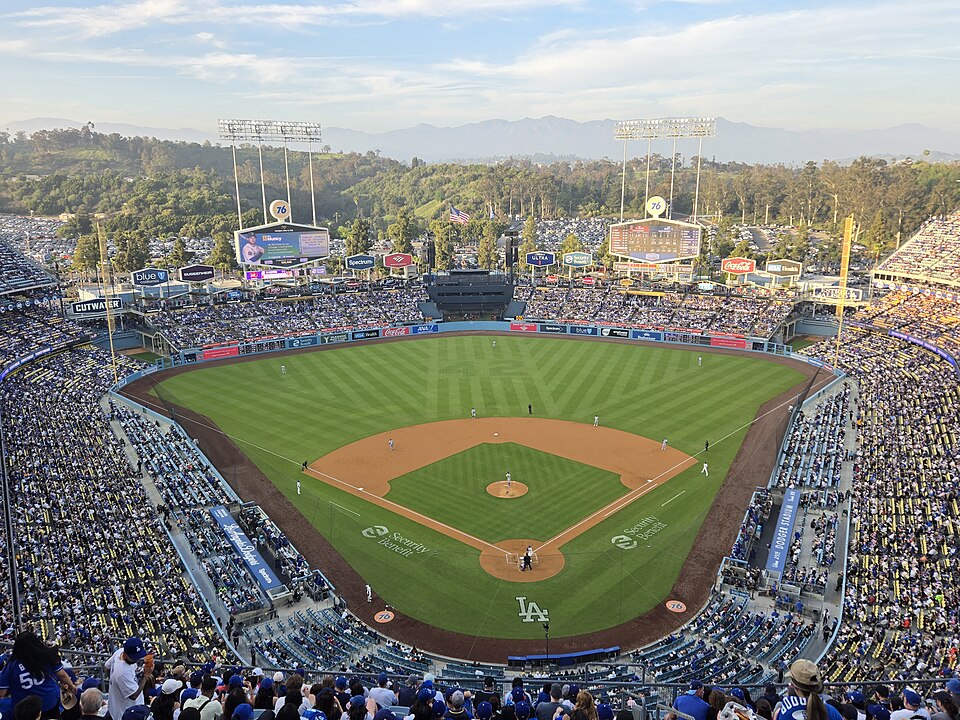
The Dodgers empire may be coming apart at the seams.

“Prosecutors are investigating whether Walter’s businesses hid financial ties while borrowing billions from insurers he controls.” — Reuters

After the surprising sale of the Los Angeles Lakers last week, it now looks as though Mark Walter may need to divest himself of the Los Angeles Dodgers as well. The club says he has no plans to sell. He also had no plans to sell the Lakers ten months ago.

The situation is in the early stages, and there is serious bias in the coverage of it so far. I do remember a President of the United States who caught 34 felonies in New York, and then caught a separate half-billion dollar civil judgment for ‘inflating the value of his assets’ to get better terms on his loans — a farcical judgment an appeals court later threw out. Inflated collateral, concealed connections. Same neighborhood of accusations. The difference is that the Walter case appears to be actually substantive and not just politically motivated lawfare.

The Dodgers having to sell isn’t the biggest story. It’s the Guggenheim group’s stake in their TV rights deal that makes this very interesting. If this is true, and it ends up costing the Dodgers their $334 million annual local television revenue, it shakes up the hierarchy of Major League Baseball immediately.

Also interesting is that Shohei Ohtani has a clause in his contract that should GM Andrew Friedman leave the team, or the ownership group change, he can opt out of his contract the following offseason.

“Ohtani can opt out if Walter is no longer controlling owner or Friedman no longer runs baseball ops.” — ESPN

Los Angeles also owes north of a billion dollars in deferred salary money to players on the team after their contracts end. That may not be a huge issue now, but if revenues are shared more evenly in the future that could become a burden to the new owners.

This only serves to add fuel to the fire for owners who desperately want a salary cap this offseason in their labor dispute with the MLBPA.

Currently the smaller-revenue teams can coast on the league’s welfare check before they spend a dime from ticket sales or local TV. They’d like a bigger cut of the pie than they’re getting, and they’re willing to institute a salary floor to get the players on board. The new CBA only needs 23 of the league’s 30 owners to approve it. If enough of the smaller fish band together and force this issue, things get very interesting. This incident could take out the ownership of the biggest financial juggernaut in the sport before the deepest parts of the CBA battle come to pass. The owners don’t care as much about leveling the competition and competitive balance as they do increasing their franchise valuations. That’s exactly what a salary cap would provide for them.

Los Angeles achieving a three-peat this fall with another World Series title would be historic and impressive regardless of the payroll, but it may also be their last chance to do so in the league’s current framework.

With the players and owners speaking different languages in early stage CBA negotiations, this tectonic shift occuring right at this time feels like another reason we may not see baseball played in 2027. The dynamics may be in such a state a flux that a reconcilliation becomes even more difficult to arrive at.

Photo: Spatms — CC BY-SA 4.0

Trade Winds

The 2026 Major League Baseball trade deadline has come to pass. There was a flurry of activity Monday afternoon that provided some surprising moves, none of which were exceedingly shocking.

The big news of the trade deadline actually broke late Saturday evening when it was announced that the Los Angeles Dodgers have come to terms on a trade with the Detroit Tigers to acquire ace lefty Tarik Skubal.

Skubal is the back-to-back reigning American League Cy Young winner, and the first reigning winner to be traded in-season since Justin Verlander in 2023 — only the sixth ever. He led all of baseball in WAR and strikeouts in 2024 and went a combined 31-10 with 469 punchouts across 2024 and 2025. There was talk he may not be traded at all this year after he had loose bodies removed from his elbow in May and was back on a mound 38 days later. The Dodgers are now the first team in league history to have a reigning two-time MVP and a reigning two-time Cy Young winner on the roster together in the same season.

Unlike most baseball fans, I was happy to hear the news. The most important reason for that is my hope was that he would not end up on the New York Yankees. The Yankees had a rather quiet deadline, but they did acquire Luis Garcia Jr. from the Nats, he leads the NL in slugging percentage. GM Brian Cashman seems to like his team’s chances should they get Judge, Stanton and Bellinger back healthy before the end of the season. 

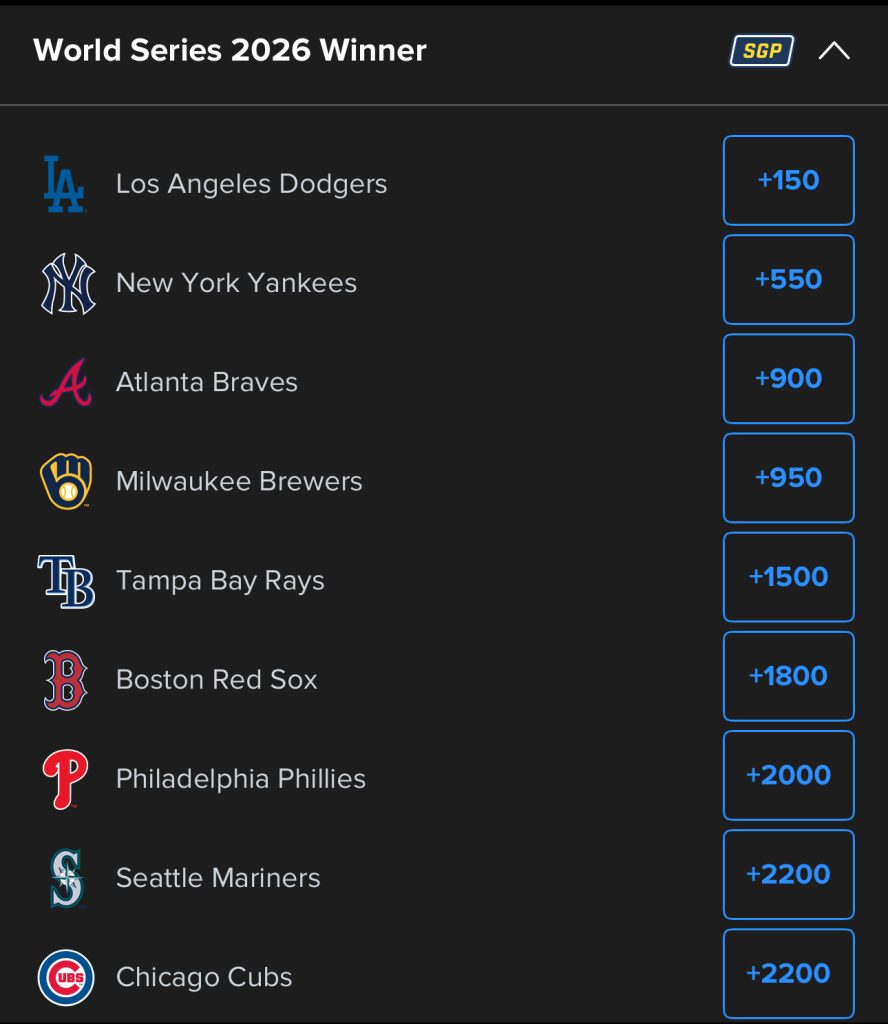
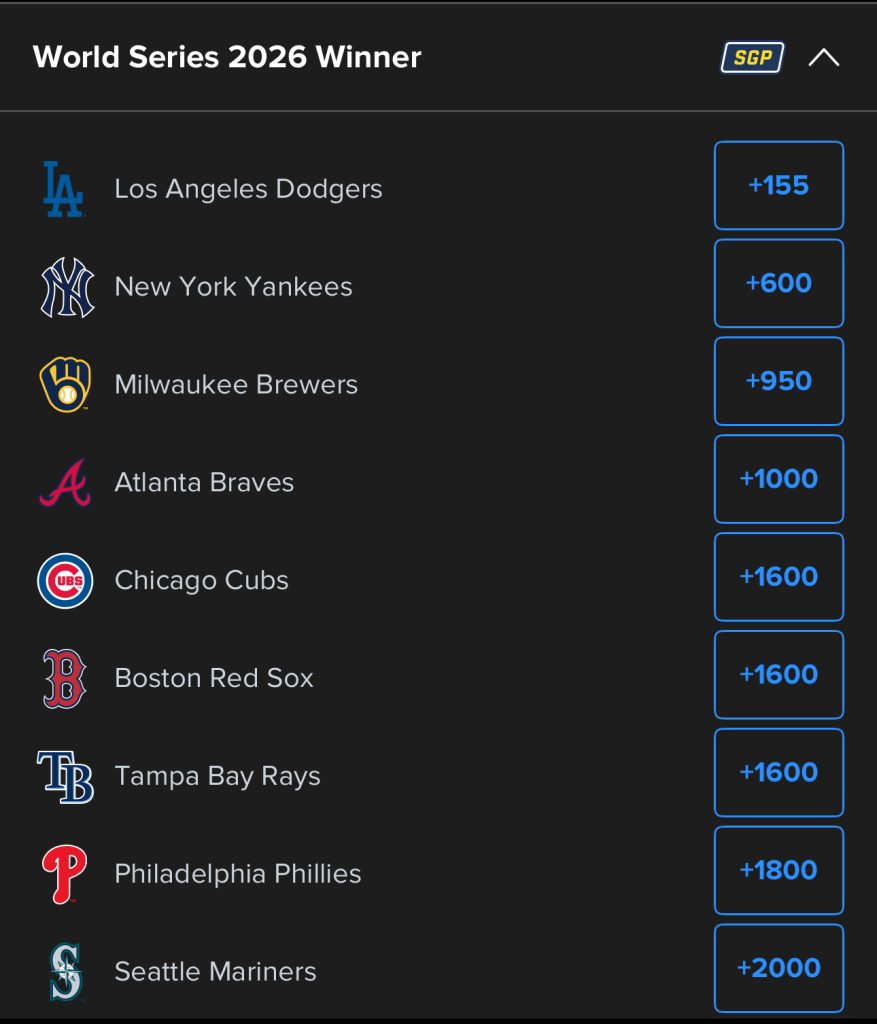
Failing to acquire Skubal hasn’t cost the Yankees much in the way of championship odds with only a slight drop from +550 Sunday afternoon to +600 Tuesday afternoon.

I screencapped two sets of odds to track the movement on FanDuel, giving a wide enough birth from the deadline itself to still get a reasonable picture of the changes it brought: 

Sunday at 5 PM: 


Tuesday at Noon: 


The question that I have for the Yanks is— what would their odds currently be had they acquired Skubal?

What would the third most favored team, the Milwaukee Brewers (+950 odds) odds be if they’d acquired Skubal?

A key reason to ask, is that the Dodgers didn’t give up a whole helluva lot to get the superstar pitcher — outfielder Zyhir Hope, the No. 5 prospect in their system and No. 25 in all of baseball, right-hander River Ryan at No. 7 in the system and No. 68 overall, and right-hander Brady Smith at No. 17, per MLB Pipeline. Los Angeles managed to hold onto their top four prospects and still get a nuclear arm added to their arsenal. 

The Dodgers sit at an unprecedented +155 to win the World Series in early August. That speaks to the incredible team they have constructed, and also the weaknesses of the rest of the field.

A three-peat would give them the first one since 1998-2000, when the Yankees pulled it off, it would also elevate the cries of the Salary Cap hungry owners and the majority of MLB fans who support such a measure.

Seeing a cap and floor model in the vein of the NFL would give fans a sense that any team could win it all. Just don’t tell that to Cleveland Browns fans, hell, don’t even mention it to Bills fans. Teams that scout, draft, recruit, sign, develop and take care of their players will still have an enormous advantage, and those in low-tax, high-revenue, nice-to-live locations will have built in advantages that will become more stark in a hard capped league. 

Point being, don’t expect a salary cap to fix all your franchises woes overnight, but I do understand the appeal and would love to see what America’s pastime looked like with a more level playing field.

Other noteworthy items from the deadline:

The Boston Red Sox basically dumped one of the members of their golden age of prospects they’ve been championing for the last several years. The oft-injured Marcelo Mayer never found his groove in the big leagues, and made more headlines for his attitude and alleged off-the-diamond issues. Word is the organization felt he was detrimental to the prospect they just locked up for nine-figures last summer in Roman Anthony. Mayer was said to be a regular fixture of the New England late night scene (according to 98.5 The Sports Hub of Boston), which fed into questions about his motivations and maturity. He was shipped to the San Francisco Giants for lefty reliever Erik Miller and minor-league outfielder Carlos Gutierrez.

The Red Sox also paid a pretty heavy price to nab Adley Rutschman from the Baltimore Orioles. The switch hitting catcher is currently injured, but could provide a valuable dynamic to the Red Sox lineup heading into the final stretch of the season, and the postseason should they land a spot. I quipped that the Red Sox are now going after players who are “pre-injured”, as another key acquisition before the deadline was Curtis Mead, the former Nationals second-baseman who has some serious pop in his bat right now and could provide much needed defensive stability to the Red Sox middle infield, was injured in his first game with the Sox. A pitch struck and broke his wrist. He now heads to the infirmary with ace Garrett Crochet, who hasn’t pitched since April 25 and still hasn’t picked up a baseball after shoulder inflammation turned into a lat strain, Roman Anthony, out since May 5 with a torn ligament in his hand and no timetable, shortstop Trevor Story, on the 60-day list since sports hernia surgery in late May and only now aiming at a rehab assignment. Rutschman officially begins his Boston tenure on the 10-day list with left wrist inflammation. Which when you compare it to the medical report I just got done delivering, is actually pretty healthy! 

Boston moved from +3500 odds on July 13, to +1800 on Sunday afternoon, climbing as high as +1500 after the acquisition of Rutschman before settling to their current line at +1600. Still a dark horse by those odds, but third behind division rivals Tampa and New York in American League team odds to win it all.

The Atlanta Braves were quiet at the deadline, their odds have dropped slightly as a result. But Chris Sale did win July’s NL Pitcher of the month, and the Bravos still have big October aspirations.

My recent article, The Dead Tradeline, discussed how the expanded Wild Card slots (and the longstanding inability to trade future draft picks) makes for less excitement at the trade deadline. Far more teams being “buyers” now than sellers limits the amount of top end players who are available to be moved, and not trading future picks limits the amount of resources teams have to acquire them. I discussed how the Red Sox could greatly benefit by being deadline sellers, but their improbable win streak, and Breslow’s desire to save his General Manager job, had made that highly unlikely. The Red Hot Sox haven’t slowed down yet, having just completed a sweep of the Dodgers this past weekend, placing them at a mind-blowing 28-5 since June 24. 

The last few weeks have felt like a holding pattern as we waited for the deadline to come and lock in the rosters. Now that we’ve seen its fruits come to bear, the headline that remains: the rich get richer in LA, the Yankees don’t make major waves, and the odds of a serious labor stoppage that puts the 2027 season at risk have grown ever higher as the owners will seek to use the Dodger’s success as the smoking gun that demands a salary cap at all costs. 

So enjoy this postseason run, it may be the last one we get for a while.