Going Nuclear

The conservative party in power has actually presented something that would help the American family.

The Department of Health and Human Services is drafting a rule change that would pay married parents roughly $9,000 a year per child to stay home and raise them. The money comes out of the Child Care and Development Fund, a $12 billion Clinton-era program built to pay for daycare so parents could go to work. To qualify you have to be married, and one spouse has to be putting in at least 35 hours a week. It doesn’t need a bill or a vote — just White House sign-off and a comment period.

This, if followed as presented, would be one of the most pro-family policies to come out of Washington since the mid-20th century.

“Parents who bear the toil, expense and opportunity cost… currently get zero.” — Roger Severino

When our birthrate was declining, I found it mighty peculiar that the only remedy presented for this problem was infinite immigration from all parts of the non-westernized world. It certainly wasn’t to create policy that encouraged and enabled the native population of the nation to start families. (Yes, Americans are a nation. It was considered people living in America of European descent.) Hungary has offered tax incentives for having children — mothers of four or more have paid no income tax for life since 2020, and Orbán has since dropped that threshold to two. Russia pays lump sums for births with regional bonuses stacked on top. China ended the one-child policy in 2015 and finally started cutting checks last year — 3,600 yuan, about $500, every year until the kid turns three. That’s real money in a country where the average rural person lives on about $3,500 a year.

Why worry about the people of your nation reproducing when there’s billions of people ready to flood into your country that you can hand jobs and small business loans to! The SBA refused to even list country of origin for these loans they’re giving out. To this administration’s credit, the SBA finally shut that window in March. Green card holders are barred from 7(a) loans entirely now. It only took until 2026.

The key element of this childcare rule change that must be maintained for it to actually be a “pro-family” policy, is that it must only apply to married individuals. Married-couple households were 74% of this country in 1960. They’ve been under 50% since 2010. Children born to unwed mothers went from 5% to roughly 40% across the same stretch, and the share of kids living with only their mother nearly tripled. It’s as if the Great Society had the opposite effect of its title. The numbers don’t lie.

Automation and AI are coming and will utlimately wreak havoc upon the labor market once the new paradigm is built. The people who want to sell you the idea that “they’ll just create new jobs, someone has to work on the robots!” Yes, someone does have to work on the robots, and at some point it will be another robot. In the meantime, one mechanic servicing a fleet of 500 robots who have replaced 3 human workers each does not offer industrial revolution labor growth.

A lot of people are going to be out of the work force anyway, moving into familial support roles is the most desirable outcome.

This would pair perfectly with a home-school voucher in the $7k per child range. Public schools spent $17,619 per pupil in FY2024, the highest figure ever recorded. The federal slice of that is about $2,500. Tearing down the indoctrinating and ineffective school system would help accelerate the nation’s flight from the grasps of cultural marxism.

Private, cooperative and religious schools would thrive. Sure, the inner cities would be a mess, many of the kids wouldn’t be able to pass basic reading or mathematics proficiency. Oh wait, we’re already there. Five percent of Detroit fourth graders were proficient in reading in 2024. Cleveland was at eight. Nine percent of Baltimore eighth graders were proficient in math.

My instincts, or political whiplash conditioning, tell me this may be another policy that will have been presented first as a good idea, get railroaded by the media and the Democrats, then get walked back, turned into something completely ineffective, and yet still victory will be declared.

But that is certainly not my hope.

This change is one that is worth fighting for.

“Don’t ever take sides with anyone against the family again.” — Michael Corleone

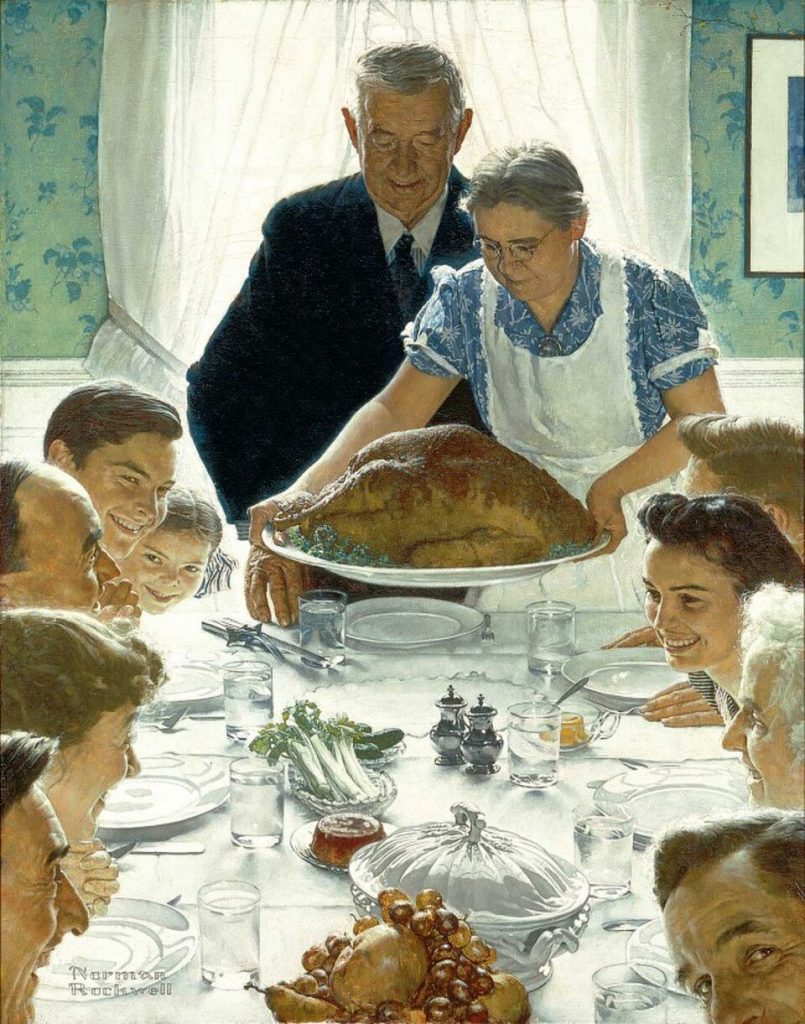
Photo: Norman Rockwell, Freedom of Want (1943), public domain.
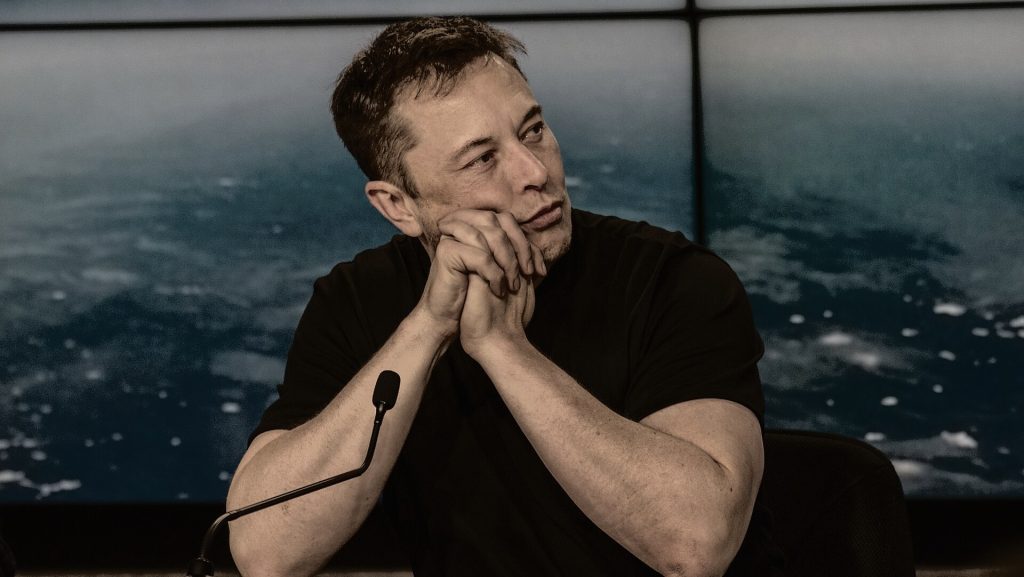
X Money X Problems


This week X, formerly Twitter, began the rollout of X Money. This has been something I have been anticipating since Elon Musk purchased Twitter for $44 billion in 2022.

“X Money is designed to make traditional bank accounts unnecessary for users.” — The Paypers

X Money is not simply a feature of X, but may be the reason Elon acquired the social media platform to begin with. Elon had originally envisioned X.com as a payments system all the way back in 1999. The concept behind it would go on to become PayPal. Elon has long understood the potential for innovation and opportunity when payments and finance finally merge with technology in a truly meaningful way. Far beyond the reaches of what CashApp and PayPal offer today.

X is positioning itself to become the WeChat of the rest of the world.

WeChat is China’s everything app, and has been for over a decade. Tencent launched it as a messaging service in 2011. Today it runs about 1.43 billion monthly users. It’s messaging, it’s a social feed, it’s video, and it’s WeChat Pay — roughly 935 million people paying for things by scanning a QR code, from a department store checkout down to a guy selling fruit off a cart. But the part Americans consistently miss is Mini Programs. These are app-like services that run inside WeChat itself, 4.3 million of them, used by around 945 million people a month. You book the doctor, hail the cab, pay the power bill, order dinner, buy the movie ticket, and file your government paperwork without ever leaving the app or downloading a single thing. You don’t have twelve apps, twelve logins, and twelve saved credit cards. You have one.

Yes, the Chinese version is restrictive, surveillance heavy, and censored. That’s not the part I’m pointing at. The singular model is the point. Whether we end up with their version of it here is a separate question.

Nobody in the West has built it — not because it can’t be built, but because the pieces were always owned by different companies with no reason to cooperate. Apple owns the wallet. Meta owns the social graph. Your bank owns the settlement layer. Elon is the first person sitting on all three at once.

X Money is offering Premium users 4% on their Stored Value Accounts and to its Premium+ users, 6%. Yes, 6% on cash you have parked in the X account, and they’re issuing digital debit cards and physical metal Visa cards. The card drops into Apple Pay and Google Pay, and a virtual version is issued the moment you sign up, so you’re spending before the metal one hits your mailbox. Not in New York, though — no money transmitter license there, which means no APY at all for New York residents. Massachusetts is out entirely. It’s live in 41 states plus D.C.

They have also partnered with Cross River Bank as their sponsor bank. X isn’t a bank and doesn’t hold a charter, so Cross River provides the charter, the FDIC-insured deposits, the compliance backbone and the payment rails. This is the banking-as-a-service model, and Cross River is effectively the bank behind fintech — a state-chartered New Jersey outfit in Fort Lee running more than 120 clients including Stripe, Affirm, Coinbase, Best Egg and Upstart on an $8 billion balance sheet. If you’ve ever financed a purchase through Affirm or moved money through Coinbase, Cross River probably executed it and you never knew their name. Deposits are insured to $250,000, with up to $10 million available through a cash sweep across partner institutions.

And the Stored Value Account doesn’t have to stop at cash. Right now X is paying 4% to Premium and 6% to Premium+ on dollars parked in the app. Let users hold stablecoins in that same account and the yield options widen considerably — tokenized Treasuries, on-chain lending, staking proof-of-stake assets like Ethereum or Solana. Your checking account, your savings account, and your brokerage stop being three separate things you log into.

There has been talk about “paying in crypto” with X Money, but I think that is the wrong angle to look at this. The GENIUS Act that passed in July 2025 by the US and signed by President Trump allows for a company like X to issue its own stablecoin, a cryptocurrency pegged one-to-one to a dollar and backed by reserves the issuer is legally obligated to redeem at face value, but they don’t even need to do that. They can allow X users to hold existing stablecoins (RLUSD, USDC) in their X value accounts, then transact them with merchants, peers, make payments, settling them with a blockchain like Solana, Ripple or Stellar as the middle layer. This will happen instantly and appear just as normal to someone as your standard PayPal transaction, but real-time settlement, with negligible fees on a ledger that confirms it for both sides. The change isn’t sending .0001 Bitcoin or Ethereum to pay for your burrito bowl, it’s that you don’t even see that layer underneath.

Innovation’s most bearish babe, Sen. Elizabeth Warren, wrote Musk in April flagging what she called a “suspicious carveout” that lets a private commercial company like X issue its own stablecoin, and noted that Thune had blocked a bipartisan floor amendment to close it. She’s right about the mechanism. She’s just wrong about which part should worry anyone.

When you swipe a card today, the transaction looks instant. It isn’t. What happened was an authorization — a promise. The real money moves later, batched overnight, run through the card network, settled between the merchant’s bank and yours over the next day or three. Venmo and Cash App are the same trick. Your balance updates the second you hit send because the app is just moving a number from one row of its own ledger to another row of its own ledger. The actual dollars are still sitting at a bank, waiting on ACH.

Distributed ledger technology collapses all of it. The transfer is the settlement. There is no authorization, then clearing, then settlement — there’s one event on a ledger both sides can verify, running 24 hours. That’s the important change. Not the currency, the plumbing. If it seems inconsequential, it frees up trillions of dollars in capital currently kept in limbo when done at scale.

X Money can put that in the palm of your hand. (Yes, perhaps like the Mark of the Beast.)

The move could potentially merge banking, investing, social media and AI into a singular app.

“When I say payments, I actually mean someone’s entire financial life.” — Elon Musk

The concept of the “everything app” is the next evolution in the “everything phone,” the smart phone. A smart-app that allows users to go back and forth between all of these aspects seamlessly, when done well, reduces friction to such a degree that adoption becomes inevitable.

The future is already being born. The good thing about it is that it only comes one day at a time.

Photo: Daniel Oberhaus, CC BY-SA 4.0

The Last Commodity

You’re spending your most important resource right now and you may not even realize it. Your attention. And I thank you kindly for spending a little of it here.

Attention is the last commodity. It’s what is truly being struggled over in the streaming wars, sports, gaming industry, and both directly and peripherally, the AI boom.

Streaming was supposed to streamline, no pun intended, where your attention was going. Pay the fee, skip the ads. That lasted about a decade. Netflix, Prime, Peacock, Disney, Paramount — all of them run ads now. More than 60% of new Netflix signups take the ad tier. Streamers often lose money on their ad-free tiers versus what they would be paid to take less money and show their subscribers ads. When people began to cut the cable cord, corporations were desperate to get their brands and products in front of the eyes of consumers, wherever they so happen to be.

With YouTube Premium I skip the ads that play through Google AdSense at the beginning of the videos, but I have to manually fast-forward to avoid the product placement and paid sponsorships. Then there’s promo codes. Affiliate links. The ad used to interrupt the content. Now the ad is the content and you often can’t find the seam.

And we’re still just talking about advertising. That’s just one small aspect of this, the larger picture is simply, what gets our attention. And that applies to everything.

Underneath it all sits the algorithm, which isn’t trying to show you what’s good. It’s trying to keep you there. Short-form video is the purest version — an infinite column of stimulus tuned by a machine that knows your weak spots better than you even do.

“SVA was associated with attentional deficits, impaired executive control, and working memory problems.” — International Journal of Adolescence and Youth

SVA is Short Video Addiction. Executive control is the part of you that decides. That’s what’s eroding, and it’s already reached a dangerous point.

YouTube has recently changed their creator pay-out system, and it’s rewarding long form again after the short form gold rush. The thresholds went up on both sides, but long-form still takes the bigger cut of the split. The goal is simple. Keep people on the platform longer, and have more content people are willing to sit through ads to see. A short captures, but doesn’t hold you. A fifteen minute video does.

If you think I’m overselling it, there’s already a cryptocurrency for this. Basic Attention Token, built by the guy who created JavaScript. It measures how much attention you spend and pays you a cut. Raised $35 million in under a minute.

“BAT connects advertisers, publishers, and users and is denominated by relevant user attention.” — Basic Attention Token

Denominated. There’s a whitepaper. There’s a ledger. The commodity of attention has been priced and put on a market. Which shows something unprecedented is taking place that we’re still on the ground floor of.

What does the world look like when generations of people are living life with augmented and virtual reality headsets/eyewear on, gaming, gambling and gooning? The last one is a Gen Z term for one who obsesses over pornography.

Yes, I imagine people will be dating, mating and living their lives in a parallel digital world. And in some fashion getting paid for it.

Facebook/Meta tried to make it a thing, spending more than $80 billion on it and wound up failing miserably. It was so poorly constructed it feels like a money laundering scheme. I haven’t seen that much money result in so little production since California’s high-speed rail.

If the picture I painted sounds bleak, a dystopian future that blends WALL-E, Ready Player One and Idiocracy, know that we’ll have a choice in the matter.

A counterculture movement taking place today seeks to take back our time, attention, and energy from all that entangles us. Rawdogging Flights has become a meme, young men who will board flights across the country and instead of burying their heads in a tablet for six hours, they merely look at the flight tracker on the seatback screen in front of them and people watch, and think, and daydream.

One of the fastest-growing accounts on X is a book club that seeks to use classic literature as a way to combat modernism and all its attention-deficit inducing pitfalls. They’re currently reading The Brothers Karamazov. There’s another trend happening where people dive into The Count of Monte Cristo.

I also don’t believe this is merely an economics story. The battle taking place goes deeper than just being for our mind. The Church Fathers had a word for it long before these technologies existed — nepsis, watchfulness. Guarding your mind against the thoughts that wander in uninvited. They understood your attention is the doorway to your soul.

The modern world is designed to separate this from you all day, everyday, without you even realizing it.

Anyways — thank you for your time. You’ve earned .00001 BAT.

The Talking Head

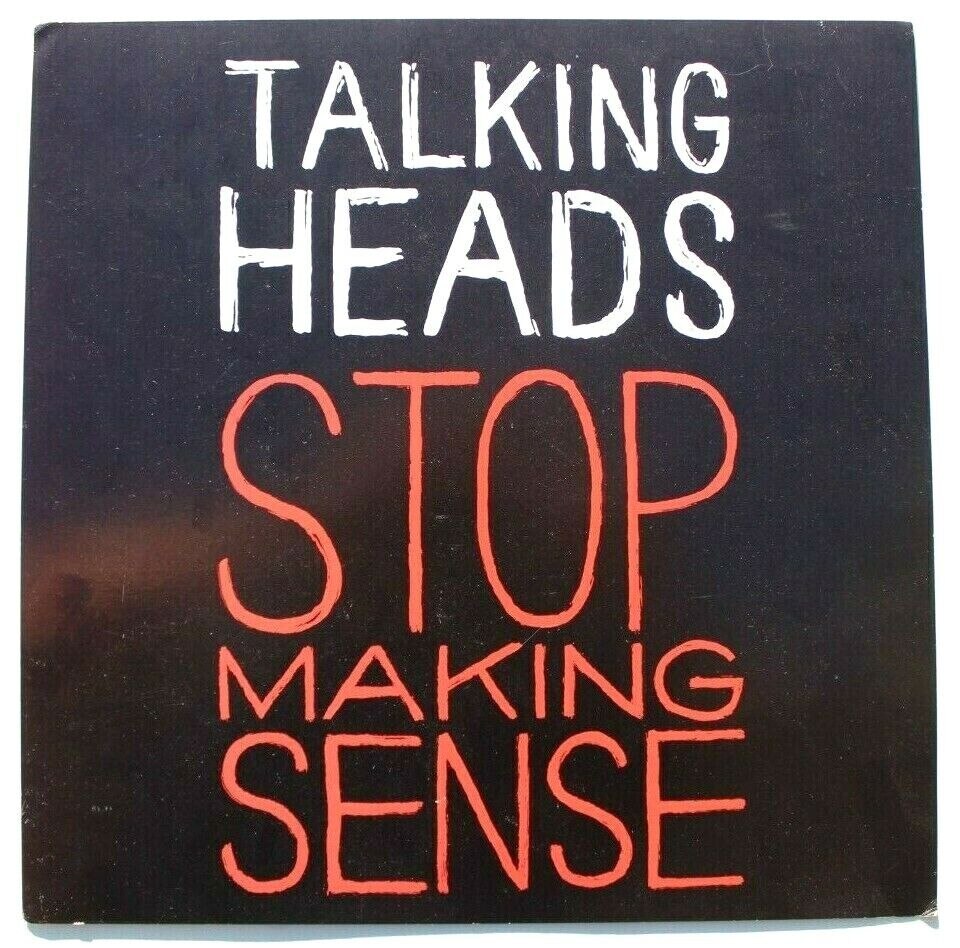
I finally watched Stop Making Sense.

It’s the Talking Heads concert film, shot by Jonathan Demme over three nights at the Pantages in Hollywood in December 1983. Frontman David Byrne walks out alone with a boom box and an acoustic guitar, and the band gets built one member at a time until it’s a nine-piece.

It had been rattling around the back of my head for years. ‘Greatest concert film ever made’, according to a lot of people with opinions I respected. But I’d never really gotten into the Talking Heads, so I never bothered. Then I saw a copy on sale for five bucks and it was time to finally take the plunge. 

I wouldn’t say I was wrong about the Talking Heads. I just didn’t know what I didn’t know. I had no negative view of them, I just failed to understand how influential they truly are. 

Funny thing about David Byrne — he reads as a Gen X icon, though he’s a Baby Boomer who was born in Scotland, 1952.

A concert film is the intersection of two artists. You need the act operating at the height of its powers, and you need a director with enough restraint to understand he is not the star. His only job is to take what happened in that room and deliver in the best way possible to the theatrical or home-viewing audience. And get the sound right. That’s a big one. 

That takes strength, because you have to remove most of yourself from the product. Scorsese doesn’t do that exactly — he’s right there on camera in The Last Waltz, asking questions. But that’s his thing and it works. The Last Waltz has been first on my list in this category for years. 

“…of enormous energy, of life being lived at a joyous high.” — Roger Ebert

Seven years after this, Demme made The Silence of the Lambs, which landed Best Picture, Director, Actor, Actress and Adapted Screenplay. The Big Five. Only two other films in history have done it. It Happened One Night (1934) and One Flew Over the Cuckoo’s Nest (1975). Demme knew, in 1983, to keep the cameras on the stage and leave himself out of it.

Now, before I say a word about the actual music, a disclaimer. I find written reviews of music absolutely preposterous. Word salad. They read like parodies of the music review business itself: Referring to an album as a “bluesy, whiskey-soaked rag mama rock opera” — it comes across as writers spinning nonsense to describe a thing you can only get by hearing it yourself. The best you can do is tell people it’s good and advise them to go experience it for themselves. Everything past that comes out clunky and pretentious. Go read any Rolling Stone album review and you’ll see what I mean.

So with that out of the way, here’s what stood out.

Byrne has said himself that he’s somewhere on the spectrum. Watch him for five minutes and it stops being a question. That is in no way used pejoratively. The man is a certified autistic/artistic genius, and he joins a list in that regard I keep that also includes Michael Jackson, Axl Rose and Kanye West. Autist being another term that is not used lightly or to be framed as derogatory. I’m referring to those possessing actual genius.

The show is constructed visually, sonically, and with a songwriting range that shows craftsmanship and control. Song after song I’d sit there thinking, “Holy shit, this is a Talking Heads song too?” Having never fully explored their catalog on my own, I badly underestimated how deeply their DNA runs through popular music and culture.

And speaking of Kanye — the suit. That absurd broad-shouldered architectural monstrosity Byrne climbs into in the back half of the film. Decades later Kanye and Lil Pump built an entire video around it, the two of them shuffling down a hallway inside giant square shoulders. I don’t consider it as a coincidence, I see it as homage. 

The version of genius people usually mean by “idiot savant” is narrow. One thing, done inhumanly well, and not much else. Byrne is the other kind. He calls on a dozen different influences and styles and makes them cohere into one thing. As a writer, I sometimes refer to myself as an idiom savant.

He is not, however, an autist at the highest order. Byrne is very left-leaning, and American Utopia — the 2018 album, then the Broadway show, then the Spike Lee film — is pro-immigration with a side of activism. While he is extremely talented, he does not reach the utmost levels of intellectual transcendence of a Stanley Kubrick or a Bobby Fischer. 

But hey. We still have John Cleese.

Image: Wikimedia Commons

The Summer of Jimbo

I met Jimbo on my first trip to Colorado. The trip was to visit a buddy from High School who was enlisted and stationed at the Air Force Academy. Jimbo was still active duty Air Force at the time we met. If you’ve seen The Big Lebowski, his aura was much aligned with The Dude’s.

We picked him up before heading to Denver for a Rockies game. Me and three airmen made the trip in a Chrysler sedan. The guys had a pony keg from a gathering the night before with about a third of the beer still in it, and they dressed it up to look like a little kid in the middle of the back seat. It had a Rockies hat set on the tap and a Rockies jersey buttoned up around the keg.

I sat up front and didn’t drink any of the beer on the ride, but the boys in the back took the occasional pull from the tap.

On the way there I came up with a game called “Rock n Roll Draft” where we took turns drafting musicians to build out our dream lineup, and then debated afterwards whose was best. I remember drafting Chris Robinson and Keith Richards, the rest of the lineup escapes me.

Jimbo was later deployed to Afghanistan, where he worked as a medic. He had a fiancée at the time. He’d sent her an iPad and a phone, and a few other gifts. A few months into his deployment he found out she had been stepping out on him, and he broke things off. It was a serious detriment to his morale, but as Jimbo does, he carried on.

Speaking of breaking things off, I asked him about the weirdest injuries he saw during his stint in the middle east. He mentioned a man who had been having carnal relations with a female colleague at the air base and had broken his penis during the act. I immediately felt better about having only broken my forearm, my clavicle and my nose.

Jimbo was an avid reader. He had read every Stephen King release, and over 30 of them on that deployment alone. The pace having quickened after his engagement fell through.

He got back to Colorado and finished his time and was honorably discharged. He then used his GI Bill to attend HVAC, heavy equipment, and plumbing trade schools. But after completing them, he wanted to lay low for awhile. He grew out his beard and slept on my buddy’s recliner every night for a year in the house he was renting in Manitou Springs. He even dated the waitress at the Irish Pub we all had a crush on. My friend in the Air Force and I took a road trip back to California, and Jimbo came along for the ride. He was that sort of feller. I called him our Kramer.

We went to see Furthur, one of the Grateful Dead lineups post Jerry Garcia, and he passed out in front of me and hit his head. Me and my buddy had to pick him up by the arms and legs like a lifeless corpse we were throwing overboard. He came to in the midst of us walking him out of the floor area of the arena in Broomfield, CO. He was fine, but in all the concerts I’ve been to, I’ve seen numerous people pass out, yet had never been with someone who had done so themselves. Well, the law of averages caught up with us that day.

Then at the end of spring, that buddy of mine got out of the Air Force and moved out of state to cash-in on his GI bill. Jimbo knew it was time to return home and get a job, but he wanted one more Colorado summer before doing so.

I was in college at the time, working nights and weekends at a pizza place, and I couldn’t let him stay with me. But I got him a job delivering pizzas at the shop. His tenure there actually outlived mine. The manager was happy to have an honest and reliable employee that showed up for his shifts.

Jimbo took to living in his car to get the last Rocky Mountain summer in. There was a learning curve as he transitioned to vehicular life. The shop had a big stainless steel dishpit, and when it was empty, he’d use the drop down sprayer to wash his hair. I told him that wasn’t the best idea for a restaurant, and he ended up getting a membership at 24 Hour Fitness where he could shower, hang out, and watch cable TV. I don’t think he exercised there.

After he finished his shift at the pizza shop, he’d take his cash and get some food, then head over to the mall parking lot. He’d trap towels and t-shirts in between the windows and the door frame to create curtains. He said he’d then “get really high” and read until he fell asleep. He never had any trouble from cops or mall security.

It’s easy to look at some of the behaviors and label him a loser or a bum, but he was also a genuinely good guy who could always be relied upon when you needed a favor in return. He honored the bro code. He wasn’t ever the reason anyone out with him had a bad time. He never stepped on anyone’s toes. And he had a funny way of telling his stories from overseas and his upbringing.

He had a great mind for frugality — he had many stories from trips to Vegas and Reno, getting free drinks and discounted rooms. He had an encyclopedic knowledge of sports, which was a big anchor of our friendship. And he had the stomach to handle and the appetite for sports betting back when the only place you could legally do so was in the state of Nevada.

The subtle art of sneaking down into better seats at a sporting event was another of his specialties, and he was always interested in a scheme on how to do so. At the Rockies game we had two good tickets, and then bought two $4 Rockpile centerfield bleacher seats. Two of us went down into the good seats with the good tickets, one came up with both tickets, brought another guy down with him, then repeated it so all four of us were a few rows behind the dugout. This works at Rockies games, but it gets trickier in a place with regular sellouts.

If you asked him anything about his life, he’d just come right out and tell you, he didn’t withhold details even when they were to the detriment of his image. Jimbo had lost his mom at a young age, and some felt he was out searching for that place that would feel like coming home.

He was a Mets fan with a Yankees tattoo. He reminded me of the song “The Pilgrim, Chapter 33” by Kris Kristofferson:

He’s a walking contradiction, partly truth and partly fiction, taking every wrong direction on his lonely way back home.

He was something of a millennial cowboy that summer, a free spirit on the Front Range, taking each day as it came, holding off the impending responsibilities of adulthood just a little bit longer. The way I saw it, after six years serving his country and being deployed in a war zone, it certainly wasn’t for me to tell him to approach things any differently.

All of this was jogged loose in my memory after seeing a Subaru Outback with the back seat folded down this afternoon, and it brought to my mind that summer of freedom ol’ Jimbo got to live years ago.

I lost touch with him a few years back, but I hope the cool breeze finally guided him to a place that feels like home.

Photo by Jeffrey Beall, licensed under CC BY 4.0.

Womanizer

Two former NBA players, Enes Kanter Freedom and Royce White, have announced they intend to identify as female to be eligible for the 2027 WNBA draft. Kanter Freedom said he and his team had carefully examined the league’s eligibility criteria and governing framework surrounding self-identification and inclusion, and that he qualifies. White followed hours later and added that his wig is in the mail.

The reason they can do this is that the WNBA has no transgender eligibility policy. None. The collective bargaining agreement signed in March says only that players who are women are eligible, and never defines the word. Into that silence stepped a parade of coaches and players — Cheryl Reeve, Stephanie White, Gabby Williams — all volunteering that a trans athlete would be welcome.

“I would welcome a trans athlete on my team or against my team, anytime. I don’t think it’s a problem in the world. It’s just another way to kind of attack trans people.”

— Gabby Williams, Golden State Valkyries

Then the players’ union issued this:

“We embrace justice, equity, diversity, and inclusion. Those are the values that unite this Union and allow it to protect women’s sports while creating transformational change. Hate, abuse, and demonization of any person or group of people, including transgender people, only fuel fear, division, and harm. We will continue to have hard conversations. But we will not be used as political pawns.”

— Women’s National Basketball Players Association

The WNBA is a Marxist community garden. It has always been an ideological experiment funded by the NBA, Nike, ESPN, etc. to platform their left-leaning, feminist and social and racial justice philosophy. The league is quite literally, a political pawn.

It actually serves as a wonderful microcosm of the shortcomings of these theories, as when gifted two mainstream stars on a team together in Caitlin Clark and Sophie Cunningham, the league has sought to suppress their popularity and elevate those who fit the racial and political agenda the league exists to serve. They are not interested in making money, they feel entitled to do and say what they want, and the concept of being profitable has absolutely no bearing on their actions.

Similar to how Mamdani’s New York City is giving everyone a little free preview of the inability for Marxist ideologues to handle the primary responsibilities of the positions they hold, in Mamdani’s case that being maintaining order and carrying out basic government functions, the league shows how the abundant fallacies in the views of those running it prevent it from ever growing into a respected and commercially viable sports product. If anyone can be a woman in their worldview, then they must dispel their bigoted ways and embrace the stunning and brave Enes and Royce as champions of the very diversity and inclusion they so virtuously espouse.

Update: In response to all this, Commissioner Cathy Engelbert sent a memo to the teams that declines to define who’s eligible, noting instead that WNBA eligibility rules are collectively bargained. Translation: the league can’t settle the transgender question without the union, and the union just told you exactly where it stands.

Update 2: Hours after this post, Sophie Cunningham was clubbed in the head on a fast break layup by Chicago’s DiJonai Carrington, who was ejected on a Flagrant 2 and then posted “WHITE PRIVILEGE” from the locker room and tagged the Fever.

Yeah, this league isn’t a completely racist trainwreck or anything like that. While it’s mildly funny when it’s a women’s basketball league, this is the same rotten ideology that’s infected large swaths of government. 

Update 3: In the third quarter of that same game, Caitlin Clark was assessed her eighth technical of the season for accidentally bumping into a black female referee after being knocked out of bounds on a pass along the baseline. She simply looked at the official, turned away, and got teed up.

If your only access to the outside world was following the WNBA, you’d have a pretty strong inclination that America was on the verge of a race war.

The Gen X George Carlin


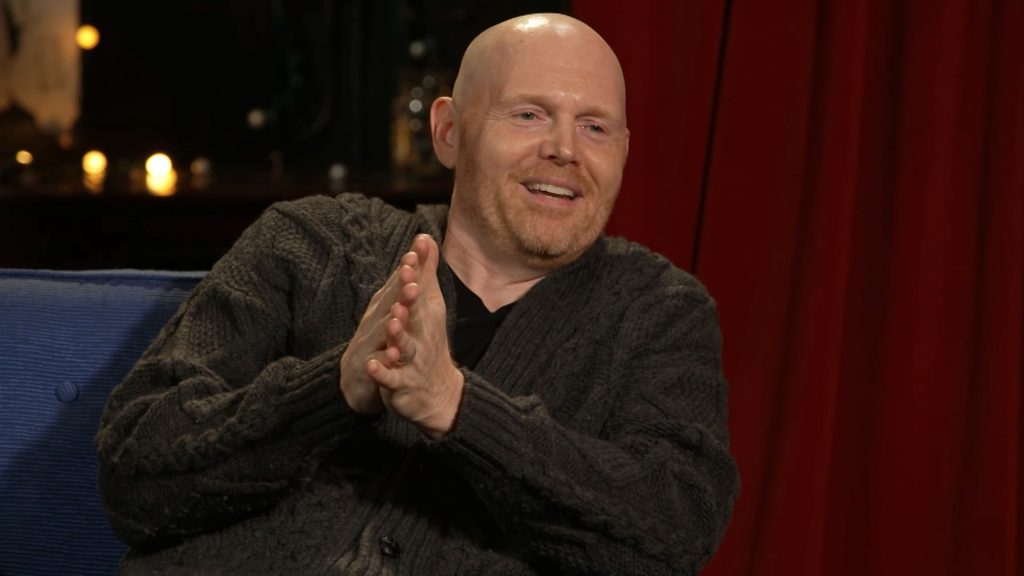
The long, and agonizing to witness, fall of Bill Burr has entered new depths.

The transformation reminds me of another once lethal comedian who became unfunny in his life’s third act.

George Carlin grew into a bitter, cynical, and nihilistic comic. It was a serious falloff from his humor in the 70’s and 80’s, which I admit still wasn’t for everyone.

I remember watching Carlin’s early specials replayed on HBO as a kid. His facial expressions, verbal cues, sound effects, oddities and writing were brilliant, and genuinely made me laugh.

I even recall where I was the day I learned he had died, June 22, 2008. Sitting in a local bar & grill with my aunt eating chicken wings. How many comedians can you say you recall such details about? For me, the only other one is Norm Macdonald’s passing.

Carlin allowed his growing cynicism to infect his act, that may be understating what has gone on with Bill Burr.

To be clear, this isn’t coming from someone who has never appreciated Burr’s work. I saw him live in a mid-sized theater about a decade ago. He did an hour and a half and it was fine, but still much softer than his specials from a decade prior to that, and he seemed to be sorting his way through the material as he went.

This was a man who once did a bit on stage about domestic violence. “They say every time after it happens, how there’s no reason to hit a woman. Now, I’m not saying you should ever do it. But no reason? There’s no reason??” It was darkly hilarious and acted out with passion and charm.

Contrast that with Bill Burr Presents: Friends Who Kill, the Netflix showcase where he MC’s and just shits on “Karens”, and by that he simply means white women. I got enough of a sense of what it was from Gavin McInnes and Anthony Cumia covering it rather than having to subject myself to the full experience. That was June of 2022. This collapse has been an ongoing thing, when was the turn? Covid seems to be the underlying inflection point. Yet, Burr is not simply a Covidiot.

A review of his 2025 Hulu special Drop Dead Years called him a therapeutic work in progress, figuring himself out in public. That was meant as a compliment. Burr agrees with the premise — he told Variety the special was the result of reevaluating his own past work, and described himself as a recovering meathead doing the best he can. So it wasn’t just the theater tour. He’s working material out in the specials too, on the eighth hour-long feature of his career, at 56 years old.

In September 2025 he went to the Riyadh Comedy Festival , which is the funniest thing I’ve seen him do in quite some time. Not that I have any issue with people taking Saudi money, I think it’s more admirable than taking Hollywood’s, but because it infuriated the very people he has been aligning himself with for roughly a decade. Top acts were reportedly paid as much as $1.6 million, according to Tim Dillon. Burr trying to reconcile his remaining fans’ anger with his willingness to forgo his new allegiances for a payday was fun to witness. 

He’s always played up the angry red-head comic, but now he’s far less coherent. He recently exhibited an inability to formulate even a basic question when interviewing The Strokes frontman Julian Casablancas on his podcast. Casablancas is no Captain Charisma himself these days, but the interview only got back on track when the singer began asking Burr questions about himself. Burr’s mind literally seems to have ceased its most basic functions in favor of distilling everything through his own self-loathing narcissistic impulses, at least from what can be gleaned on the surface. It’s a sure fire recipe for getting your wires crossed.

He also feels he can write off all criticism of his comedy as racist because he is in an interracial marriage. Which is, of course, preposterous. His comedy doesn’t fail to make me laugh because of who his wife is. It’s his constant mental gymnastics that seek to position himself as the counter-cultural voice of reason that fail to make him relatable to the people who once appreciated him. This negative feedback loop creates further cognitive dissonance that struggles to process how he became the one being labeled out-of-touch.

Bill Burr was never a comedic genius that rivaled the all-time greats. But he was funny. That’s no longer the case. Comedy comes from honesty, and when you can’t be honest about the world, you can’t satirize, mock, or lampoon its inconsistencies in a genuine way.

George Carlin stopped being funny and started being a very well paid doomer, more interested in showing the audience how smart he was for figuring the grand mysteries of the universe out on his own. Bill Burr has descended beyond that. The cringy content he is putting out today does however make for its own form of entertainment.

You won’t be seeing me at any of his shows in the future, but we’ll always have the Red Sox.

Sex Ed

I’m reminded of the age old question: who is going to teach our kids when there are no more young people willing to martyr themselves for the sake of the profession?

The answer is: The Sex Robots.

A WESTERN NEW YORK school district has halted its plans to place a humanoid robot in a classroom after a New York Focus report on the plan sparked fierce debate over the use of artificial intelligence in schools and backlash from local parents. Salamanca City Central School District announced in a Facebook post Friday afternoon that its pilot project with tech company Realbotix has been put on hold as school officials “work through enhanced student data privacy agreements” with the state education agency and engage with community members… In April 2024 (Realbotix), it acquired Simulcra, the Las Vegas parent company behind RealDoll, which creates hyperrealistic sex dolls.

— New York Focus

This story lept out at me before the uproar even had time to begin. One of those comically incompetent decisions that only gets made by the most highly-educated individuals.

Upon seeing the aesthetic of the device, I became more concerned for the robot’s safety than that of the high school students.

Our Long National Nightmare is Over

Another glassy-eyed deconstructionist has bitten the dust.

“Cracker Barrel CEO Julie Masino is stepping down nearly a year after the company’s failed rebrand, logo redesign, and restaurant modernization efforts sparked widespread customer backlash.” —AP

This concludes what I consider a successful boycott of the Americana eatery.

It was not enough for me that they walked back the logo redesign. I wanted the restaurants returned to their classic look instead of the modernist cleansings they’d undergone. Masino’s renovations had left them as generic, soulless diners, and I wanted her gone from the company. Time will tell if her replacement suffers from the same ideological incompetence she exhibited.

For today, I’m declaring victory, and the next time I’m in the vicinity of a Cracker Barrel, I will be stopping by to enjoy a Country Fried Breakfast with double hash brown casserole as the sides, eggs over medium, and cream gravy on the chicken fried steak. 

I encourage everyone to pay them a visit. Their next quarterly earnings report showing an increase in sales after her departure will be sweeter than a Double Chocolate Fudge Coca-Cola Cake. 

A nation is its people and their culture. And damn it, this is ours.