The Milwaukee Brewers have sent the two-time defending World Series Champion Los Angeles Dodgers home for what may be a long winter after completing a four-game sweep in the NLCS last night in Dodger Stadium.
The Brewers now advance to their first World Series appearance in 44 years, their 1982 showing being the only one in their history. They have never won a World Series title.
The Brewers returned the favor as the Dodgers swept Milwaukee 4-0 in the 2025 NLCS. A series in which Shohei Ohtani displayed superhuman abilities on the mound and in the batter’s box. He pitched six scoreless innings in the clinching Game 4, allowing two hits and striking out 10, and went 5-for-14 at the plate in the series with three home runs and four RBIs — all three of those homers coming in that same Game 4, where he went 3-for-3. As otherworldly as that version of Ohtani was last fall, he was every bit as human in the rematch this year. Ohtani did finally bust out of a months-long home run slump with a three-run blast in the second inning. The typically demure Ohtani flipped his bat after cracking the homer, looked back toward his dugout and let out a cathartic release of emotion. Dealing with a knee injury had hampered his power and hitting ability, but he finally found his stroke. It appeared to be enough to get the Dodgers to the next game. But the Brew Crew fought all the way back. Jake Bauers cut the lead in half with a two-run double in the fourth. In the fifth, David Hamilton singled home a run and Bauers drew a bases-loaded walk to tie it. Garrett Mitchell led off the sixth with a solo shot off Tanner Scott to give Milwaukee its first lead of the night, and Hamilton tacked on an insurance homer off Edwin Díaz in the ninth.
The NLCS rematch sweep brings to mind a sports psychology concept that doesn’t make the stat sheet. When teams have been beaten, and often in heartbreaking or humiliating fashion, they seem to do quite well when given an opportunity for revenge in future years.
A few examples of this that come to mind beyond the 2025 & 2026 NLCS between Dodgers and Brewers are the National Championship games between Clemson and Alabama, the 2015 season ended with Bama slipping by Clemson, the next season saw Clemson return the favor with Deshaun Watson throwing a late touchdown to seal it for the Tigers.
The Philadelphia Eagles lost to the Kansas City Chiefs in the 2022 season’s Super Bowl, and then got their rematch two years later and absolutely decimated the Chiefs in that game, 40-22. It can happen when a team loses badly in a championship opportunity, as the Denver Broncos were lampooned by the Seattle Seahawks in Super Bowl XLVIII, the only “cold weather” Super Bowl, having been played at MetLife Stadium. The game opened with the snap going past Peyton Manning’s head and into the end zone for a safety, things continued to go downhill from there, with the Seahawks running out to a 43-8 victory. Just a few years later, the Broncos were back in the Super Bowl, again with Peyton under center, and were underdogs against Cam Newton’s Panthers. They played like a team that knew the bitter taste of defeat and would do anything to avoid partaking in it once more, and snatched a 24-10 victory in Super Bowl 50 over Carolina.
Is there precedent for this to occur generationally? As the Seahawks and Patriots rematched 11 years after the famous Malcolm Butler goal line interception that snagged Tom Brady his fourth ring. Can this really play a factor that many years later when both rosters are completely turned over? Well, the Seahawks demolished the Patriots in this past February’s Super Bowl, perhaps it was the matchup, and maybe the organization had the mental edge after what had transpired more than a decade ago.
Sports psychology sidebar aside, the Brewers victory last night does something truly incredible, it leaves three teams in contention for the World Series, all of which are in the bottom half of the league in terms of payroll. Milwaukee ranks 19th, Tampa Bay 25th, and Cleveland dead last.
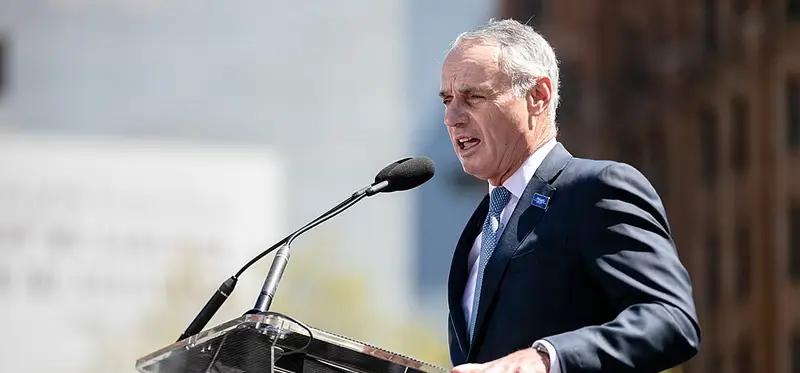
Commissioner Rob Manfred has dug his heels in for an impending labor fight this offseason that looks as contentious as any since the 1994 dispute cost the MLB a World Series. The majority of owners are determined to implement a cap and floor system. Their latest proposals have set those numbers at a $245.3 million cap and a $171.2 million floor. The MLB Players Association, their union, is staunchly opposed to this.
Thus far in the public negotiation posturing, neither side is speaking the same language, and a long, protracted work stoppage that costs the league significant games in the 2027 season appears inevitable.
Were the Dodgers to accomplish a threepeat this fall, the league would have a lopsided outcome to champion to their fans as proof positive that the current system is broken, and they must carry this fight through whatever collateral damage it brings with it to save the game.
Instead, we are going to get a World Series offering of Milwaukee and either Cleveland or Tampa Bay. Two franchises who have never won a World Series, and Cleveland who is in the league’s longest drought for a team who has lifted the trophy, the dry spell going all the way back to 1948.
Now sure, there are plenty of fans who regardless of the outcome of this World Series desperately want a salary cap and floor in place to allow small market teams to compete for titles on a more consistent and equitable basis, the way the NFL and NBA have allowed, should they acquire the right roster and coaching composition to do so.
I kind of like the idea that New York’s 11% top income tax rate and the rising cost of living within the city would make it even harder for the Yankees to put an end to their now franchise-record-tying 17-year World Series drought with a hard cap in place. But let’s not make this about what I want.
What I want to do is call MLB’s bluff.
Major League Baseball wants a salary cap, to increase competition, and to increase the franchise valuations of the small market clubs. But they have had their eyes on something else, and it directly conflicts with the salary cap push.
Rob Manfred has aligned the MLB media rights to end after the 2028 season. The MLB just watched the NBA sign new television/broadcast rights deals to the tune of $76 billion over 11 years. With Amazon Prime, ESPN, and NBC getting a slice of the pie at roughly 2.6 times the annual value of the last round of rights.
Manfred just had to maneuver media rights restructuring when ESPN dropped Sunday Night Baseball and their $550m a year annual obligation to it, he found a short term home for Sunday Night Baseball on NBC/Peacock, which included coverage of the wild card round, and then prevented losing the $550m a year from ESPN by handing them over the rights to MLB.TV, their out-of-market games package that is the best deal in sports streaming.
How does this tie into the labor fight?
MLB is looking to get a significant increase in media rights in 2029, but there’s a catch. If 60 or more games are lost in a season, the MLB would be paid their normal amount that year from their rights holders, but the contract would extend by a year, and the MLB would owe a discounted season of baseball to their rights holders for that extended year (essentially a free one if the whole season is wiped out).
“The networks might be pleased they’re receiving an extra year at a bargain rate.” — The Athletic
The lockout and the loss of games is MLB’s primary weapon to force the MLBPA to come to the table and negotiate, and accept aspects of their floor and cap system. Yet the MLBPA is aware of this 60 game clause. The players only need to survive two months without income, and the league will be scrambling to get them back on the field in order to fulfill their media rights obligations, and move toward the big money offers for 2029.
If I was Bruce Meyer, executive director of the MLBPA, I wouldn’t pick up the phone for Manfred until May 15th. He’ll be bending on his terms by then, I’d let him talk about their concessions.
Then I’d hang up and tell him to call back when he has a more serious offer.
We may lose a couple months’ worth of baseball next spring, but I can’t fathom how the league sees getting to the media rights negotiating table a year later and a year of current revenue shorter.
It would make sense for them to push for a new CBA that ends after the new media rights deals have been negotiated. Saving the cap fight for another day.
The new media rights may break the current model up and have games broken up across multiple streaming services, but allow for far more national exposure of the sport on a daily basis. This could bring in significantly more revenue that allows the league to make the idea of a cap and floor system even more palatable to the players, as it’s giving them a cut of a much larger pie.
My prediction, it will be a long ugly winter, but the boys will be playing ball by June.
Photo: Governor Tom Wolf / Wikimedia Commons / CC BY 2.0