The Dodgers empire may be coming apart at the seams.
“Prosecutors are investigating whether Walter’s businesses hid financial ties while borrowing billions from insurers he controls.” — Reuters
After the surprising sale of the Los Angeles Lakers last week, it now looks as though Mark Walter may need to divest himself of the Los Angeles Dodgers as well. The club says he has no plans to sell. He also had no plans to sell the Lakers ten months ago.
The situation is in the early stages, and there is serious bias in the coverage of it so far. I do remember a President of the United States who caught 34 felonies in New York, and then caught a separate half-billion dollar civil judgment for ‘inflating the value of his assets’ to get better terms on his loans — a farcical judgment an appeals court later threw out. Inflated collateral, concealed connections. Same neighborhood of accusations. The difference is that the Walter case appears to be actually substantive and not just politically motivated lawfare.
The Dodgers having to sell isn’t the biggest story. It’s the Guggenheim group’s stake in their TV rights deal that makes this very interesting. If this is true, and it ends up costing the Dodgers their $334 million annual local television revenue, it shakes up the hierarchy of Major League Baseball immediately.
Also interesting is that Shohei Ohtani has a clause in his contract that should GM Andrew Friedman leave the team, or the ownership group change, he can opt out of his contract the following offseason.
“Ohtani can opt out if Walter is no longer controlling owner or Friedman no longer runs baseball ops.” — ESPN
Los Angeles also owes north of a billion dollars in deferred salary money to players on the team after their contracts end. That may not be a huge issue now, but if revenues are shared more evenly in the future that could become a burden to the new owners.
This only serves to add fuel to the fire for owners who desperately want a salary cap this offseason in their labor dispute with the MLBPA.
Currently the smaller-revenue teams can coast on the league’s welfare check before they spend a dime from ticket sales or local TV. They’d like a bigger cut of the pie than they’re getting, and they’re willing to institute a salary floor to get the players on board. The new CBA only needs 23 of the league’s 30 owners to approve it. If enough of the smaller fish band together and force this issue, things get very interesting. This incident could take out the ownership of the biggest financial juggernaut in the sport before the deepest parts of the CBA battle come to pass. The owners don’t care as much about leveling the competition and competitive balance as they do increasing their franchise valuations. That’s exactly what a salary cap would provide for them.
Los Angeles achieving a three-peat this fall with another World Series title would be historic and impressive regardless of the payroll, but it may also be their last chance to do so in the league’s current framework.
With the players and owners speaking different languages in early stage CBA negotiations, this tectonic shift occuring right at this time feels like another reason we may not see baseball played in 2027. The dynamics may be in such a state a flux that a reconcilliation becomes even more difficult to arrive at.
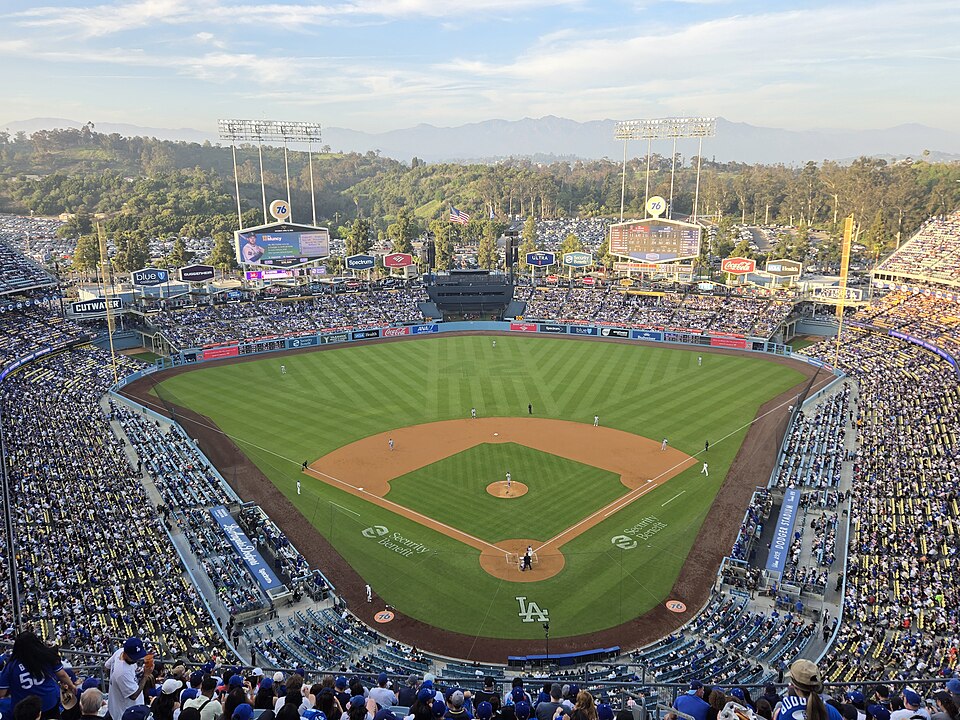
Photo: Spatms — CC BY-SA 4.0